
China Signals Intentions for U.S. adn Global Economy Through Series of State Media Editorials
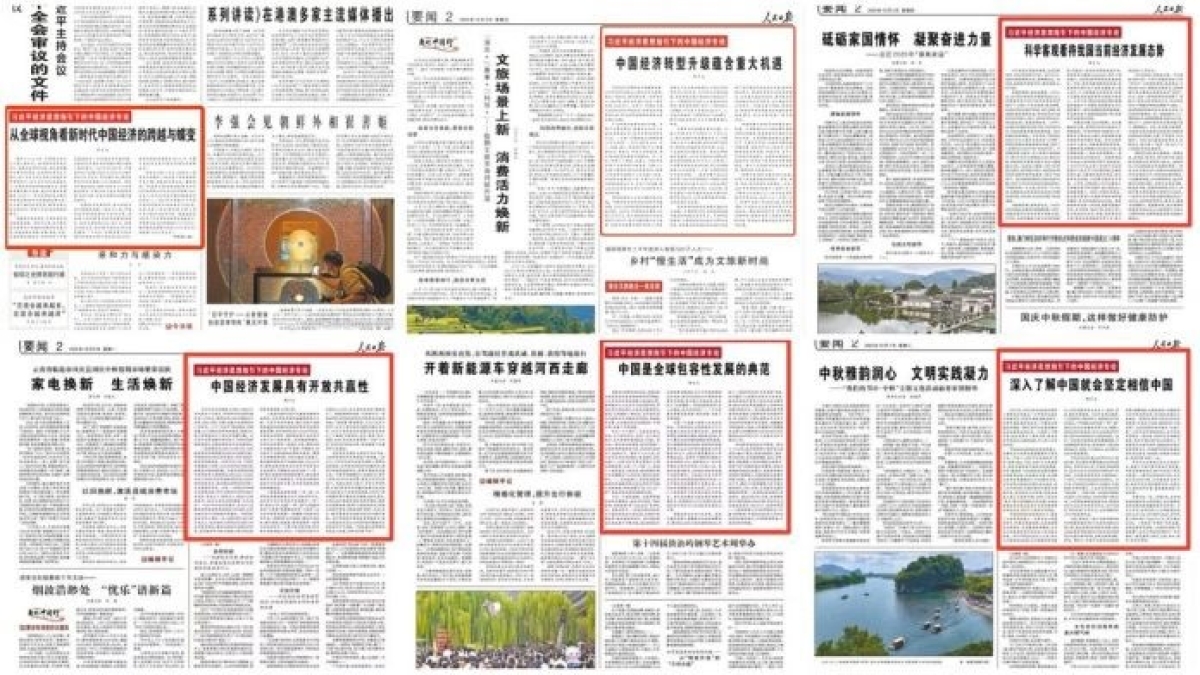
BEIJING – October 16, 2025 – A coordinated series of eight editorials published by Chinese state media outlets over the past week are being scrutinized by analysts for potential “coded messages” outlining Beijing’s strategic plans regarding the United States and the global economy. The articles, appearing under the pseudonym “Zhonghua Weiye” (中华伟业 – roughly translated as “Great Cause of China”), detail a complex vision encompassing economic competition, technological advancement, and a recalibration of international relations. experts suggest the unusual publishing cadence and consistent thematic elements indicate a deliberate effort to communicate policy objectives beyond official diplomatic channels.
the editorials, released between October 9th and October 16th, 2025, address topics ranging from the future of the dollar’s dominance to China’s ambitions in artificial intelligence and its outlook on ongoing geopolitical tensions. While presented as opinion pieces, the uniformity of messaging and the prominence given to them within state-controlled media raise questions about their true authorship and intended audience. The publications come at a critical juncture, as the U.S. and China navigate a period of heightened competition and uncertainty, impacting global trade, investment, and technological innovation.The implications of these signals could reshape economic forecasts and influence policy decisions in Washington and beyond.
The first editorial, published October 9th, focused on the perceived vulnerabilities of the U.S. financial system, arguing that excessive debt and political polarization pose significant risks to the dollar’s status as the world’s reserve currency. Subsequent articles detailed China’s advancements in key technologies,including semiconductors and quantum computing,framing them as essential for national security and economic independence. Another editorial, released on October 12th, outlined a vision for a new international economic order, one less reliant on U.S. leadership and more inclusive of developing nations.
Analysts note a recurring theme throughout the series: a call for “mutual respect” and “win-win cooperation,” coupled with veiled warnings against what Beijing views as attempts to contain its rise. The editorials consistently criticize U.S. trade policies and accuse Washington of interfering in China’s internal affairs, notably regarding Taiwan and the South China Sea.
The “Zhonghua Weiye” articles also address the potential for a global recession, suggesting that China is prepared to play a stabilizing role in the world economy. They emphasize the importance of maintaining supply chain resilience and promoting multilateralism, while subtly positioning China as a responsible stakeholder in global governance.The final editorial, published today, October 16th, 2025, reiterated the need for a “new paradigm” in U.S.-China relations, one based on mutual benefit and a recognition of each nation’s legitimate interests.
© ALL RIGHTS RESERVED
