
Ultra-Processed Foods Threaten Developing Brains, Study Warns
Urgent Call to Rethink Maternal and Child Diets
A landmark review reveals a disturbing link between ultra-processed foods (UPFs) and significant risks to brain development, potentially amplifying the likelihood of conditions like ADHD, depression, and even dementia later in life. The findings underscore an urgent need to reassess the dietary habits of expectant mothers and children.
Concerns Over UPF Consumption Grow
Researchers in Switzerland have meticulously examined the ramifications of UPF consumption across critical developmental stages: prenatal, adolescent, and early childhood. Their findings, published in the journal Frontiers in Public Health, suggest that early exposure to these highly processed items could impede cognitive growth and elevate risks for long-term mental health challenges.
UPFs, characterized by their high content of unhealthy fats, salt, and sugar, have become ubiquitous in modern diets. While their impact on adult health is increasingly understood, the specific effects on a developing brain remain a significant concern.
The review notes that UPFs are engineered for maximum palatability and shelf-life, often at the expense of nutritional value. They frequently contain additives and byproducts from extensive processing and packaging.
In many developed nations, UPFs now constitute over half of daily dietary energy intake. This trend is also on the rise in middle-income countries, with children and adolescents showing particularly high consumption rates, a demographic highly vulnerable to nutritional deficiencies. This pattern could initiate a detrimental cycle impacting health across generations.
Health Ramifications of UPF Diets
Extensive studies consistently associate UPFs with weight gain and obesity across all age groups. Furthermore, diets heavy in these processed items are linked to an increased risk of various cancers, cardiovascular diseases, type 2 diabetes, metabolic syndrome, and hypertension.
During pregnancy, high UPF intake has been linked to pre-eclampsia, gestational diabetes, and adverse neonatal outcomes, including congenital heart defects and premature births. Crucially, UPFs displace nutrient-dense foods, leading to micronutrient deficiencies that are particularly harmful during critical periods of rapid growth and neural maturation.
Emerging evidence also connects heavy UPF consumption with hyperactivity, attention difficulties, depression, and anxiety, potentially causing cumulative, lifelong neurocognitive harm. Deficiencies in vital nutrients like iron and zinc, often found in UPF-heavy diets, can hinder neurodevelopmental processes and cognitive functions in children.
For instance, animal studies indicate that trans-fat intake during pregnancy can trigger inflammation and memory deficits in offspring. The review also points to the role of UPFs in disrupting the gut-brain axis. Alterations in the gut microbiome due to UPFs can negatively affect the production of crucial neurotransmitters like serotonin and brain-derived neurotrophic factor (BDNF), both vital for cognitive development and mood regulation.
A concerning statistic from the UK indicates that UPFs provide 65% or more of lunchtime calories in many school meal programs, potentially entrenching poor dietary habits from a young age.
Vulnerable Stages and Brain Development
The developing brain is particularly susceptible to nutritional influences. The third trimester of pregnancy and early childhood are periods of intense plasticity, where inadequate nutrition can permanently alter brain structure and function.
Adolescence represents another critical window. The ongoing maturation of the prefrontal cortex and the mesolimbic dopamine system makes this age group more sensitive to the rewarding effects of UPFs and emotional stress.
Repeated exposure to UPFs during these formative stages can strengthen pathways associated with reward seeking while weakening inhibitory control mechanisms. This can contribute to habitual overconsumption, described in the review as “reward dysfunction.”
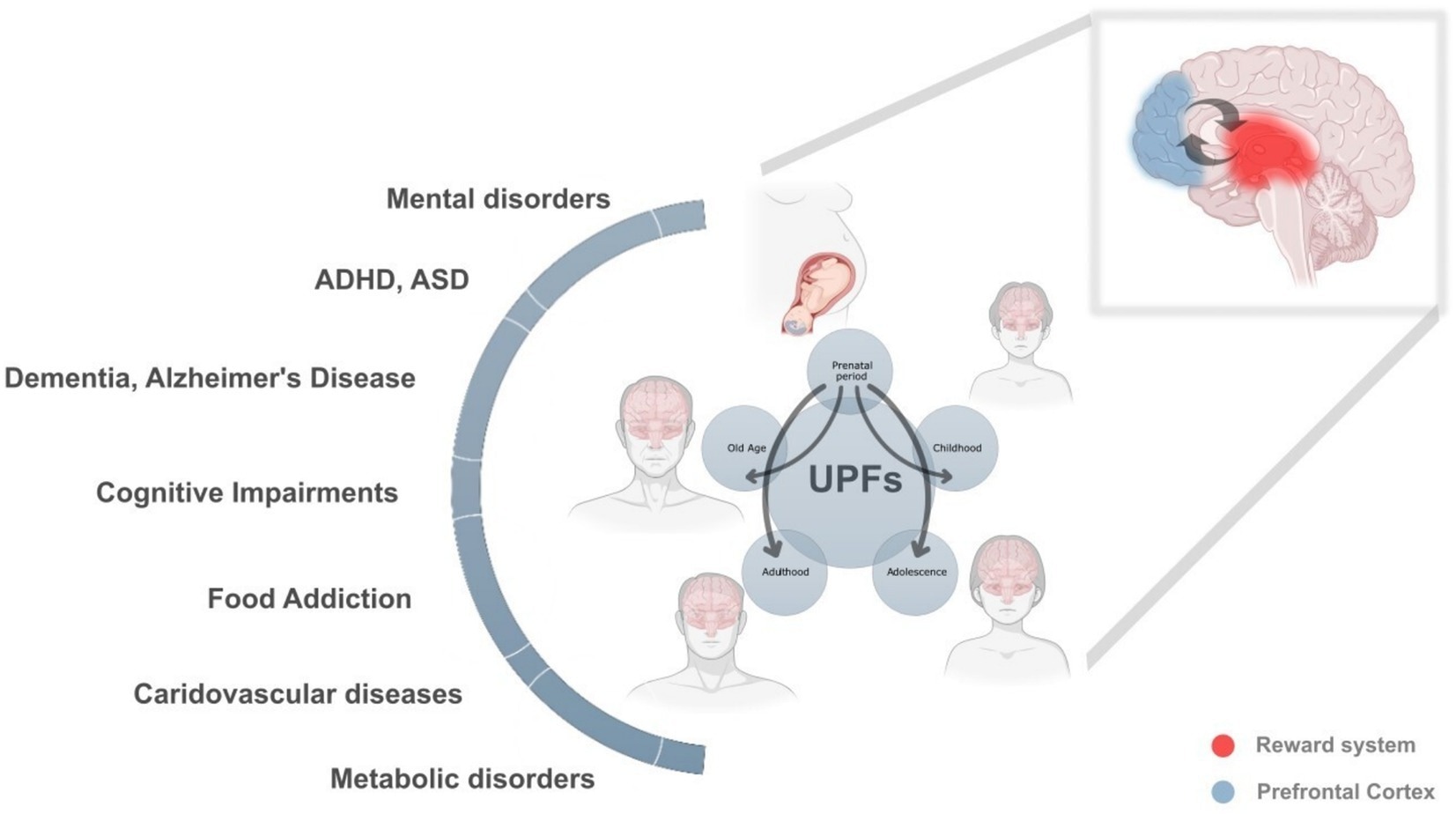
The widespread availability of UPFs, aggressive marketing tactics, and increased screen time collectively create an environment that promotes the consumption of energy-dense, sweet, and salty foods. Early UPF consumption can lead to chronic inflammation, persistent obesity, metabolic dysfunction, and a higher risk of mental health disorders persisting into adulthood.
Moving Forward: Policy and Prevention
The review concludes that cumulative exposure to UPFs, from fetal development through adulthood, is strongly associated with a spectrum of neurocognitive issues, ranging from early executive dysfunction to an increased risk of dementia in later life.
The authors advocate for public health interventions, including reducing the availability of UPFs, implementing clear front-of-pack food labeling, and encouraging product reformulation. Prioritizing longitudinal neuroimaging research is also recommended to establish causality and identify the most sensitive developmental periods.
Clinicians are urged to promote diets rich in fiber and minimally processed foods to support optimal brain development and long-term cognitive health.
