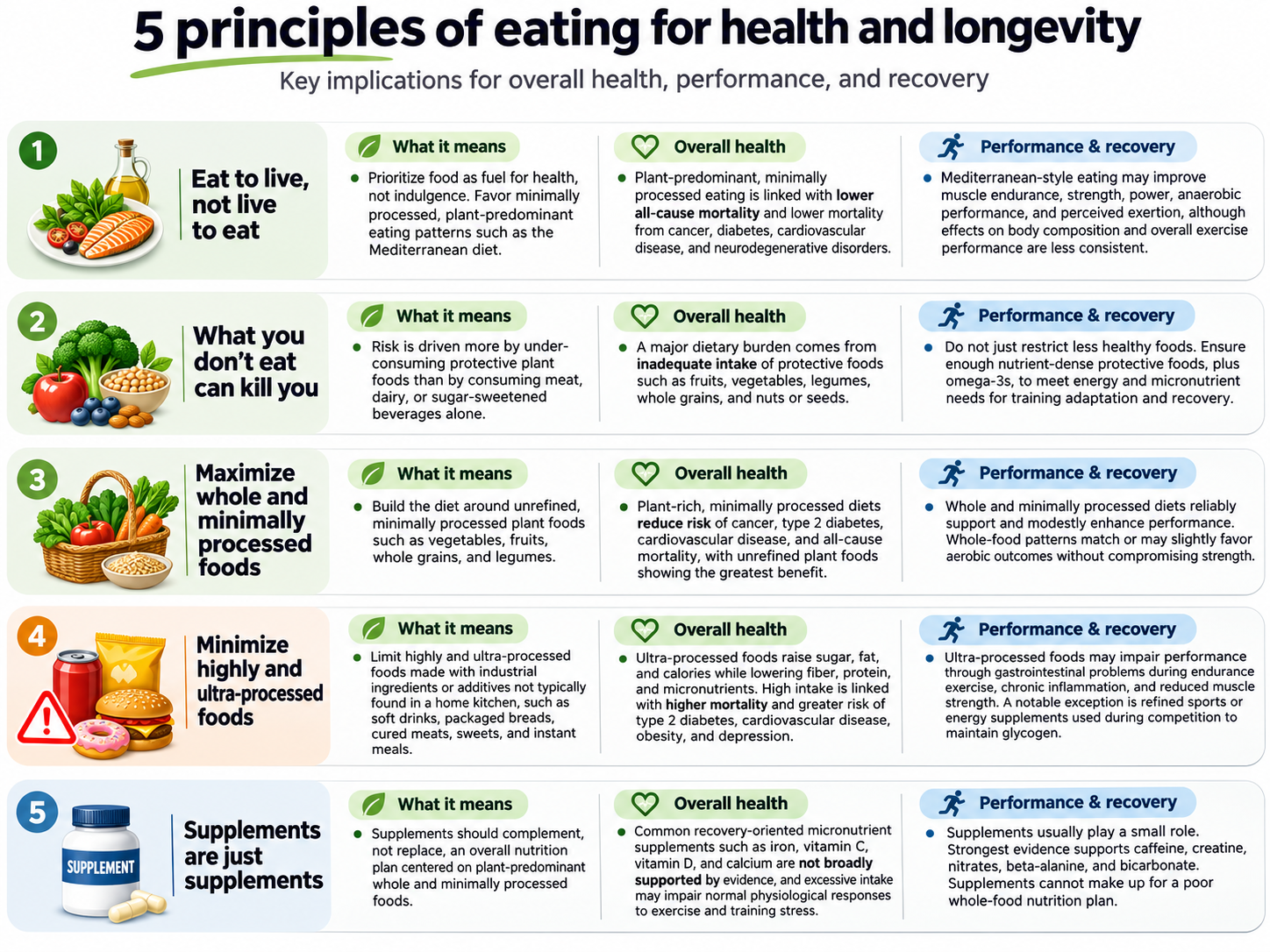
Narrative Review: Energy Deficit Outweighs Diet Quality for Athletic Performance
A narrative review published in the journal Nutrients finds that a nutrient-rich diet cannot compensate for insufficient energy intake, a pattern linked to slower marathon times and more medical problems among Boston Marathon runners.
The review, led by Richard M. Rosenfeld of SUNY Downstate Health Sciences University and the American College of Lifestyle Medicine, and Jordan D. Metzl of the Hospital for Special Surgery, examines how dietary patterns, energy availability, and targeted supplementation affect physical performance and long-term health across all activity levels.
- Low energy availability was more common in women than men among surveyed Boston Marathon runners.
- Exercising individuals need 1.4–2.0 g/kg/day of protein, above the 0.8 g/kg/day RDA for sedentary adults.
- Carbohydrate needs range from 5–12 g/kg/day depending on training duration.
- Creatine monohydrate increases muscle strength and mass; caffeine modestly improves aerobic endurance.
Low energy availability (LEA) occurs when dietary intake fails to cover physiological needs after exercise expenditure. Prolonged or severe LEA can progress to relative energy deficiency in sport (REDs), impairing bone health, reproductive function, immunity, metabolism, sleep, and muscle performance.
Protein targets rise with training demands
Athletes training to build muscle may benefit from 1.6–2.2 g/kg/day. Distributing approximately 20–30 g of protein per meal supports muscle protein synthesis. Total daily intake and its distribution across meals generally matter more than precise timing around exercise. For older adults, combining protein intake with resistance training improves muscle strength and body composition more than protein alone.
Carbohydrate and fat guidelines track training load
Carbohydrates remain the primary fuel for moderate- and high-intensity exercise. Athletes should adjust carbohydrate intake to match daily training load. Fat should provide 20–35% of total energy, with less than 10% from saturated fat. The review states ketogenic diets offer no established athletic performance advantage and may impair high-intensity and endurance activities reliant on carbohydrates and muscle glycogen.
Supplement evidence varies by compound
Caffeine can reduce perceived exertion and produce modest improvements in exercise performance and aerobic endurance, though higher doses may cause anxiety, increased heart rate, gastrointestinal discomfort, and disrupted sleep. Dietary nitrates from beetroot may improve blood flow and oxygen delivery, particularly in less-trained individuals.
Sodium bicarbonate and beta-alanine may benefit high-intensity, short-duration activities, though bicarbonate’s benefits are small and inconsistent and gastrointestinal discomfort can limit its use. Omega-3 fatty acids may reduce muscle soreness, but evidence for improved athletic performance remains inconclusive.
Masters athletes need higher protein distribution
Competitive athletes aged 35 years or older experience age-related loss of muscle mass, bone density, and aerobic fitness. Approximately 1.6–1.8 g/kg/day of protein, distributed across at least three meals, has been suggested for these athletes.
Leucine may stimulate muscle protein synthesis in older adults, while creatine supplementation can improve strength and muscle mass. Essential amino acid supplementation has shown more consistent benefits for physical function in older adults than in younger populations.
The review’s lead author, Richard M. Rosenfeld, brings a multidisciplinary academic background to lifestyle medicine. He earned a BA in chemistry from Hamilton College and an MD from the University at Buffalo School of Medicine, followed by an MPH in epidemiology from the University of Pittsburgh and an MBA from SUNY Oswego.
A Distinguished Professor of Otolaryngology at SUNY Downstate Health Sciences University since 2016, he has chaired the American Academy of Otolaryngology–Head and Neck Surgery Foundation Guideline Development Task Force since its 2005 establishment and served as editor-in-chief of Otolaryngology–Head and Neck Surgery from 2006 to 2014.
In 2023, Rosenfeld became Director of Guidelines and Quality for the American College of Lifestyle Medicine, the organization with which he is affiliated in this review.
Lifestyle factors amplify or undermine nutrition
Larger amounts of alcohol can impair muscle protein synthesis, rehydration, glycogen replenishment, and exercise recovery. The authors recommend avoiding alcohol before exercise and during early recovery.
A stable body weight can mask insufficient energy availability because the body conserves energy at the expense of normal physiological functions, and a normal body mass index does not necessarily indicate healthy body composition or metabolic health.
Worth a look
- Florida Attorney General Sues Leapfrog Over Hospital Safety Grades
- KDCA Launches Public Campaign to Develop Consumer-Led Health Content for National Health Information Portal
- Joe Russo: Xavier ‘the Conscience’ in Patrick Stewart’s Final Performance (archyde.com)
- Christian de Looper Argues Sony XM4C Delivers Refined Sound Quality (newsdirectory3.com)