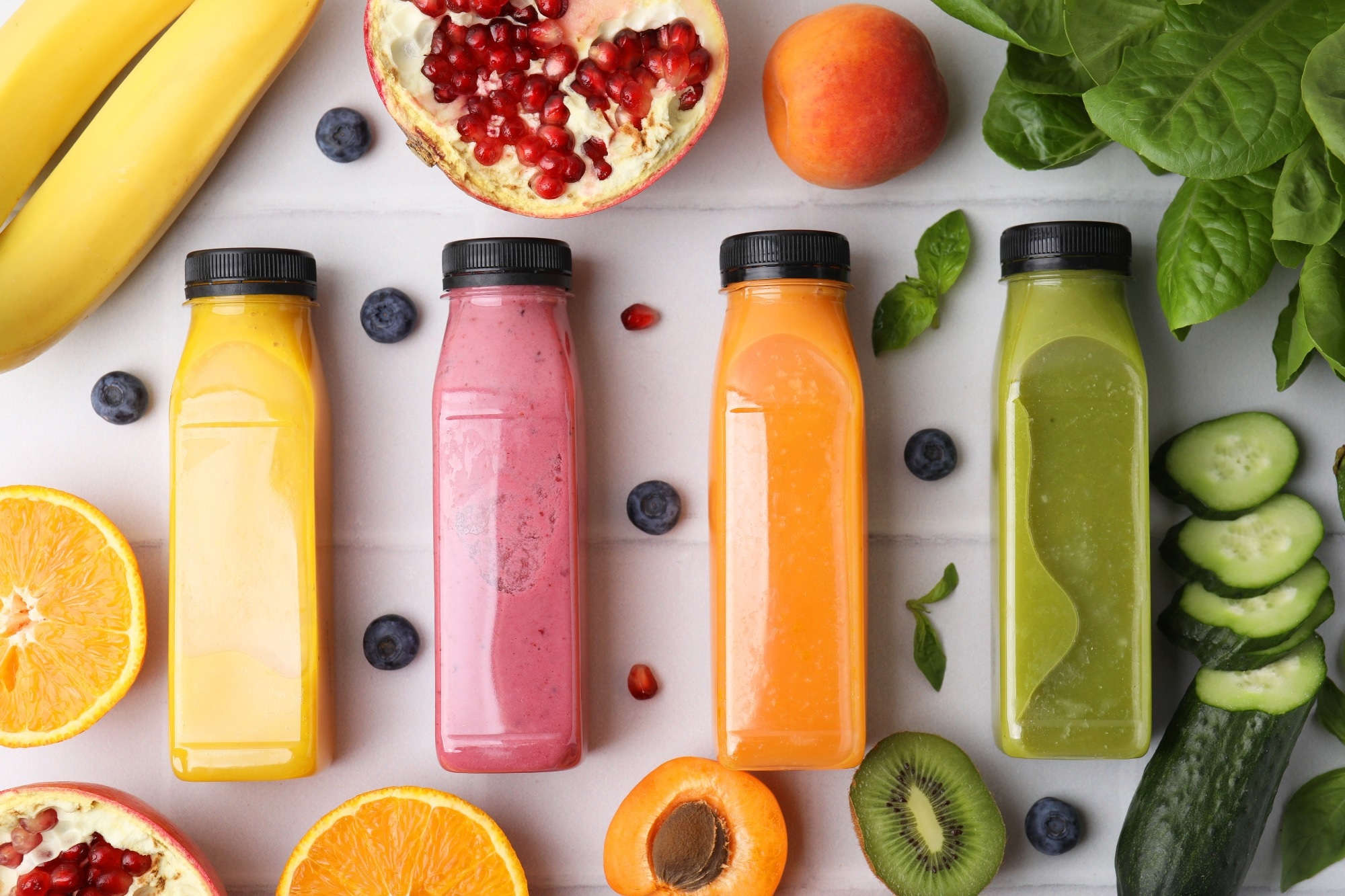
Smoothies vs Juice: Which Is Healthier?
In the ongoing quest to optimize dietary choices for long-term health, a recent study published in Nutrients has reignited the debate between consuming whole fruits in smoothie form versus drinking fruit juice, revealing nuanced differences in glycemic impact, satiety, and nutrient bioavailability that could inform clinical guidance for metabolic health management.
Key Clinical Takeaways:
- Smoothies retain more fiber and phytonutrients than juice, leading to slower glucose absorption and improved glycemic control in individuals with prediabetes.
- Participants consuming smoothies reported 22% greater satiety and reduced caloric intake at subsequent meals compared to those drinking equivalent-calorie fruit juice.
- The study, funded by the NIH’s National Institute of Diabetes and Digestive and Kidney Diseases (NIDDK), involved a randomized crossover design with 45 overweight adults, strengthening its relevance for clinical nutrition counseling.
Despite widespread perception that fruit juice offers a convenient, nutrient-dense alternative to whole fruit, emerging evidence suggests that mechanical disruption of fruit cellular structure—whether through blending or juicing—alters physiological responses in meaningful ways. While both forms deliver vitamins, minerals, and antioxidants, the absence of intact fiber in juice results in rapid fructose delivery to the liver, potentially exacerbating hepatic lipogenesis and insulin resistance over time. In contrast, smoothies, which preserve the fruit’s fibrous matrix, modulate glucose kinetics through delayed gastric emptying and enhanced colonic fermentation, supporting a more favorable metabolic profile.
This distinction is particularly relevant given the rising prevalence of metabolic syndrome, affecting over one-third of U.S. Adults according to the CDC. A 2023 longitudinal analysis in JAMA Internal Medicine linked daily fruit juice consumption to an 18% higher risk of developing type 2 diabetes, whereas whole fruit intake—especially when consumed with fiber intact—was associated with neutral or protective effects. The current study builds on this foundation by isolating the variable of preparation method, using a controlled crossover trial where participants consumed either 300ml of mixed berry smoothie or juice, matched for caloric and sugar content, with washout periods to eliminate carryover effects.
“When we preserve the plant cell wall through blending, we maintain the physical barrier that slows enzymatic access to sugars. Juicing dismantles this barrier, resulting in a metabolic challenge more akin to sugar-sweetened beverages than whole fruit.”
Funded by an R01 grant from the NIDDK (Grant #DK128456), the trial measured postprandial glucose, insulin, glucagon-like peptide-1 (GLP-1), and subjective satiety over a 3-hour period. Results showed that the smoothie condition produced a 28% lower peak glucose excursion and a 40% higher GLP-1 response—indicative of enhanced incretin activity and potential benefits for appetite regulation. These findings align with mechanistic studies demonstrating that viscous fiber in blended fruit increases luminal viscosity in the compact intestine, delaying carbohydrate hydrolysis and modulating gut hormone secretion.
For clinicians advising patients on dietary modifications—particularly those managing obesity, insulin resistance, or cardiovascular risk—these results underscore the importance of counseling beyond mere fruit intake to include preparation method. While whole fruit remains the gold standard, smoothies represent a viable middle ground when consumed without added sugars or dairy-based thickeners that could negate metabolic benefits. In contrast, even 100% fruit juice lacks the structural complexity to confer similar advantages and should be limited, especially in populations at risk for metabolic dysfunction.
Individuals seeking personalized nutrition strategies may benefit from consulting with specialists who integrate behavioral science and metabolic testing into preventive care. Patients aiming to refine their carbohydrate quality or manage postprandial glucose excursions are encouraged to engage with registered dietitians trained in evidence-based medical nutrition therapy. Those requiring deeper metabolic evaluation—such as assessment of hepatic insulin sensitivity or incretin function—may consider referral to board-certified endocrinologists capable of interpreting continuous glucose monitoring data within a comprehensive risk assessment framework.
From a public health perspective, these findings support revising dietary guidelines to explicitly distinguish between fruit forms, moving beyond broad recommendations like “increase fruit consumption” to specify preparation context. Such precision could enhance the effectiveness of nutrition interventions in community health programs, particularly those targeting underserved populations where juice consumption is often disproportionately high due to cost, accessibility, and marketing influences.
As research continues to elucidate the role of food matrix in nutrient bioavailability and metabolic signaling, the distinction between processed and minimally processed fruit forms will likely gain prominence in both clinical guidelines and food labeling policy. Until then, prioritizing smoothies over juice—when whole fruit is impractical—offers a scientifically supported strategy to harness the benefits of fruit while mitigating glycemic volatility.
*Disclaimer: The information provided in this article is for educational and scientific communication purposes only and does not constitute medical advice. Always consult with a qualified healthcare provider regarding any medical condition, diagnosis, or treatment plan.*