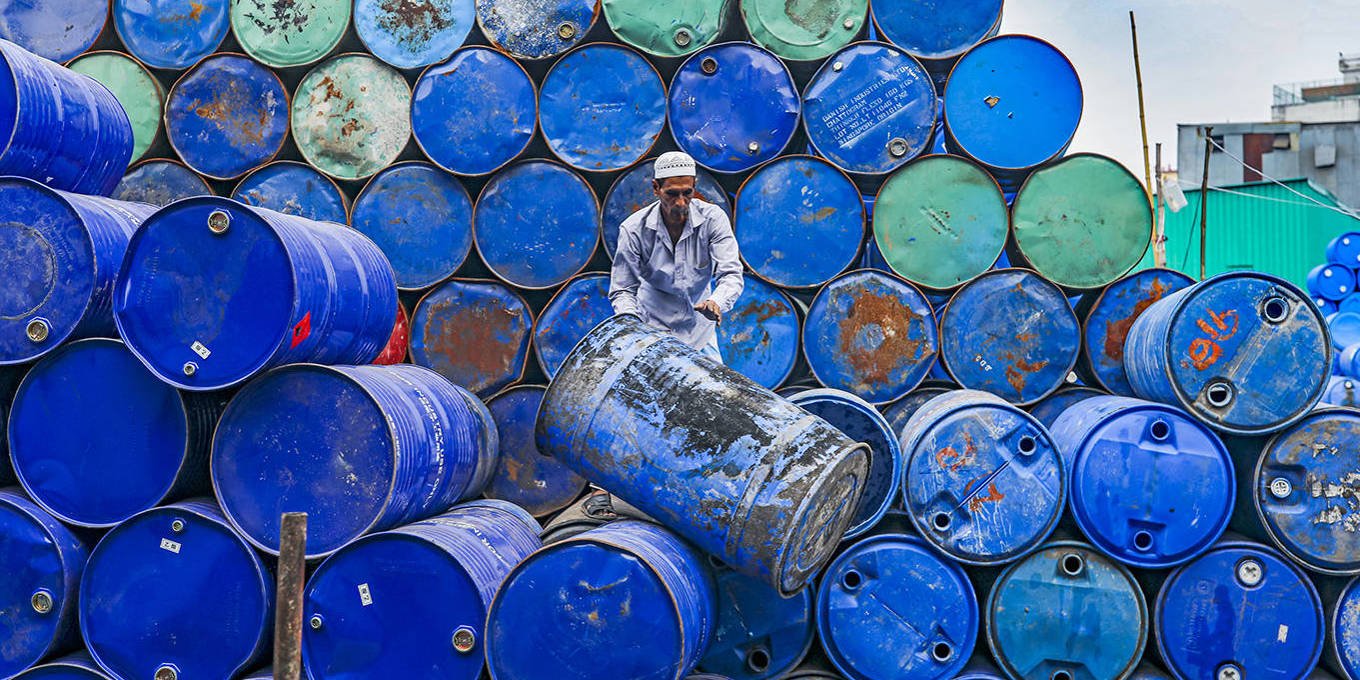
Ending Energy Inequality: The Case for a Global Oil Buyers’ Club
As energy markets fracture under geopolitical strain, a coalition of importing nations proposes an oil buyers’ club to cap prices and shield vulnerable economies from volatile crude costs—a move that could redefine global commodity governance and create urgent demand for risk analytics, trade compliance, and sovereign advisory services.
How Price Volatility Triggers Fiscal Imbalance in Import-Dependent Economies
Brent crude traded above $92 per barrel in early April 2026, up 18% year-to-date, according to ICE Futures Europe settlement data, squeezing current account balances across emerging markets. The World Bank estimates that a sustained $10 increase in oil prices widens the fiscal deficit of the average low-income oil importer by 0.7% of GDP, forcing cuts to social spending or increased borrowing. This dynamic was evident in Q1 2026 current account reports from Pakistan and Bangladesh, where oil import bills rose 22% and 19% respectively, exacerbating external vulnerabilities. Such imbalances don’t just strain sovereign balance sheets—they ripple into corporate earnings, particularly for energy-intensive manufacturers and logistics firms operating in dollar-denominated supply chains.
When input costs spike unpredictably, CFOs face margin compression that standard hedging strategies often fail to fully mitigate due to basis risk and liquidity constraints in over-the-counter derivatives markets. This creates a clear B2B problem: multinational corporations need sophisticated commodity risk management platforms that integrate real-time price forecasting, scenario stress testing, and dynamic hedging execution. Providers in this space—such as those specializing in energy trading and risk management (ETRM) systems—become critical partners for firms seeking to stabilize input costs amid market fragmentation. Access to these capabilities is no longer optional; it’s a prerequisite for operational resilience in a multipolar energy landscape.
Why a Multilateral Buyers’ Club Could Reshape Market Allocation
The proposed oil buyers’ club, championed by a coalition including India, China, and several African nations, aims to aggregate purchasing power to negotiate long-term contracts at pre-agreed price ceilings, insulating members from spot market spikes. Drawing from the model of the International Coffee Agreement and recent LNG buyer alliances, the mechanism would rely on transparent quota allocation and monitored compliance to prevent free-riding. According to UNCTAD’s 2025 State of Commodity Dependence report, oil accounts for over 40% of export earnings in 15 developing economies, making price stability a macroeconomic imperative rather than a market convenience.
Critics argue such a club risks distorting market signals and inviting producer retaliation, notably from OPEC+ members who cut output by 2.2 million barrels per day in Q1 2026 to support prices. Yet proponents counter that monopsony power—when exercised collectively and transparently—can correct asymmetric bargaining power in markets dominated by a few major exporters. As former IMF chief economist Gita Gopinath noted in a March 2026 Brookings Institution forum, “When demand is fragmented and supply is coordinated, the resulting imbalance isn’t market efficiency—it’s systemic exploitation.” Her remarks underscore the need for institutional counterweight in commodity markets.
“A buyers’ club isn’t about fixing prices—it’s about restoring equilibrium in a system where the poorest pay the highest effective cost for energy.”
This structural shift would directly impact global trade finance and customs compliance workflows. Long-term agreements under a buyers’ club framework require robust documentation, origin verification, and adherence to evolving sanctions regimes—particularly if participation involves nations under selective restrictions. Enterprises navigating these contracts will depend on specialized legal counsel and trade advisory firms capable of structuring complex, multi-jurisdictional supply agreements that withstand regulatory scrutiny. The demand for such expertise is already rising: Thomson Reuters’ 2025 Trade Compliance Index showed a 34% increase in corporate inquiries related to commodity contract enforceability amid geopolitical fragmentation.
The B2B Imperative: Risk Intelligence and Sovereign Advisory in Fragmented Markets
Beyond immediate price management, the buyers’ club concept signals a broader trend toward plurilateral governance in global commodities—a shift that elevates the strategic value of firms offering macroeconomic scenario planning, sovereign credit analysis, and cross-border arbitration readiness. Energy traders and industrial consumers alike will need access to real-time flow data, port congestion metrics, and alternative routing analytics to optimize logistics under constrained routing options. This is where providers of maritime intelligence, trade flow modeling, and supply chain resilience platforms enter the equation—not as vendors, but as essential infrastructure for operational continuity.
For example, a German industrial manufacturer reliant on Middle Eastern crude might use predictive analytics to reroute shipments via the Cape of Great Hope if Suez Canal transit risks rise—a decision informed by freight rate spreads, insurance premiums, and demurrage forecasts. Such decisions are increasingly informed by platforms that fuse AIS satellite data with machine learning models trained on historical chokepoint disruptions. The market for these tools is expanding rapidly; Wood Mackenzie projects global spending on energy transition and supply chain resilience software will reach $11.2 billion by 2028, growing at a CAGR of 14.3%.
Meanwhile, corporate treasurers managing exposure to volatile oil-linked revenues—such as those in petrochemicals or aviation—will seek deeper integration between commodity risk platforms and enterprise resource planning (ERP) systems. The ability to auto-feed hedging positions into P&L forecasts, compliant with IFRS 9 and ASC 815, reduces manual intervention and improves audit readiness. Vendors offering API-native ETRM solutions with embedded AI-driven volatility forecasting are positioned to capture share in this evolving landscape.
The push for an oil buyers’ club is not merely a reaction to today’s price spike—it is a symptom of a deeper restructuring in global commodity governance. As unilateralism wanes and minilateral cooperation gains traction, the corporations and states that thrive will be those equipped with foresight, not just reaction. For B2B leaders in risk analytics, trade law, and sovereign advisory, this moment demands proactive engagement: the World Today News Directory connects you with vetted firms ready to turn market fragmentation into strategic advantage.