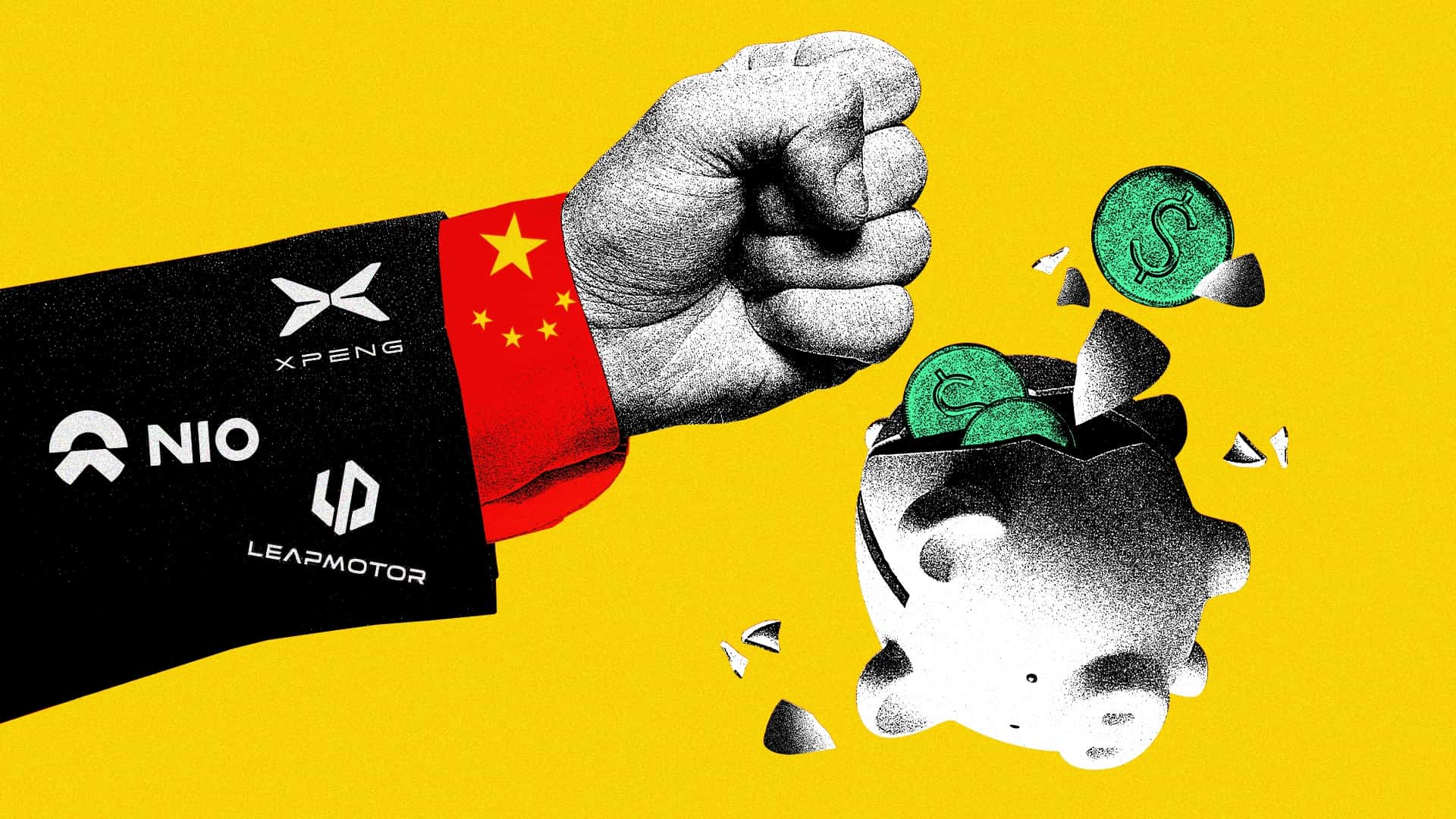
China’s EV Companies Aren’t Just Making Great Cars. They’re Making Money
Chinese electric vehicle (EV) manufacturers – Leapmotor, Nio, and Xpeng – have posted their first annual or quarterly profits, signaling a dramatic shift in the global automotive landscape. This profitability, driven by robust domestic demand and increasingly competitive pricing, contrasts sharply with ongoing losses reported by Western automakers, forcing a re-evaluation of EV market dynamics and supply chain strategies. The implications extend to specialized supply chain risk assessment firms as companies seek to navigate this evolving environment.
The Profitability Paradox: A Turning Tide in the EV Market
For years, the narrative surrounding EVs centered on substantial investment and consistent losses. Western giants poured billions into research, development, and manufacturing, often operating at a deficit while striving for scale. Meanwhile, Chinese EV companies, bolstered by government support and a rapidly expanding domestic market, have quietly been refining their operations. The recent profit announcements – Leapmotor’s $78 million full-year profit (reversing a $410 million loss), Nio’s $104 million Q4 adjusted net profit (compared to a $900 million loss), and Xpeng’s $55 million Q4 net profit (versus a $190 million loss) – represent a watershed moment. These figures, detailed in their respective investor relations releases (Leapmotor, Nio, Xpeng), demonstrate a clear trajectory towards sustainable profitability.
Vertical Integration and Cost Control: The Chinese Advantage
The success of these Chinese automakers isn’t solely attributable to government subsidies – though those have played a significant role, totaling an estimated $230 billion from 2009 to 2023, according to the Center for Strategic and International Studies. A key differentiator is their aggressive pursuit of vertical integration. BYD, for example, manufactures approximately 75% of its EV components in-house, including batteries, motors, and software (EV Magazine). This control over the supply chain allows for significant cost reductions and greater resilience against external shocks. This level of integration is forcing Western automakers to reassess their reliance on external suppliers and explore strategic partnerships. The need for robust contract negotiation and risk mitigation is driving demand for specialized corporate legal counsel with expertise in international supply chains.

The Western Struggle: A Tale of Recalibration and Losses
In stark contrast, Tesla remains the only consistently profitable pure-play EV manufacturer in the West, though its profits have recently been impacted by its pivot towards AI and robotics. Major American automakers – General Motors, Ford, and Stellantis – collectively absorbed multi-billion-dollar charges in 2025 as they recalibrated their EV ambitions (InsideEVs). European automakers are facing similar headwinds, but continue to invest in updated models with improved range and charging capabilities. This divergence highlights a fundamental difference in strategic approach and operational efficiency. The financial strain on Western automakers is prompting a wave of restructuring and cost-cutting measures, including workforce reductions and the postponement of ambitious expansion plans.
The BYD Factor: A Dominant Force
BYD’s influence cannot be overstated. The company received at least $3.7 billion in direct government subsidies, as reported by Bloomberg in 2024 (Bloomberg). Although, BYD’s success extends beyond financial support. Its ability to rapidly scale production, innovate in battery technology, and offer competitive pricing has positioned it as a global leader. Interestingly, BYD recently experienced a 41% sales decline in February, a temporary setback attributed to intensifying competition and seasonal factors (CNEVPost), which has ironically created opportunities for its competitors.
“The Chinese EV market is incredibly dynamic. Companies that can adapt quickly and innovate continuously will thrive. Those that are slow to respond will be left behind.” – Dr. Li Wei, Senior Automotive Analyst, Global Investment Partners.
Multi-Brand Strategies and Ecosystem Integration
Nio’s adoption of a multi-brand strategy – encompassing its premium Nio line, the mass-market Onvo, and the budget-friendly Firefly – demonstrates a sophisticated understanding of market segmentation. Nio’s battery-swapping network, now exceeding 3,750 stations across China, offers a compelling alternative to traditional charging infrastructure, addressing range anxiety and reducing upfront costs. Xiaomi’s entry into the EV market, leveraging its existing consumer electronics ecosystem, is another noteworthy development. The company sold over 380,000 units within two years of launching the SU7, achieving a quarterly profit in the process (CarNewsChina). This success underscores the power of integrating EVs into a broader connected device platform.
The Global Expansion and the US Market
Chinese EV manufacturers are now aggressively expanding into global markets, with Leapmotor utilizing Stellantis’s dealer network in Europe and exporting to over 40 countries. The US market, however, remains a challenge, with Chinese EVs facing potential tariffs and political headwinds. Nevertheless, the increasing competitiveness of Chinese EVs is forcing Western automakers to accelerate their own EV development and reduce costs. The shifting dynamics are creating a need for sophisticated market entry strategies and regulatory compliance expertise, benefiting specialized international trade consulting firms.
The rise of profitable Chinese EV companies is not merely a regional phenomenon; it’s a global inflection point. The industry is undergoing a fundamental transformation, driven by technological innovation, cost competition, and strategic government support. For businesses navigating this evolving landscape, access to expert analysis, strategic guidance, and robust B2B partnerships is paramount. Explore the World Today News Directory to connect with vetted providers who can help you capitalize on the opportunities and mitigate the risks in the rapidly changing world of electric vehicles.