
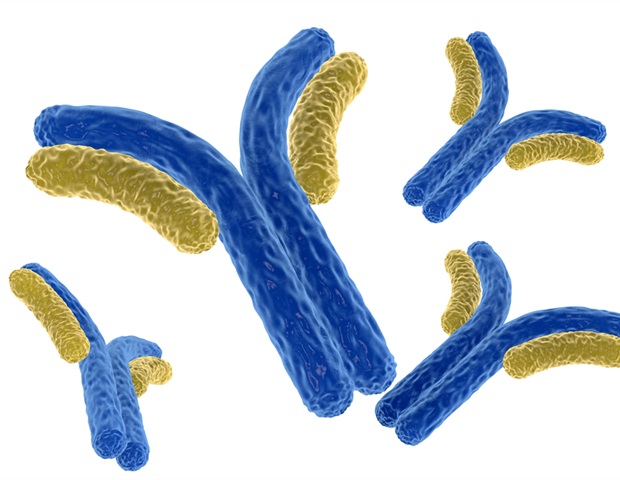
A new study from researchers at the Ragon Institute of MGH, MIT and Harvard, in collaboration with scientists at Scripps Research Institute, has revealed a previously unknown regulatory mechanism governing the selection of immune cells during an immune response. Published in the journal Immunity, the findings challenge long-held assumptions about how the immune system develops effective antibodies.
For decades, scientists believed that the process of antibody development within structures called germinal centers was purely competitive. B cells, the immune cells responsible for producing antibodies, undergo mutation and selection, with those producing the antibodies that bind most strongly to a threat – be it a pathogen or a vaccine – ultimately prevailing. The new research demonstrates that this process is not solely about strength of binding, but too involves a feedback mechanism that actively regulates which B cells are allowed to mature.
The research team, led by Facundo Batista, Phillip and Sussan Ragon Professor of Biology at MIT and Associate Director and Scientific Director of the Ragon Institute, used mouse models to observe B cell behavior within germinal centers. They discovered that B cells with the highest binding affinity to a target actually spent less time in the germinal center compared to those with weaker binding. Stronger-binding cells were found to suppress the development of weaker-binding cells targeting the same site.
“When we started examining this response, it became clear that the effect was highly localized, anatomically,” explained Yu Yan, a research scientist in the Batista Lab and first author of the study. “We were able to identify cells in and around the germinal centers producing antibodies creating a hyperlocal feedback loop.”
According to Batista, the germinal center’s own antibody production acts as a “brake” on further selection, limiting the development of already effective antibodies. “Antibody binding only needs to be so high for protection. Eventually, you will get diminishing returns,” he said. “Braking the further development of already effective binders redirects the germinal centers to other targets. Antibodies themselves are thus driving antibody diversity and a broader response.”
The Ragon Institute, where Batista’s lab is based, focuses on developing the next generation of vaccines and therapeutics for diseases including HIV, malaria, influenza, and SARS-CoV-2, with a particular emphasis on understanding B cell function. The institute is a collaborative effort between Massachusetts General Hospital, MIT, and Harvard.
These findings have significant implications for vaccine design. Current strategies often aim to maximize antibody strength, but this research suggests that fostering a broader, more diverse antibody response may be equally, if not more, important. The study suggests that controlling the feedback loop within germinal centers could be a key to generating vaccines that offer protection against a wider range of viral variants or future pathogens.
