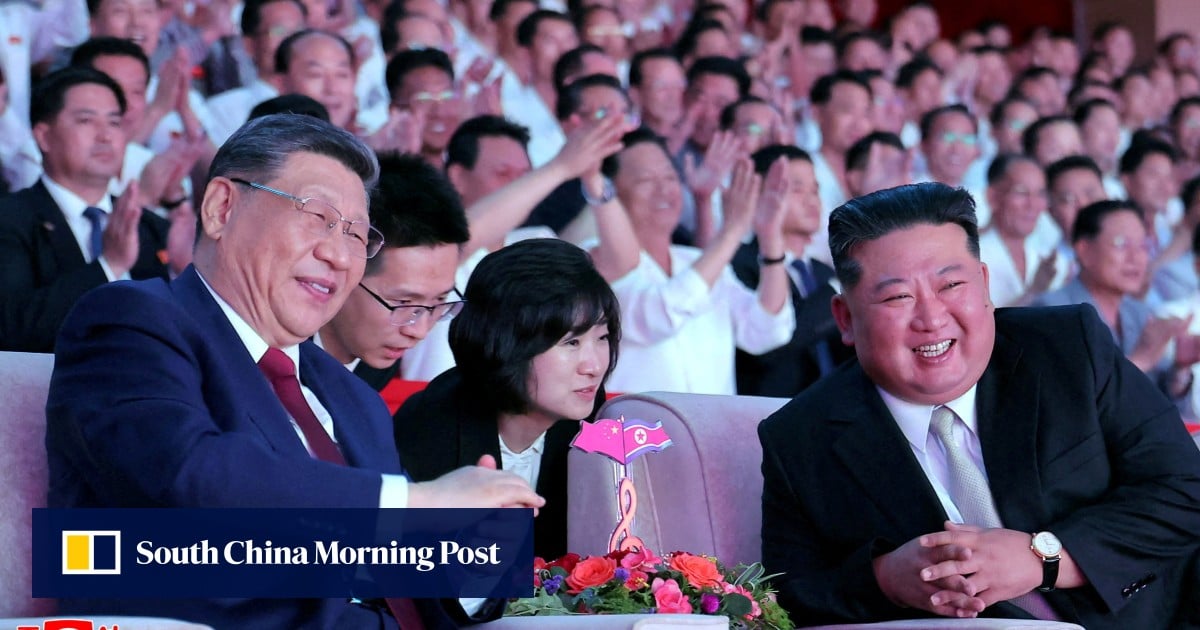
Xi Jinping and Kim Jong-un Summit: Analyzing China-North Korea Relations and Geopolitical Impact
Following high-level diplomatic meetings in Pyongyang, North Korean leader Kim Jong-un has solidified his regional leverage by framing the nation’s nuclear program as an irreversible reality. While Chinese President Xi Jinping sought to temper North Korean military posturing, the summit concluded with Pyongyang successfully rebuffing external denuclearization demands.
The Irreversibility of the Nuclear Stance
North Korea has officially declared that the era of negotiating its nuclear status is over. According to recent reports from The Straits Times, Pyongyang’s state media characterized the issue of “denuclearization” as a matter that has been terminated. This shift marks a departure from previous diplomatic cycles where “phased disarmament” remained a theoretical—if stalled—concession.

For international observers, the implications are stark. The removal of denuclearization from the table forces a recalibration of regional security architecture. As businesses and multinational organizations assess long-term stability in East Asia, many are turning to specialized political risk consultancies to evaluate how this hardening of policy affects regional supply chains and asset security.
Xi Jinping’s Diplomatic Tightrope
President Xi Jinping arrived in Pyongyang with the dual objective of maintaining regional stability and signaling to the United States that China remains a primary interlocutor. However, analysis from the Lowy Institute suggests that Xi drew a firm line regarding North Korea’s demands for a formal military alliance.

While Beijing remains Pyongyang’s economic lifeline, Xi appeared unwilling to grant the security guarantees Kim Jong-un sought. This indicates that while China values North Korea as a buffer state, it is increasingly wary of being dragged into a direct conflict by Pyongyang’s provocations. The resulting dynamic is a “cold peace” where both sides maintain the facade of unity while pursuing divergent national interests.
“The summit was less about a new era of friendship and more about the management of mutual frustration. Xi needs to keep the peninsula quiet to focus on domestic economic recovery, but Kim has realized that his nuclear deterrent is the only card he needs to keep the world off balance.” — Dr. Aris Thorne, Senior Fellow for Northeast Asian Security.
Strategic Implications for Global Markets
The hardening of North Korea’s stance creates immediate logistical and financial challenges. As regional tensions fluctuate, companies operating in South Korea, Japan, and the surrounding maritime corridors face heightened uncertainty. This environment necessitates robust contingency planning. Many firms are now engaging top-tier international commercial law firms to navigate potential sanctions, export controls, and the legal complexities of operating in a heightened geopolitical theater.
Furthermore, local infrastructure projects in the region are subject to increased scrutiny. For stakeholders involved in cross-border trade, the volatility of the peninsula is no longer a peripheral concern; it is a core operational risk. Engaging with vetted logistics and supply chain security firms has become a priority for businesses seeking to mitigate the impact of sudden policy shifts or regional lockdowns.
A Message to Washington and Moscow
The diplomatic maneuvering in Pyongyang was also a message directed at Washington and Moscow. According to reporting from The Star, the summit served as a demonstration of China’s continued relevance in the Pacific. By hosting Kim, Beijing reminded the U.S. that any long-term resolution to the Korean crisis must involve Chinese participation.

Simultaneously, the summit acted as a signal to the Kremlin. As Russia-North Korea relations have warmed, China is keen to ensure it does not lose its traditional sphere of influence. This triangle of interests—Washington’s containment strategy, Moscow’s search for unconventional allies, and Beijing’s desire for regional hegemony—has turned the Korean Peninsula into the most complex geopolitical chessboard of 2026.
The Path Forward
The reality as of June 2026 is that the window for meaningful denuclearization has effectively closed under the current administration. Kim Jong-un has successfully transitioned his regime from a state seeking recognition to a state that demands it as a nuclear-armed power.
For those monitoring these developments, the future remains unpredictable. The intersection of hard power, shifting alliances, and economic sanctions suggests a prolonged period of volatility. As the regional situation evolves, stakeholders would be well-served to maintain a proactive stance, ensuring that their legal, financial, and security frameworks are sufficiently resilient to withstand the pressures of a changing global order. Accessing the right information and professional guidance is no longer a luxury; it is the fundamental requirement for navigating the next phase of this enduring, high-stakes standoff.