Taiwan Charges Nvidia and Super Micro Staff for Illegal AI Server Exports to China
On August 24, 2026, Taiwanese prosecutors charged nine individuals—including personnel from Nvidia and Super Micro—for orchestrating the illegal export of high-end artificial intelligence servers equipped with banned graphics processing units to mainland China, according to the Keelung District Prosecutors’ Office. The case highlights persistent vulnerabilities in global tech supply chains as Washington and Beijing compete for dominance in advanced computing infrastructure.
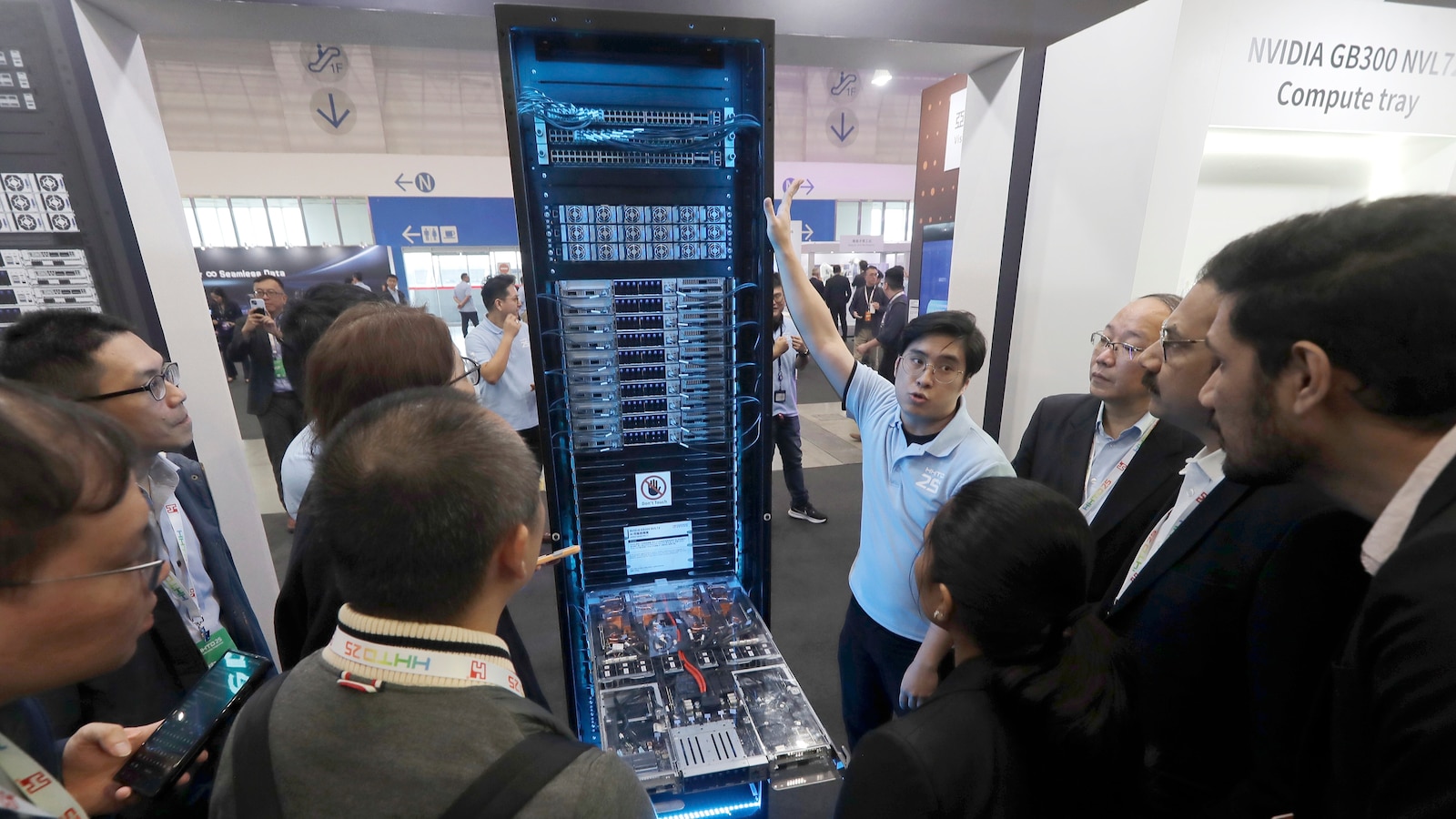
The indictment provides a granular account of how restricted U.S. artificial intelligence hardware moves through regional distribution networks to reach Chinese end-users. According to the Keelung District Prosecutors’ Office, the illicit operations centered around high-end servers housing Nvidia B300 graphics processing units, which are strictly banned from sale to China under export controls implemented by the United States.
Under these stringent regulatory frameworks, any sale of advanced AI servers requires rigorous verification. Buyers must maintain a spot on Nvidia’s approved whitelist, submit detailed end-user and end-use documentation, and agree to absolute no-resale conditions. Furthermore, any purchase order exceeding eight high-end AI servers triggers mandatory on-site inspections conducted by company staff and technicians to ensure compliance.
Deception and Rerouting Tactics in the Distribution Chain
Prosecutors outline a multi-stage diversion scheme that began in February 2025. In the primary transaction, two individuals surnamed Chen at server sales company Flying Tiger Technology allegedly secured a whitelist position and lined up an initial buyer. Court documents show that the defendants concealed the fact that the designated data center provider, Chief Telecom, lacked the necessary electrical capacity and bandwidth to house 130 servers. Chang, an Nvidia distribution manager in Taiwan, allegedly assured Nvidia that the required verifications were complete, unlocking the sale.

As the hardware moved, logistical evasion tactics multiplied. Out of 74 servers that successfully reached mainland China, prosecutors state that 50 were routed through Indonesia, 16 were delivered directly, and eight were shipped first to Japan and then to Hong Kong. In a separate attempt involving 56 additional servers, the shipment failed and the hardware was seized while still in Taiwan. Some defendants even established a company in Japan and created fake websites with falsified information to bypass scrutiny.
The financial scale of the operation was substantial. The Flying Tiger executive who remains at large received more than $21.2 million in illicit proceeds from the completed resales. Meanwhile, the head of Quintai Electronics allegedly issued four false invoices to conceal money flows, diverting approximately NT$39.16 million in assets belonging to Albatron Technology, whose chief executive, Lu, was also implicated in the ring.
Corporate Responses and Parallel Investigations
Nvidia spokesperson Patrick Rutherford stated in a written document, “We will work with the Taiwan authorities to help them resolve the allegations as quickly as possible.” Similarly, Super Micro noted in a written statement that the arrests of its two former employees stemmed from the company’s active cooperation with local authorities, emphasizing its ongoing commitment to enhance export compliance programs and protect American innovation.
This Taiwanese prosecution runs parallel to significant enforcement actions in the United States. On March 19, 2026, the U.S. Department of Justice unsealed an indictment charging Super Micro co-founder and board member Yih-Shyan “Wally” Liaw and two others in a $2.5 billion diversion scheme. That federal case revealed remarkably similar concealment methods, including the use of non-working dummy servers staged for compliance audits where serial number stickers and labels were transferred using ordinary household hair dryers.
As prosecutors seek maximum five-year prison sentences for key defendants like the Nvidia manager identified as Chang—whom investigators labeled a key figure who demonstrated a poor attitude following the offense—the global spotlight remains fixed on the porous boundaries of tech export controls.