
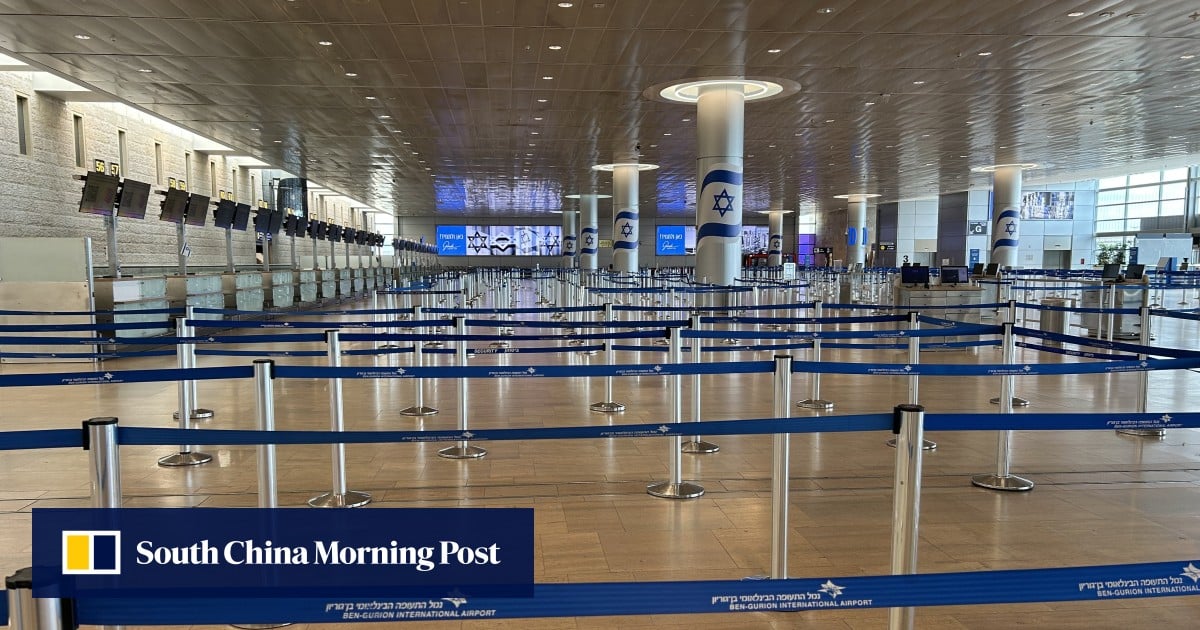
Flights across the Middle East were being cancelled Saturday as multiple nations closed their airspace following strikes by the United States and Israel against targets in Iran. Iran responded with retaliatory missile strikes, impacting cities across the Gulf region, according to reports.
Iran’s Civil Aviation Organisation announced the closure of its entire airspace “until further notice,” as reported by the Tasnim news agency. Israel followed suit, closing its airspace to all civilian flights, according to Transport Minister Miri Regev. Qatar’s civil aviation authority too temporarily suspended flights, shuttering its airspace.
The disruptions extended beyond those directly involved in the conflict. Carriers including Air France, Air India, Turkish Airlines, Norwegian, Air Algérie and Lufthansa announced widespread cancellations. Explosions were reported in Bahrain, the United Arab Emirates, and Qatar, including a suspension of all flights to and from Dubai International Airport.
The strikes by the U.S. And Israel targeted what Israeli sources described as Iran’s supreme leader, president, and head of the armed forces, though confirmation of casualties remains unverified. U.S. Officials indicated plans for several days of continued attacks, according to CNN sources. President Donald Trump described the military campaign as “massive and ongoing,” and called for regime change in Tehran, urging Iranians to “take over your government.”
Iran’s retaliatory strikes targeted both Israel and U.S. Targets across the Middle East. Iranian Foreign Minister Abbas Araghchi, speaking from Tehran, stated that Iran’s Supreme Leader, Ayatollah Seyyed Ali Khamenei, was “alive as far as I know,” and claimed that most Iranian officials were unharmed. Araghchi asserted that Iran’s strikes were aimed at U.S. Bases as an act of self-defense and that Tehran had no intention of attacking Persian Gulf nations.
The United Arab Emirates characterized the conflict as an “historic moment” in the Middle East, criticizing world leaders for failing to ensure regional stability. While some U.S. Allies expressed concern, others condemned Iran’s retaliation. The European Union’s President of the European Commission, Ursula von der Leyen, called the developments “greatly concerning,” and emphasized the importance of EU sanctions against Iran’s regime and Revolutionary Guards. EU High Representative for Foreign Affairs and Security Policy, Kaja Kallas, stated the EU was coordinating with Arab partners to explore diplomatic paths, and that a European naval mission in the Red Sea was on high alert.
Russia condemned the U.S. And Israeli strikes, stating they were pushing the region toward a “humanitarian, economic, and potentially even radiological disaster.”
As of Saturday evening, Iranian state media reported continued strikes and counter-strikes, with no indication of de-escalation. The status of ongoing diplomatic efforts remains unclear.
