
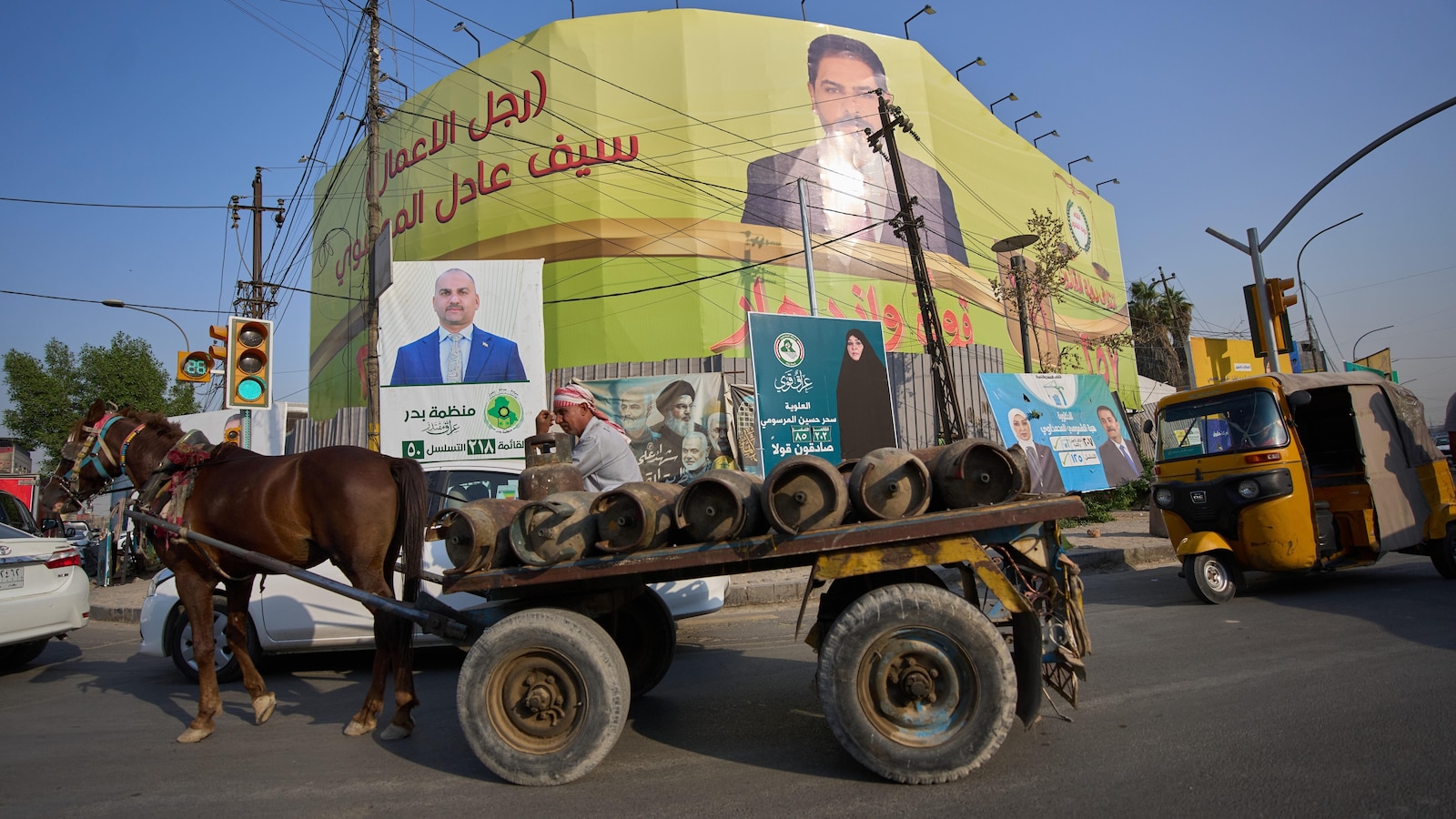
BAGHDAD – Iraqis are heading to the polls Saturday in a parliamentary election that will test the fragile stability achieved under Prime Minister Mohammed Shia al-Sudani and shape the country’s future trajectory amid ongoing regional tensions and internal divisions.The election comes as al-Sudani seeks a second term, navigating a complex political landscape and balancing relationships with both Iran and the United states.
The vote is taking place against a backdrop of widespread public discontent over corruption and economic hardship. Allegations of vote-buying have surfaced, leading election officials to disqualify 848 candidates-sometimes for reasons cited as allegedly insulting religious rituals or members of the armed forces.
While overall violence has decreased since the tumultuous years following the 2003 invasion, security remains a concern. Safaa al-Mashhadani, a Sunni candidate and Baghdad Provincial Council member, was assassinated by a car bomb on Oct. 15 in the al-tarmiya district north of the capital; five suspects have been arrested. Past elections have been marred by political violence, including assassinations and attacks on polling stations.
Groups that emerged from the anti-government protests of October 2019 are participating, but are hampered by internal divisions, lack of funding, and limited political support.
Al-Sudani, who came to power in 2022 with the support of pro-Iran parties, has attempted to position himself as a pragmatist focused on improving public services.however, he faces challenges from within the Shiite coordination Framework bloc that initially brought him to power, specifically over control of state institutions. Simultaneously, the U.S. is increasing pressure on him to rein in Iraq’s powerful militias.
A key point of contention is the Popular Mobilization Forces (PMF), a coalition of militias formed to combat the Islamic State group.Tho formally integrated into the Iraqi military in 2016, the PMF continues to operate with significant autonomy. Members of the PMF will vote alongside other security forces on Saturday.
Historically, Iraq’s election results have not always translated directly into the selection of the prime minister.Since 2003, only one Iraqi prime minister, Nouri al-Maliki, has served more than one term. The outcome of this election will be a crucial indicator of Iraq’s political direction,but the path to forming a government remains uncertain.
