House Committee: US Approved 879,000 AI Chips to China, Including Firms on Military List
The Commerce Department approved exports of 879,000 advanced Nvidia and AMD AI chips to Chinese buyers from December 2025 through May 2026, the House Foreign Affairs Committee said on Thursday — out of over 3.4 million chips companies had asked to ship.
The approvals, disclosed by committee Chair Brian Mast, included licenses for four companies the Pentagon lists as alleged Chinese military-backed firms: Tencent, Alibaba, Baidu and BYD. The chips covered were Nvidia’s H200 and AMD’s MI325X, the semiconductor accelerators at the center of the US-China AI rivalry.
The release of the data – described by Mast as “the most detailed public disclosure in the history of the Export Control Reform Act” – lands as the Trump administration absorbs revelations about former Nvidia CEO Jensen Huang’s affair with an alleged Chinese spy, which fueled renewed calls in Washington for a harder line on Chinese technology threats.
Of the over 3.4 million chips sought, the committee’s documents show the administration approved just under 26 percent. All four named Chinese recipients are on the Pentagon’s list of alleged Chinese military-backed companies, the committee noted.

Which Chinese companies got how many chips
| Buyer | Chips approved |
|---|---|
| Tencent | 150,000 |
| Alibaba | 75,000 |
| Baidu | 43,000 |
| BYD | 4,000 |
| Total approved (all buyers) | 879,000 |
| Total requested by companies | Over 3.4 million |
The figures come from documents the committee released on Thursday. It was not immediately clear from the disclosures how many of the approved licenses resulted in actual China-bound shipments.
Mast uses Export Control Reform Act powers to publish
Mast, a Florida Republican, “exercised his authorities under the Export Control Reform Act” to release license application information on Nvidia and AMD’s China AI chip approvals, the committee said in a statement. The 2018 law expanded the Commerce Department’s authority to restrict exports of sensitive technologies on national security grounds.
“This is the most detailed public disclosure in the history of the Export Control Reform Act,” said Mast.
The Commerce Department said its approach to H200 licensing “is based on a rule published in the Federal Register in January 2026,” which imposes significant national security-related requirements on applicants to qualify for case-by-case consideration rather than a presumption of denial.
Over 30 percent of approved chips went to Pentagon-listed firms
Chris McGuire, a former US official and specialist in the US-China technology standoff, said the concentration of licenses among military-listed companies undermines confidence in the licensing process.
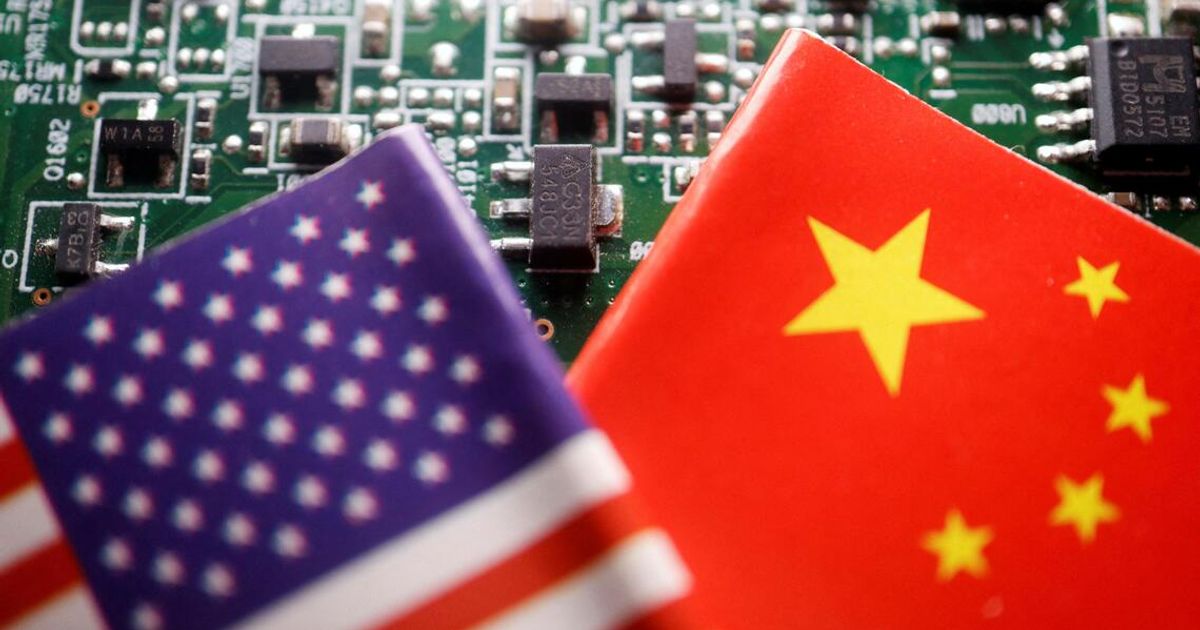
“The fact that over 30% of the AI chips sent to China were shipped to companies that the Department of War has designated as Chinese military companies is astonishing, and calls into question whether Commerce conducted any serious national security review before approving these licenses,” said McGuire.
The affair involving Huang has also drawn attention to shipments of Nvidia chips smuggled into China that went without punishment, dialing up pressure on the administration to crack down on Chinese tech threats.
Trump’s December reversal of Biden-era curbs
Worried that the coveted chips could bolster China’s armed forces and weaken America’s edge in artificial intelligence, former US President Joe Biden had barred or limited Chinese buyers’ access to them. In December, Trump cleared Nvidia to send its H200 chip to China, undoing the Biden-era curbs and provoking sharp backlash from China hawks spanning the US political spectrum.
Skeptics questioned whether the chips were actually arriving. According to a May Reuters report, roughly 10 companies had received US clearance to purchase the H200, yet none of the chips had actually been delivered.
In July, Commerce official Jeffrey Kessler testified before the committee that shipments had begun but had been “very few.” Reuters later reported, citing people familiar with the matter, that several major Chinese internet companies had each obtained about 10,000 H200 chips.

In a statement, Nvidia said the approvals came “subject to strict conditions and limited volumes,” adding: “Despite receiving some licenses, we have since stopped shipping H200s to China.”
AMD said it “complies with applicable US export control laws and regulations and maintains rigorous processes to ensure compliance across our global operations.” Requests for comment went unanswered by Alibaba, Tencent, Baidu, BYD, the Commerce Department and the Chinese Embassy in Washington.
Chip stocks slide on the disclosure
Markets reacted within the day. Nvidia’s stock ended down 3.3 percent, AMD slumped 7.7 percent, and the broader Nasdaq and S&P 500 fell 2.2 percent and 1.8 percent, respectively.
What the licensing fight means for exporters
The disclosure hands companies on both sides of the Pacific – and their counsel – a public yardstick for how the administration balances AI sales with security vetting. The facts of this disclosure remain confined to the committee’s own documents.