
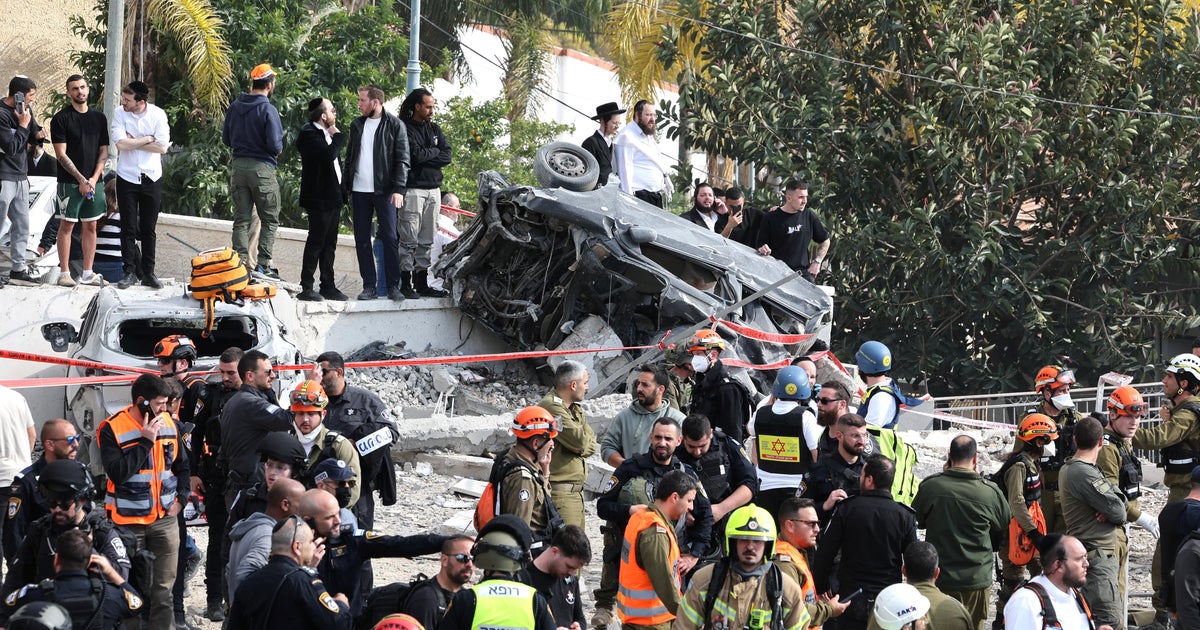
Iran’s president announced Sunday the establishment of an interim leadership council following the killing of Supreme Leader Ayatollah Ali Khamenei in a U.S.-Israeli attack, as retaliatory strikes by Iran targeted multiple countries across the Middle East.
President Masoud Pezeshkian, one of three individuals appointed to the council, stated in a televised address that the body had begun its work. “We will continue with all our strength along the path set by Imam Khomeini,” he said, referring to the founder of the Islamic Republic. Pezeshkian also issued a threat, stating that Iran’s military would “forcefully crush the enemy’s bases” in the region.
The announcement came as Iran launched a wave of missile and drone attacks, targeting countries hosting U.S. Forces and Israel itself. The United Arab Emirates’ Ministry of Defense reported three deaths – a Pakistani, a Nepali, and a Bangladeshi national – resulting from the attacks, after intercepting 167 missiles and 541 drones. Ali Larijani, Secretary of Iran’s Supreme National Security Council, warned that any countries allowing the use of their territory for attacks against Iran would themselves become targets, stating that such bases were “not part of the land of those countries. rather, they are American soil.”
In Israel, the death toll from an Iranian missile strike on the city of Beit Shemesh, west of Jerusalem, rose to eight on Sunday, according to Israel’s Magen David Adom emergency medical service. Twenty-three people were hospitalized with injuries, including two in serious condition. Earlier, Israeli emergency services confirmed that a barrage of missiles had hit residential buildings in the city.
The U.S. Embassy in Jerusalem issued an alert urging Americans in Israel to shelter in place, warning it was unable to provide evacuation assistance. All U.S. Government employees and their families were ordered to remain sheltered, and the embassy announced its closure on Monday, March 2, 2026, suspending all consular services, including passport processing. Ben Gurion Airport remained closed to all traffic.
Oman reported attacks on a port and an oil tanker off its coast, marking the first suspected Iranian strikes on the sultanate, which had previously mediated talks between the U.S. And Iran. Blasts were also reported in Dubai, Doha, and Riyadh.
Amidst the escalating conflict, China strongly condemned the U.S. And Israeli killing of Khamenei, calling for an immediate halt to military operations. Russia echoed this sentiment, with President Vladimir Putin calling the killing a “cynical violation” of morality and international law. Russian diplomat Sergey Lavrov initiated a phone call with his Chinese counterpart, Wang Yi, to discuss the situation.
North Korea also condemned the U.S.-Israeli action, labeling it an “illegal act of aggression” and accusing Washington of exhibiting “gangster-like nature.”
Iran’s top religious authority, Grand Ayatollah Naser Makarem Shirazi, issued a “fatwa” calling for Muslims to wage “jihad against America and Israel” in response to Khamenei’s death.
The International Atomic Energy Agency (IAEA) is scheduled to hold a special meeting Monday at the request of Russia to discuss the situation in Iran.
President Trump, in a post on his Truth Social platform, warned Iran against further attacks, threatening a response “with a force that has never been seen before.”
Satellite images revealed significant damage to the compound of Supreme Leader Khamenei in Tehran. Israeli Prime Minister Benjamin Netanyahu stated that the compound had been struck and indicated growing signs that Khamenei had been killed.
Hezbollah, the Lebanese militant group, vowed to “confront aggression” by the U.S. And Israel. Protests erupted in several countries, including Iraq and Pakistan, with clashes in Karachi, Pakistan, resulting in at least nine deaths and over 50 injuries as demonstrators attempted to storm the U.S. Consulate.
