
The Battle of Cheongcheon: A Turning Point in the Korean War
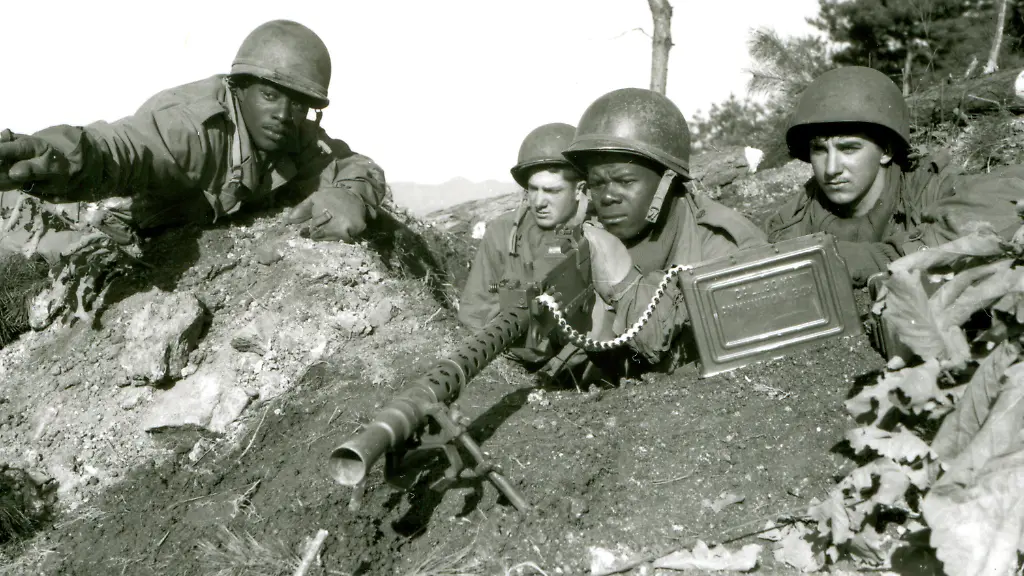
Following fierce fighting, relations between US President Harry Truman and General Douglas MacArthur deteriorated as the Korean War progressed. (Foto: picture alliance / ASSOCIATED PRESS)
The battle of Cheongcheon marked a notable shift in the Korean War, representing the first military success for China against the united States. The majority of the approximately 230,000 Chinese soldiers engaged in the battle were poorly equipped, with only half carrying rifles, and many suffered from malnutrition. however, they compensated for their lack of modern weaponry with their sheer numbers and extensive experience in mountain warfare. Utilizing the cover of darkness, Mao’s forces launched relentless attacks on exposed positions from multiple directions, continuing wave after wave even after suffering heavy losses until a breakthrough was achieved.
The tenacity of the Chinese troops deeply impacted the defending forces. as one US officer later recalled, ”We were in a constant firefight. We mowed down the Chinese and they still continued to attack. I’m not sure if it’s fear, coercion or confusion that drives them. Maybe a little of everything.”
MacArthur’s Reputation Suffers a Blow
While four Chinese armies directly engaged MacArthur’s forces, two additional armies maneuvered to encircle his right flank, defended by South Korean and Turkish soldiers. The challenging, rugged terrain prevented the 8th Army from effectively utilizing its superior equipment. Together, temperatures plummeted to minus 30 degrees Celsius, and adequate winter clothing was scarce.
It wasn’t until November 28th that MacArthur, stationed at his headquarters in Tokyo, fully grasped the gravity of the situation and ordered a retreat. The withdrawal proved arduous,with Chinese shock troops repeatedly attempting to cut off the UN soldiers’ escape route. The front lines didn’t stabilize until January 1951, near the 38th parallel – the same latitude where the war had initially begun.
The battle proved a bitter defeat for MacArthur. Rather of a triumphant advance, his troops were forced into a chaotic retreat exceeding 100 kilometers, ultimately returning to South Korea. The 8th Army sustained 11,000 casualties – dead, wounded, and missing. Chinese losses were estimated at 45,000.
According to historian heyn, “MacArthur’s misjudgments and arrogance contributed substantially to the defeat at Cheongcheon.” This setback severely damaged MacArthur’s reputation and exacerbated tensions with President Truman, ultimately leading to the general’s dismissal. The public began to realize the korean War would not be a swift victory,but a protracted and costly conflict.
For the following two years, a brutal stalemate characterized by trench warfare raged around the 38th parallel. A ceasefire agreement was finally signed on July 27, 1953, and remains in effect today.Notably, North and South Korea remain technically at war.
Source: ntv.de
