
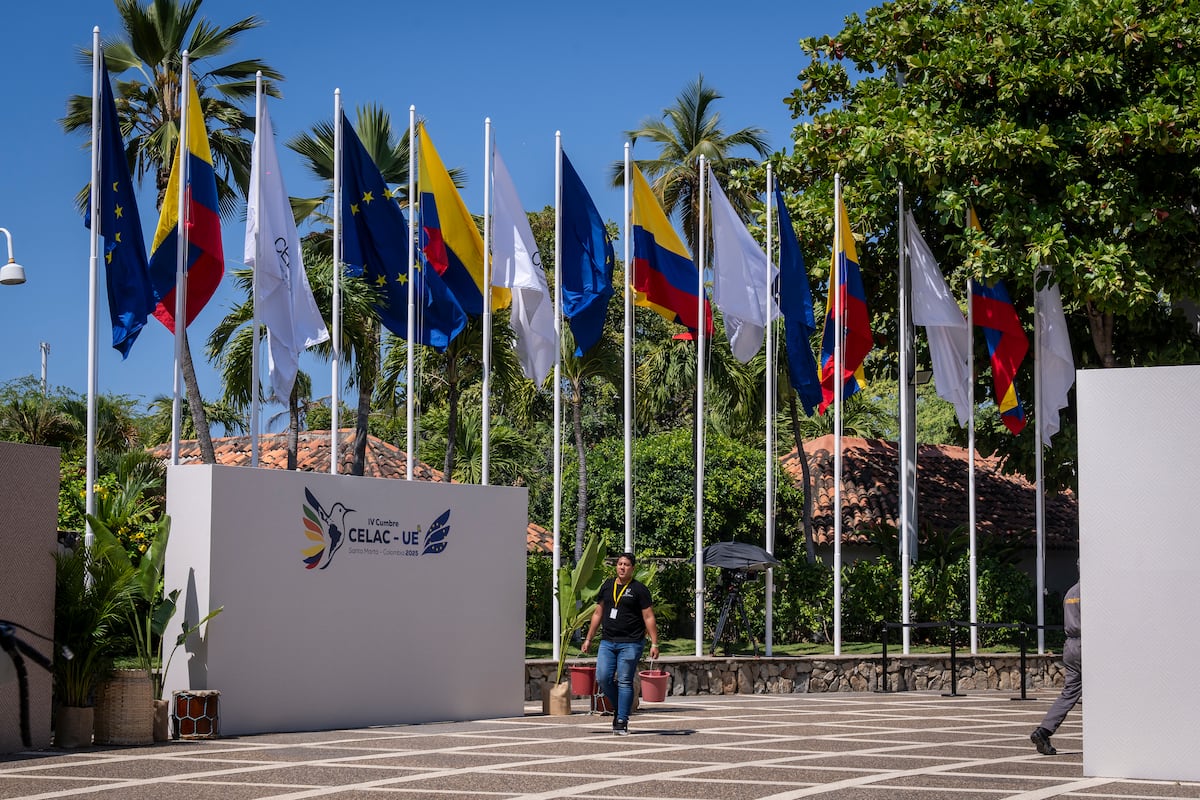
EU-CELAC Summit Opens in Colombia Amidst Shifting Geopolitical Landscape & Trump’s Shadow
Santa Marta, Colombia – November 7, 2025 – Leaders from the European Union and the Community of Latin American and Caribbean States (CELAC) convened today in Santa Marta, Colombia, for a bi-regional summit marked by a complex backdrop of evolving global alliances and the looming presence of a re-elected Donald Trump. Colombian President Gustavo Petro is hosting the event, a role assumed as Colombia holds the CELAC presidency for 2025, following the previous summit in Brussels in 2023.
The summit agenda focuses on key areas of mutual concern, including the defense of multilateralism, trade and investment – particularly relevant given the ongoing tariff wars initiated by the Trump administration - as well as ecological and digital transitions. Joint efforts to combat organized crime, corruption, drug trafficking, and human trafficking are also slated for discussion.
Brazilian President luiz Inácio Lula da Silva has emphasized the urgency of addressing the escalating drug boat crisis, stating that the meeting “only makes sense if we discuss this issue of American warships in the seas of Latin America,” as he articulated during a press conference at the COP30 climate conference in Belém.
The summit unfolds at a pivotal moment for Colombia’s foreign policy. Historically a staunch ally of the United States and a major recipient of it’s military aid, particularly in the context of the “war on drugs,” President Petro has demonstrably distanced his government from the Trump administration. The relationship has deteriorated to the point where Trump has publicly labeled Petro a “thug” who “produces a lot of drugs,” and his government has revoked Petro’s visa and added him to the Clinton List – a catalog of individuals sanctioned by the U.S.Treasury.
However, this shift isn’t solely reactive to Trump. Even prior to his initial presidency, Petro has actively broadened Colombia’s diplomatic reach, establishing new embassies in African nations, strengthening south-south cooperation, and undertaking tours of Arab countries. Colombia’s decision in May to join the investment program of China’s New Silk road further exemplifies this diversification.
The choice of Santa Marta as the summit location is symbolic. The city is commemorating 500 years as its founding by Spanish colonizers and is being promoted as a meeting point of Indo-American, Afro-Iberian, and Iberian cultures. It also holds historical significance as the site of Simón Bolívar’s death in 1830. While offering a unique cultural backdrop, Santa Marta’s limited transport connections present logistical challenges as it hosts not only the heads of state and foreign ministers but also a series of parallel events focused on cultural, economic, and social issues.
The summit’s success will likely hinge on navigating the delicate balance between fostering regional cooperation and addressing the uncertainties introduced by a potentially more isolationist and confrontational U.S. foreign policy under a second Trump term.
