
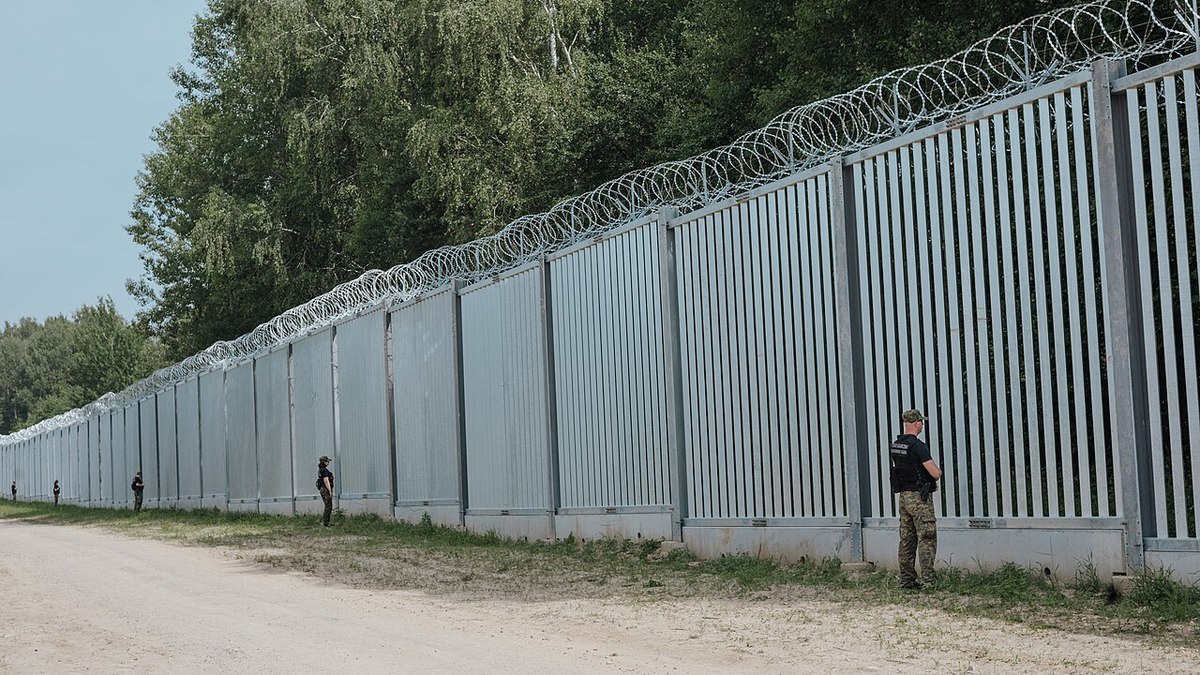
Poland Closes Border with Belarus, Disrupting key China-EU Trade Route
Warsaw, Poland - Poland has indefinitely closed its border with Belarus, significantly impacting a vital trade corridor between China and the European Union. The move halts a railway route handling an estimated €25 billion (approximately $27 billion USD) in goods annually.
The closure affects roughly 90% of cargo traveling along the “New Silk Route,” a key component of China’s Belt and Road Initiative. Polish authorities cite security concerns as the primary reason for the decision, pointing to recent joint military exercises between Russia and Belarus, and also repeated incursions of Russian drones into Polish and Romanian airspace. Poland has stated the border will remain closed until threats from the Belarusian regime subside and Polish citizens detained in Minsk are released.
The disruption will impact businesses reliant on the speed of rail transport, including e-commerce giants like Shein and Temu. Data shows cargo volume on the route increased by 10.6% in 2024, with the total trade value jumping nearly 85% to €25.07 billion – representing 3.7% of all EU-China trade.
Polish companies, including state-owned railway operator PKP Cargo, are bracing for the consequences. While PKP Cargo believes it can manage short-term delays, a prolonged closure will likely force shippers to utilize slower, more expensive routes via Kazakhstan, the Caspian Sea, and Türkiye.
China has expressed strong concern, with Foreign Minister Wang Yi traveling to Warsaw to seek assurances regarding the continuation of the rail link, which Beijing considers strategically crucial.
The Polish government has emphasized that national security takes precedence over commercial interests. Analysts suggest the United States supports the disruption, viewing it as an chance to encourage the EU to lessen its economic dependence on China, especially in the context of the ongoing war in Ukraine.
Escalating Regional Tensions
The border closure comes amid increasing military activity in the region. On Friday, Estonia accused russia of violating its airspace with three MiG-31 fighter jets. NATO confirmed the interception by Italian jets and pledged a proportionate response. Earlier in the week, Poland shot down Russian drones within its territory, and Romania reported a Russian drone entering its airspace on Sunday. these incidents underscore a growing sense of unease and the potential for further escalation.
