
India-Russia Trade Surges, Addressing Imbalance Becomes Key focus
Table of Contents
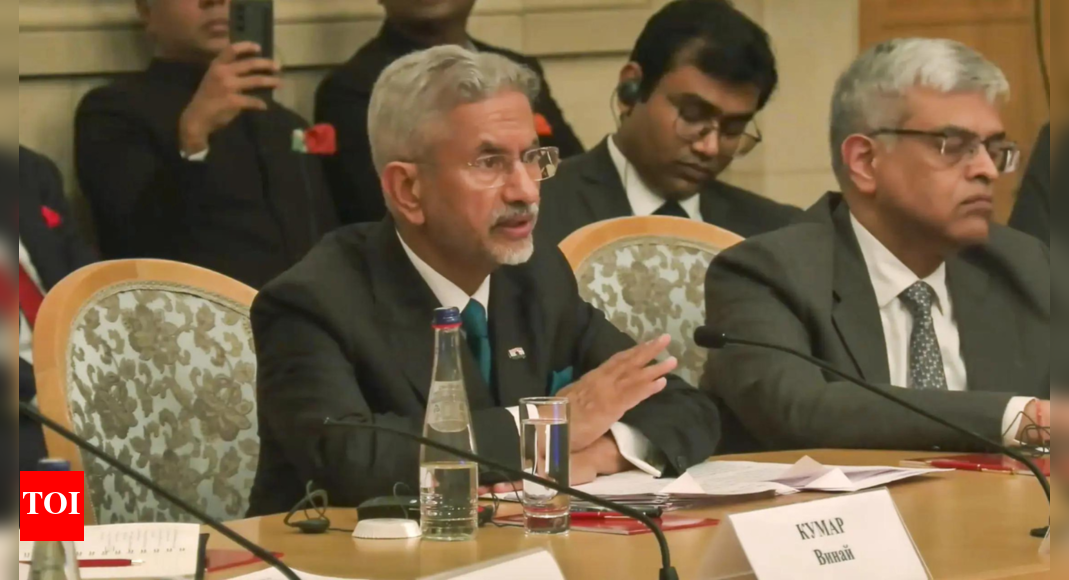
New Delhi – A important expansion of trade relations between India and Russia is underway, with both nations seeking to address a growing trade imbalance. External affairs Minister S.Jaishankar recently concluded a visit to Moscow, where he proposed strategies to diversify trade and rectify the current deficit, which stands at $58.9 billion, largely due to increased Indian oil procurement from Russia.
Growing Economic Partnership
Bilateral trade between India and Russia has experienced considerable growth, reaching $68 billion by the fiscal year 2024-25, a fivefold increase in recent years [[2]].Russia is now a key trading partner for India, ranking fourth after the United States, China, and the United Arab Emirates [[1]]. In terms of imports, Russia holds the second position, trailing only China.
This surge in trade is occurring against a backdrop of evolving global dynamics,with both countries seeking to strengthen economic ties self-reliant of Western sanctions.Russia has emphasized the importance of establishing payment mechanisms using national currencies and fostering independent transportation and logistics networks.
Addressing the Trade Imbalance
Minister Jaishankar highlighted the urgency of addressing the trade imbalance, proposing several actionable measures. These include tackling tariff and non-tariff barriers,streamlining logistics,enhancing connectivity through key corridors like the International North-South Transport Corridor,and finalizing the India-Eurasian Economic Union free Trade Agreement.
“These measures will not only help to address the imbalance and grow our trade, but also hasten the timely achievement of our revised trade target of $100 billion by 2030,” Jaishankar stated during the India-Russia Inter-Governmental Commission for Trade, Economic, Scientific, technological and Cultural Cooperation (IRIGC-TEC) meeting [[2]].
Did You Know?
The International North-South Transport Corridor (INSTC) aims to reduce freight costs and transit times between India and Russia by 20-30% by providing a shorter, more efficient route compared to conventional sea routes.
Key Trade Targets and Initiatives
The focus extends beyond simply increasing trade volume. Both nations are prioritizing the completion of the Program of Economic Cooperation until 2030. Connectivity projects, including the Northern Sea Route and the Chennai-Vladivostok Corridor, are also being actively promoted to facilitate smoother trade flows.
| Year | India-Russia Trade (USD Billion) | % Change |
|---|---|---|
| 2020 | 11.4 | -17.4% |
| 2021 | 13.5 | +18.4% |
| 2022 | 30 | +122.2% |
| 2023 | 60.9 | +103% |
| 2024-25 (Projected) | 68 | +11.7% |
Geopolitical Context and Future Discussions
The discussions between Jaishankar and his Russian counterpart, Sergey lavrov, also encompassed broader regional and global issues, including the ongoing conflict in Ukraine. Lavrov is expected to provide insights into the recent Russia-US summit. The foundation of the relationship, according to the Russian Foreign Ministry, rests on “mutual trust and respect.”
Pro Tip: Diversifying trade beyond oil and defense will be crucial for India to achieve a more balanced and enduring economic partnership with Russia.
Both countries are committed to enhancing cooperation in key sectors such as transport, energy, agriculture, and scientific-technical fields. As india navigates a complex geopolitical landscape, its strategic partnership with Russia remains a vital component of its foreign policy.
What impact will these initiatives have on India’s energy security? and how will the evolving global political climate shape the future of India-russia trade?
The India-Russia relationship has deep historical roots, dating back to the Cold War era. Initially driven by Soviet support for India’s industrialization, the partnership has evolved to encompass defense cooperation, energy security, and now, a growing economic relationship. The current surge in trade is partly a consequence of shifting global supply chains and India’s need to secure alternative energy sources. looking ahead, the success of initiatives like the INSTC and the Eurasian Economic Union FTA will be critical in sustaining this momentum.
Frequently Asked Questions about India-Russia Trade
- What is the current state of India-Russia trade? India-Russia trade has surged to $68 billion in 2024-25, a fivefold increase in recent years.
- what is the main driver of this trade growth? Increased Indian procurement of Russian oil is a significant factor,contributing to a trade imbalance.
- What steps are being taken to address the trade imbalance? measures include diversifying trade, streamlining logistics, and finalizing free trade agreements.
- What is the significance of the INSTC? the International North-south Transport Corridor aims to reduce freight costs and transit times between India and Russia.
- What are the key sectors of cooperation between India and Russia? Key sectors include energy,defense,transport,agriculture,and scientific-technical fields.
We hope this article provided valuable insights into the evolving economic relationship between India and Russia. Please share your thoughts in the comments below, and don’t forget to subscribe to our newsletter for more in-depth analysis of global economic trends.
