
Prenatal Pesticide Exposure Linked to Brain Abnormalities in Children
Table of Contents
- Prenatal Pesticide Exposure Linked to Brain Abnormalities in Children
- What is Chlorpyrifos?
- study Details and Findings
- Widespread Brain Changes Observed
- Inflammation and Oxidative Stress as Potential Mechanisms
- Regulatory Landscape and Ongoing Debate
- Looking Ahead: The Long-Term Impact of Pesticide Exposure
- Frequently Asked Questions about chlorpyrifos and Brain Development
New york City - A groundbreaking study published August 18 in JAMA Neurology reveals a critically important association between prenatal exposure to chlorpyrifos,a widely used pesticide,and altered brain development in children.Researchers found that higher levels of exposure during pregnancy correlated with structural and metabolic changes in the brain, as well as impaired motor skills in children aged six to nearly 15 years. This research offers critical insights into the lasting impact of environmental toxins on neurological development.
What is Chlorpyrifos?
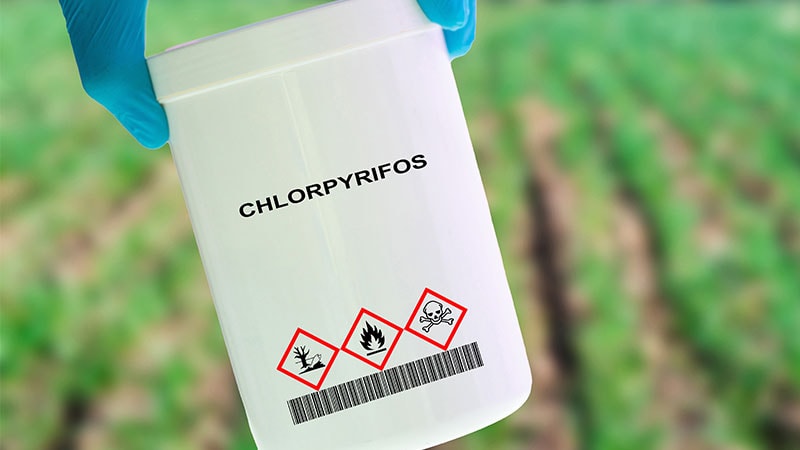
Chlorpyrifos is a chlorinated organophosphate pesticide commonly used globally in agriculture to control insects on a variety of crops. Exposure can occur thru ingestion, skin contact, or inhalation. The pesticide is especially concerning during pregnancy as it can cross the placenta, reaching concentrations in the fetal bloodstream up to four times higher than those in the mother’s circulation and penetrating the fetal blood-brain barrier. Pregnancy is an exquisitely sensitive period of brain development that is vulnerable to environmental exposures, including CPF,
explained Dr. Bradley S. Peterson, lead author of the study and division chief of psychiatry and behavioral sciences at children’s Hospital Los Angeles.
study Details and Findings
The prospective, longitudinal study involved 727 pregnant women-African American or dominican-residing in northern New York City, recruited between January 1998 and July 2006. MRI scans were subsequently performed on 332 of their children between 2007 and 2015. Detailed analysis of data from a final cohort of 270 children (median age, 10.38 years) revealed widespread brain changes linked to prenatal chlorpyrifos exposure.
Specifically, MRIs showed thicker frontal, temporal, and posterior inferior cortices, reduced white matter volumes, and lower diffusivity of internal capsule white matter. Researchers also observed lower indices of neuronal density in white matter tracts and diminished performance on fine motor and motor programming tasks. These findings suggest that even moderate levels of exposure can have lasting effects on brain structure and function.
Did You know? The study participants’ exposure to chlorpyrifos was primarily due to indoor pest spraying, a common practice in the inner-city neighborhood before residential use was banned in 2001.
Widespread Brain Changes Observed
The study’s findings detailed specific alterations across various brain regions. Increased cortical thickness was observed in frontal, temporal, and posteroinferior areas, while decreased cortical thickness was noted in the dorsal parietal region. Furthermore, magnetic resonance spectroscopic imaging revealed reduced N-acetyl-L-aspartate levels-a marker of neuron density-in deep white matter tracts and the insular cortex. Diffusion tensor imaging showed changes in white matter integrity within the internal capsule,and arterial spin labeling indicated reduced regional cerebral blood flow.
Key MRI Findings Summarized
| Brain Region | Observed Change with CPF Exposure |
|---|---|
| Frontal Cortex | Increased cortical thickness |
| Temporal Cortex | Increased cortical thickness |
| Dorsal Parietal Cortex | Decreased cortical thickness |
| White Matter tracts | Reduced volume, altered neuronal density |
| Internal Capsule | Changes in diffusivity and fractional anisotropy |
Dr. peterson emphasized the strength and breadth of these associations, stating, These are very strong associations such that progressively higher levels of exposure are associated with progressively greater disruptions in development of brain structure and metabolism, as well as greater disruptions in motor control.
Inflammation and Oxidative Stress as Potential Mechanisms
Researchers suggest that inflammation and oxidative stress may be key mechanisms linking chlorpyrifos exposure to brain development issues. interestingly, the observed brain changes were similar to those associated with other prenatal exposures, such as air pollution, despite the differing chemical compositions. This suggests a common pathway of disruption. What other environmental factors might contribute to similar neurological effects in developing children?
Pro Tip: Minimizing exposure to pesticides during pregnancy is crucial. Consider purchasing organic produce when possible and thoroughly washing fruits and vegetables.
Regulatory Landscape and Ongoing Debate
The use of chlorpyrifos remains a contentious issue. In August 2021, the Environmental Protection Agency (EPA) revoked all tolerances for chlorpyrifos on food, effectively banning its use on many crops. However, this decision was challenged by agricultural groups, and in December 2023, a U.S. Circuit Court vacated the EPA’s earlier ruling. The EPA is currently considering a new rule to restrict exposures for farmworkers and vulnerable populations, setting limits for the pesticide on 11 specific crops: alfalfa, apple, asparagus, tart cherry, citrus, cotton, peach, soybean, strawberry, sugar beet, and spring and winter wheat.
Currently, only five states-California, Hawaii, new York, Maryland, and Oregon-have banned chlorpyrifos. Senior investigator Virginia A. Rauh, ScD, of Columbia Mailman school of Public Health, highlighted the need for broader public health policy changes to address this issue.
Looking Ahead: The Long-Term Impact of Pesticide Exposure
This study adds to a growing body of evidence linking early-life environmental exposures to neurodevelopmental outcomes. Ongoing research is focused on identifying potential interventions to mitigate the effects of pesticide exposure and understanding the cumulative impact of multiple environmental toxins. The long-term consequences of these exposures, including potential links to neurodegenerative diseases later in life, are also areas of active inquiry.
Frequently Asked Questions about chlorpyrifos and Brain Development
- What is chlorpyrifos and why is it concerning? Chlorpyrifos is a pesticide that can disrupt brain development, particularly during pregnancy, due to its ability to cross the placenta and affect the fetal brain.
- How does chlorpyrifos affect the brain? The study found that prenatal exposure to chlorpyrifos is linked to changes in brain structure, reduced white matter volume, and impaired motor skills.
- What can pregnant women do to reduce their exposure? Pregnant women can reduce exposure by purchasing organic produce, thoroughly washing fruits and vegetables, and advocating for stricter pesticide regulations.
- Is chlorpyrifos currently banned in the United States? The EPA initially banned chlorpyrifos, but that decision was overturned in court. The agency is currently considering new restrictions.
- What are the long-term effects of prenatal chlorpyrifos exposure? The long-term effects are still being studied, but may include increased risk of neurodevelopmental disorders and cognitive impairments.
This research was supported by the National Institute of Environmental Health Sciences, the EPA STAR program, the national Institute of Mental Health, the John and Wendy neu Family Foundation, an anonymous donor, Patrice and Mike Harmon, the Inspirit fund, and the Robert Coury family.
If you found this information valuable, please share it with your network. Your support helps us continue to deliver impactful journalism. Subscribe to our newsletter for the latest updates on environmental health and wellness.
