US-China Trade Talks Ahead of Trump-Xi Summit: Tariff Cuts Under Discussion
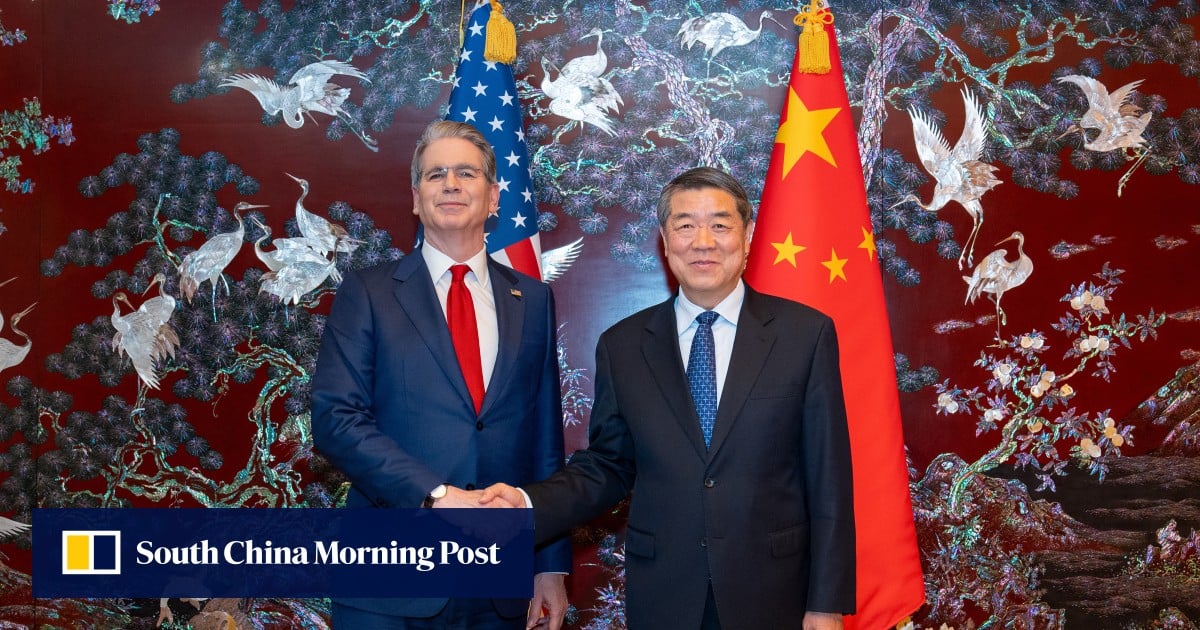
US Treasury Secretary Scott Bessent and Chinese Vice Premier He Lifeng concluded brief trade negotiations in Seoul on May 13, 2026. These talks serve as a critical precursor to an upcoming summit between President Donald Trump and President Xi Jinping, focusing on managed trade and potential tariff reductions on $30 billion of imports.
The brevity of the Seoul meeting has sent a clear signal to global markets: the technical groundwork is finished, and the final decisions now rest solely with the two most powerful leaders on earth. For the corporate world, this transition from diplomatic negotiation to executive decree creates a volatile window of uncertainty. When trade policy is decided by a summit rather than a slow-moving bureaucratic process, the result is often a “shock” to the system that leaves unprepared businesses scrambling to adjust their pricing, sourcing, and legal compliance.
This is no longer about incremental adjustments. We are witnessing a shift toward a “managed trade” era, where specific purchase targets and targeted tariff cuts replace broad market rules.
The Seoul Briefing: A Prelude to High-Stakes Diplomacy
The meeting in Seoul was characterized by its efficiency—or its haste, depending on your perspective. By keeping the talks brief, Bessent and He Lifeng have effectively cleared the deck for President Trump and President Xi. The primary objective was to align on a framework for agriculture purchases and the establishment of trade and investment forums. However, the lack of a detailed joint readout suggests that several “red line” issues remain unresolved, leaving the heavy lifting for the upcoming summit.

For companies operating in the crosshairs of this relationship, this “briefest trade talks yet” approach is nerve-wracking. It suggests a preference for top-down mandates over bottom-up agreements. Businesses can no longer rely on predictable trade cycles. they must now prepare for sudden pivots in tariff structures that can be triggered by a single handshake in Beijing.
Navigating these sudden shifts requires more than just a good accountant. Many firms are now engaging specialized international trade attorneys to audit their supply chains and ensure they have the legal flexibility to pivot sourcing if a “managed trade” agreement suddenly excludes their specific product category.
Decoding the $30 Billion Tariff Pivot
The most concrete detail emerging from the lead-up to the summit is the potential for tariff cuts on $30 billion of imports. This is not a blanket reduction. Instead, it is a surgical strike designed to provide relief to specific sectors while maintaining leverage over others.

The focus on agriculture is particularly telling. By targeting agricultural purchases, the administration aims to provide immediate, tangible wins for the American heartland. However, the “managed” nature of this trade means these cuts are likely contingent on China meeting strict purchase quotas. If those quotas are missed, the tariffs could snap back into place with very little warning.
This “quota-for-relief” model creates a precarious environment for logistics providers. A sudden surge in agricultural exports to meet a quota can overwhelm port infrastructure and spike shipping costs overnight. To mitigate this, regional distributors are increasingly relying on vetted global freight forwarders who can manage the volatility of “surge” shipping requirements.
The “Managed Trade” Gamble
Managed trade is a departure from the free-market ideals that governed global commerce for decades. In a managed system, the government decides what is bought, how much is bought, and at what price. This removes the risk of market fluctuations for some, but it introduces a massive political risk for everyone else.
The primary risks of this approach include:
- Market Distortion: When governments mandate purchases, it can lead to artificial price inflation in specific commodities.
- Enforcement Friction: Monitoring whether China has actually met its purchase targets requires an intrusive level of oversight that can lead to further diplomatic friction.
- Sectoral Exclusion: A $30 billion cut is a drop in the bucket compared to total trade. The companies not included in that relief package may find themselves at a competitive disadvantage overnight.
Because managed trade replaces market logic with political logic, the “solution” for businesses is diversification. Relying on a single corridor for critical components is now a liability. Forward-thinking CEOs are consulting with strategic supply chain consultants to implement “China Plus One” strategies, ensuring their operations can survive a sudden collapse in bilateral relations.
Localized Fallout: From the Midwest to the Pacific Rim
While the talks happened in Seoul, the impact is felt in the soil of Iowa and the docks of Long Beach. The focus on agriculture means that the U.S. Midwest is essentially the “collateral” in this geopolitical game. A successful summit means a windfall for farmers; a failure means a surplus of crops and a crash in local prices.

In the Pacific Rim, the tension is felt in the manufacturing hubs. The mention of “investment forums” suggests that the U.S. Is looking for ways to decouple critical technology while maintaining a flow of general consumer goods. This creates a fragmented regulatory environment where a product might be legal to export to one region but banned in another based on the latest summit agreement.
“We are moving away from a world of rules-based trade and into a world of relationship-based trade. In this new environment, the ability to pivot your entire procurement strategy in 48 hours is the only real competitive advantage.”
This sentiment is echoed by trade specialists across Asia, who note that the brevity of the Seoul talks indicates that the technical experts have been sidelined in favor of political willpower. When the “experts” are gone, the risk of oversight increases.
As President Trump prepares to meet President Xi, the world is holding its breath, waiting to see if a $30 billion concession is enough to stabilize the world’s two largest economies. But for the business owner, the government contractor, or the agricultural exporter, waiting is not a strategy. The “managed trade” era demands a proactive defense—one built on legal agility and diversified logistics.
The window between the Seoul talks and the final summit is the time to secure your perimeter. Whether it is auditing your tariff classifications or diversifying your supplier base, the cost of being wrong is now far higher than the cost of preparation. To find the verified professionals capable of navigating this geopolitical minefield, explore the comprehensive resources available through the World Today News Directory.