
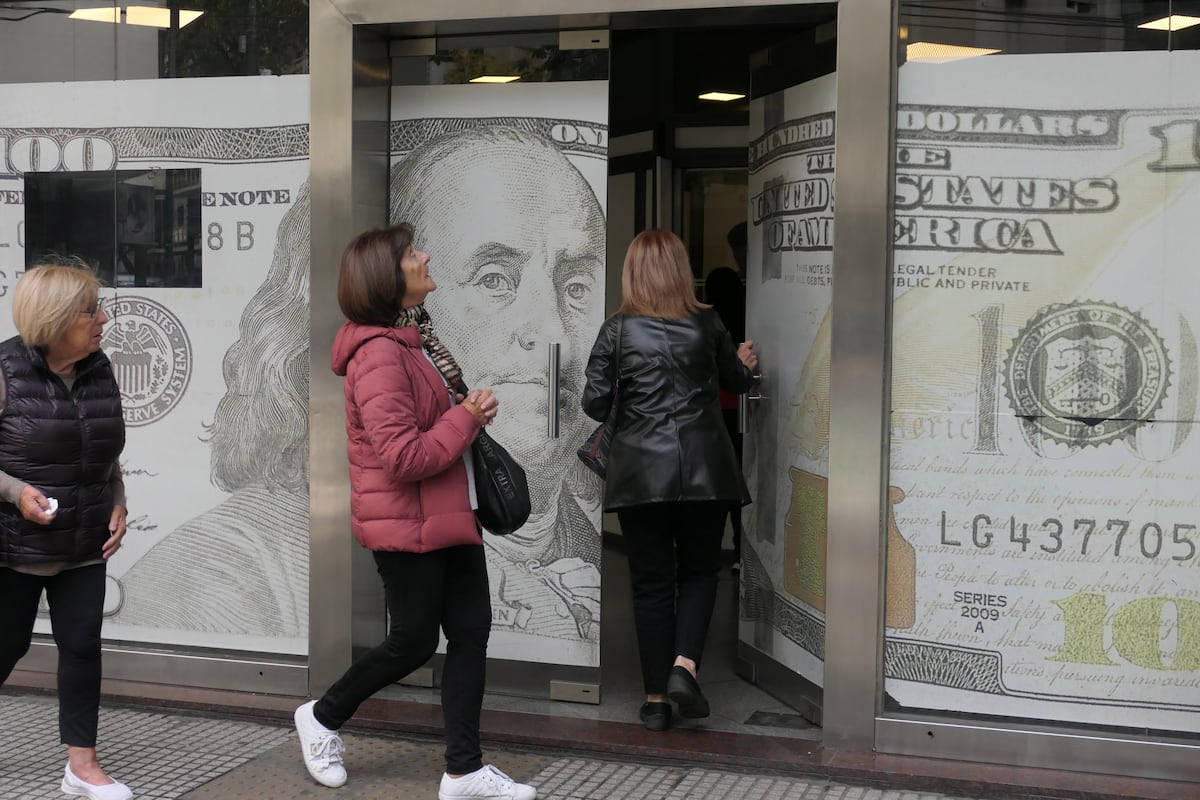
Argentina Tightens Dollar Access, Sparking Market Reaction
Recent measures by the Argentine Central Bank (BCRA) to bolster its reserves and stabilize the currency have triggered a response in financial markets. The BCRA has reintroduced a restriction, previously lifted in April, preventing individuals who purchase dollars at the official exchange rate from accessing financial dollars (MEP and counted wiht liquidation) for a period of three months.
This move targets a specific arbitrage strategy where investors were exploiting the difference between the official exchange rate and the higher rates available through bond and share operations in the stock market. Investors would purchase dollars at the official rate and then sell them through the MEP (electronic payments market) or “dollar counted with liquidation” markets, currently trading at 1,431 and 1,470 pesos per dollar respectively, realizing a profit.
Economy Minister Luis Caputo defended the resolution, stating it simply aims to curtail this specific arbitrage activity and is not a return to previous capital controls (“stocks”).BCRA Board member Federico Furiase clarified that the measure does not restrict individuals from purchasing dollars for savings, but prevents them from promptly re-selling those dollars in the financial markets.The goal, according to officials, is to avoid distortions in the exchange market and protect BCRA reserves, particularly ahead of upcoming legislative elections.
However, the immediate effect of the announcement on Friday was a rise in the quotes for financial dollars, widening the gap with the official rate to around 10%, a difference that had previously narrowed.the country risk indicator also increased, reaching 1,058 points, reversing a recent downward trend initiated after positive signals regarding support from former President Trump. Bonds and stocks also halted their recent upward trajectory.
The resolution has drawn criticism from both market operators and the political opposition. Some observers expressed concerns about the government’s governance and policy consistency. Opposition lawmakers, including Julia Strada of the Kirchner party and Esteban Paulón of the Socialist party, criticized the measure as a temporary fix and a sign of broader economic instability.
Argentina has experienced increasing exchange rate volatility in recent months. Despite initial efforts to stabilize the peso through interest rates and monetary policy, the Treasury began intervening in the foreign exchange market last week. the BCRA has also been utilizing its reserves to maintain the currency’s flotation system, as agreed with the International Monetary Fund (IMF). Over three days, the Central Bank sold over $1.1 billion in reserves.
Recently, a currency swap agreement with the United states for $20 billion, along with potential credit and investment opportunities, provided temporary relief. Though, the BCRA’s latest measure on Friday has cast doubt on the sustainability of this calm, and the coming week will reveal whether it represents a temporary turbulence or a more critically important economic challenge.
