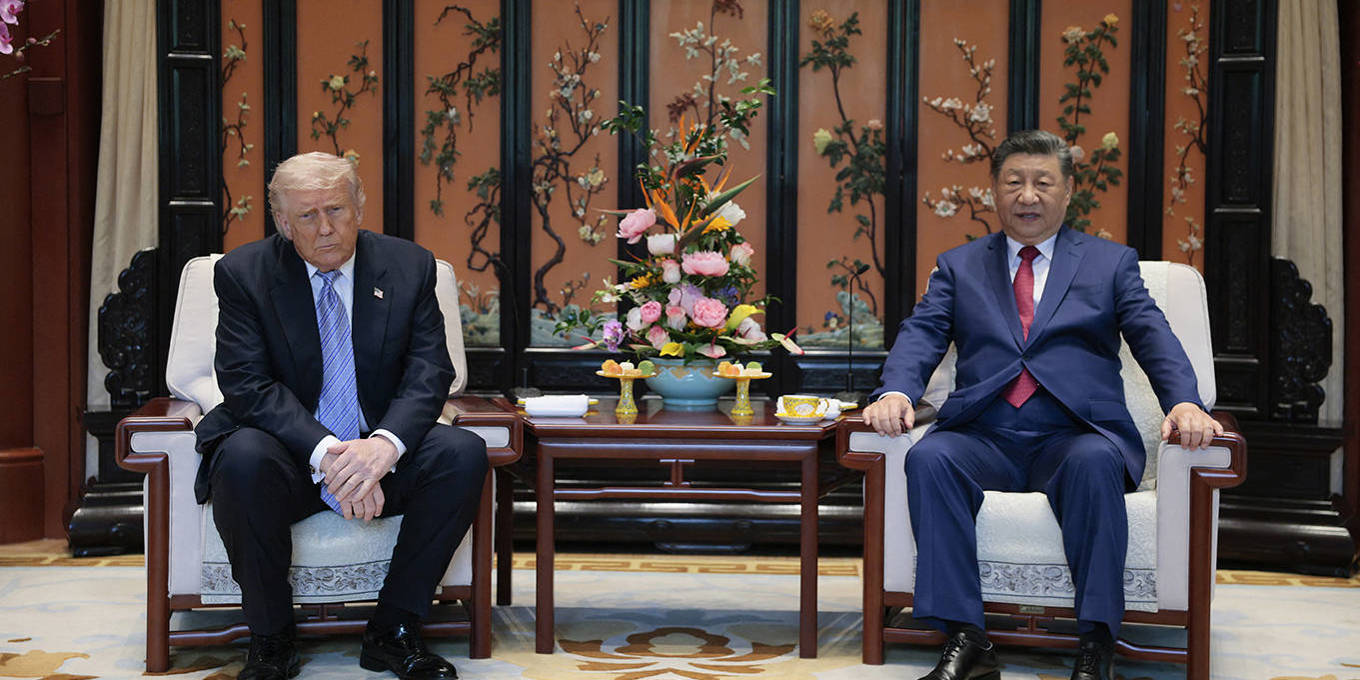
Trump-Xi Summit: Reducing Global Economic Tail Risks
US President Donald Trump and Chinese leader Xi Jinping’s recent Beijing summit aims to establish a sustained trade truce and reopen the Strait of Hormuz. This diplomatic pivot seeks to reduce systemic tail risks that have destabilized the global economy for eighteen months, offering a potential stabilizer for international markets.
For the C-suite, the primary obstacle hasn’t been a lack of growth potential, but the presence of “tail risks”—those low-probability, high-impact events that make long-term capital expenditure (CapEx) a gamble. When the world’s two largest economies are in a state of friction and critical energy arteries are throttled, the geopolitical risk premium spikes. This volatility forces firms to hoard cash rather than invest in innovation, effectively freezing the gears of global expansion. To navigate this precarious transition, many enterprises are now engaging financial risk advisory services to recalibrate their hedge positions and liquidity buffers.
The market is currently pricing in a fragile optimism. The focus is no longer on the immediate trading session, but on whether this truce can survive the next two fiscal quarters.
The Macro Shift: Dismantling the Tail Risk Premium
The Beijing summit targets two specific pressure points: the Sino-American trade relationship and the maritime security of the Strait of Hormuz. Resolving these is not merely a diplomatic win; it is a fundamental adjustment to the global cost of capital. When tail risks subside, the “uncertainty tax” that has plagued global supply chains begins to evaporate.
- Energy Arbitrage and Logistics: Reopening the Strait of Hormuz removes a massive bottleneck in global oil transit. This doesn’t just lower the price of a barrel; it reduces the volatility of shipping insurance and freight rates. For firms with lean margins, the reduction in energy-driven overhead is the difference between a stagnant quarter and a profitable one. Companies are increasingly turning to supply chain optimization firms to redesign their routing strategies for a more stable maritime environment.
- Trade Predictability: A sustained trade truce allows for a shift from “just-in-case” inventory management back toward “just-in-time” efficiency. The past eighteen months have seen a surge in inventory carrying costs as firms stockpiled components to avoid tariff shocks. A truce allows for the normalization of working capital, freeing up cash flow that can be redirected toward R&D.
- Equity Valuation and Volatility: Lower systemic risk leads to a compression of equity risk premiums. When the threat of a sudden trade war or energy blockade recedes, institutional investors are more likely to move out of safe-haven assets and back into growth-oriented equities, particularly in the technology and industrial sectors.
Stability is the ultimate currency of the boardroom.
“The fragmentation of global trade isn’t just a political issue; it’s a productivity killer. When companies spend more time managing geopolitical risk than they do improving their product, the entire global economy loses its edge.”
This sentiment echoes the broader concerns highlighted in reports by the World Trade Organization (WTO), where the emphasis on trade predictability is treated as a prerequisite for sustainable GDP growth. Without a truce, the cost of doing business across borders remains prohibitively high due to the constant threat of sudden regulatory shifts.
Impact on Corporate Balance Sheets
The fiscal reality of the last year and a half has been one of defensive positioning. Many firms have seen their EBITDA margins compressed by rising input costs and the necessity of diversifying supply chains away from high-risk zones. This “de-risking” process is expensive, often requiring massive upfront investments in new facilities and vendor vetting.
A sustained truce doesn’t mean the world returns to the pre-friction era, but it does allow for a more calculated approach to diversification. Rather than a panicked exodus from certain markets, firms can now pursue strategic optimization. This shift requires a sophisticated legal framework to ensure compliance with both US and Chinese regulations, leading to a surge in demand for international corporate law firms specializing in cross-border trade agreements.
The reduction in tail risks also alters the landscape for debt financing. With lower volatility, credit spreads typically tighten, reducing the interest burden for corporations looking to refinance their debt. This creates a window of opportunity for mid-market firms to expand their operations without the crushing weight of high-interest “risk-adjusted” loans.
The focus now shifts to the execution of the truce. A handshake in Beijing is a start, but the market demands a roadmap.
The Forward Outlook: From Truce to Growth
The global economy has been operating in a state of high-alert for eighteen months. The psychological shift from “crisis management” to “strategic growth” cannot happen overnight, but the Beijing summit provides the necessary catalyst. The real test will be the upcoming quarterly earnings calls, where analysts will look for evidence of reduced hedging costs and stabilized input prices.

Institutional investors are closely monitoring the International Monetary Fund (IMF)‘s outlooks for signs of a coordinated global recovery. If the Strait of Hormuz remains open and trade tariffs stabilize, we can expect a rotation back into emerging markets that have been starved of capital due to the Sino-American standoff.
The risk of a relapse remains. Geopolitical truces are notoriously fragile, and a single diplomatic misstep could reintroduce the tail risks that the market is currently discounting. However, the alternative—continued volatility—is a price the global economy can no longer afford to pay.
As the landscape shifts, the ability to pivot quickly will separate the winners from the losers. Whether it is renegotiating supplier contracts or restructuring a global tax strategy, the need for vetted, professional partners has never been higher. To find the specialized consultants, legal experts, and financial advisors capable of navigating this new era of cautious stability, explore the comprehensive listings in the World Today News Directory.