
php
Asteroid Watch: Scientists Track Four Space Rocks
While asteroid impacts may seem like the stuff of science fiction, many agencies and observatories are actively monitoring these celestial bodies. Their work serves a crucial purpose: to understand the origins of life and protect our planet.
The Building Blocks of Life
Asteroids, remnants from the solar system’s formation around 4.6 billion years ago, number over a million, with most residing in the main asteroid belt between Mars and Jupiter. According to honorary professor **Monica Grady** at The Open University, some asteroids may hold the key to understanding life’s beginnings.
She stated, “Some asteroids contain a lot of organic compounds, which may be the basic constituent elements of life. Someone has proposed the hypothesis that life on Earth can begin because these asteroids bring the raw materials for life.”
Near-Earth Objects: A Closer Look
While most asteroids pose no threat, those that approach Earth warrant close monitoring. Scientists track their orbits to assess and eliminate potential impact risks, sometimes even predicting future close encounters. Special attention is given to those with unusual compositions.
According to **Rozek**, “When an object approaches the Earth, it attracts a lot of attention. We monitor closely until we can accurately grasp its orbit, eliminate impact risks, and sometimes even predict impacts. For objects far away from Earth, we look for targets with abnormal compositions.”
Apophis: A Close Shave
Named after the Egyptian god of chaos, Apophis sparked concern after its discovery in 2004. Initially, there was a slight chance of an Earth impact, but NASA later ruled out any threat for at least a century. On April 13, 2029, Apophis will safely pass by our planet.
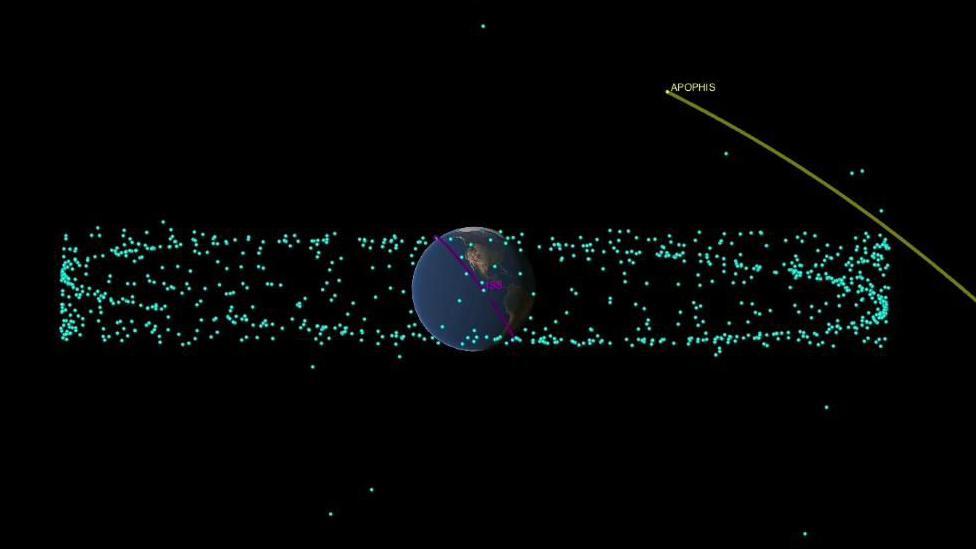
**Rozek** notes, “We currently know that it will pass the planet safely on April 13, 2029… It has been the focus of ground observations since its discovery, and this time it will be very close to the height of the geosynchronous satellite. We think the gravity of the Earth may stretch the asteroid or even change its shape.”
During its close approach, Earth’s gravity may alter Apophis’s orbit and potentially trigger minor landslides on its surface. With an average diameter of 340 meters, it will pass within 32,000 kilometers, visible to the naked eye.
2024 YR4: A Near Miss
Discovered in 2024, asteroid 2024 YR4, estimated to be between 53 and 67 meters in diameter, briefly made headlines due to a slight possibility of impacting Earth in 2032. Initially, the probability was estimated at 1/32, but NASA later dismissed this concern.
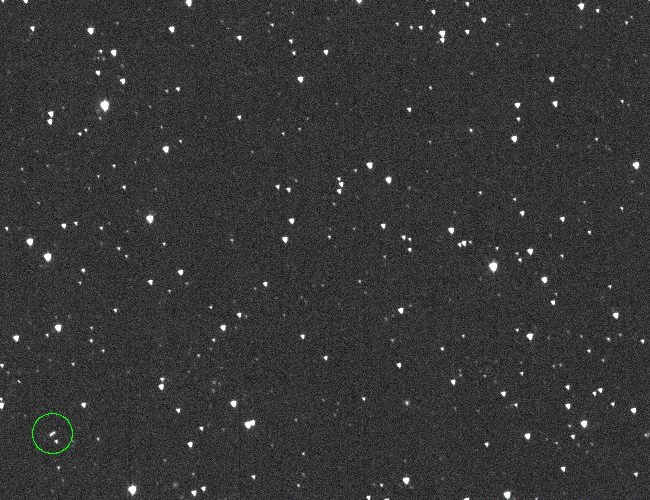
According to **Professor Grady**, “One of the biggest challenges when observing an asteroid that may collide with the Earth is judging the possibility of its impact. We must continue to observe to correct its tracks and paths.”
While a small chance (3.8%) of impacting the moon remains, NASA assures that even a collision would not alter the moon’s orbit.
Didymos and Dimorphos: Planetary Defense Test
The Didymos asteroid system consists of Didymos and its orbiting satellite, Dimorphos. While neither poses a threat to Earth, they served as targets for NASA’s DART mission in 2022. The mission intentionally crashed a probe into Dimorphos to test the feasibility of altering the orbit of a potentially hazardous space rock.
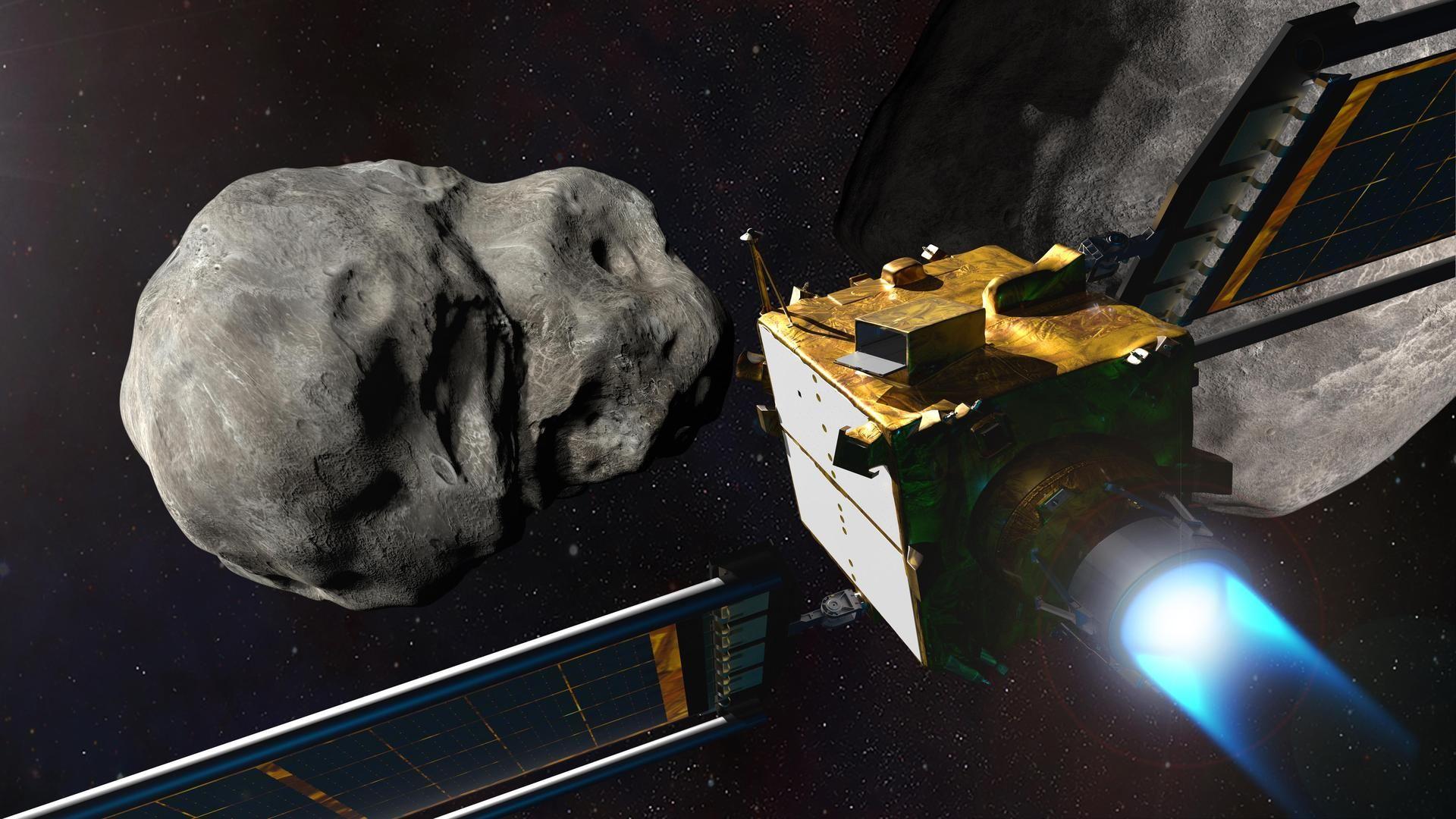
**Rozek** explained, “This mission successfully hit Dimorefos, changing its orbit around Didimos, and is the first actual test of planetary defense… This change is mainly measured through ground observations. We will continue to monitor and wait for the arrival of the Hera mission next year to further study the impact after the impact.”
Psyche: A Metallic World
Psyche, described by NASA as “one of the most fascinating objects in the main asteroid belt”
, is composed of metal and rock. Scientists believe these metals originate from a protoplanet’s core, providing valuable insights into the formation of Earth and other planetary cores.
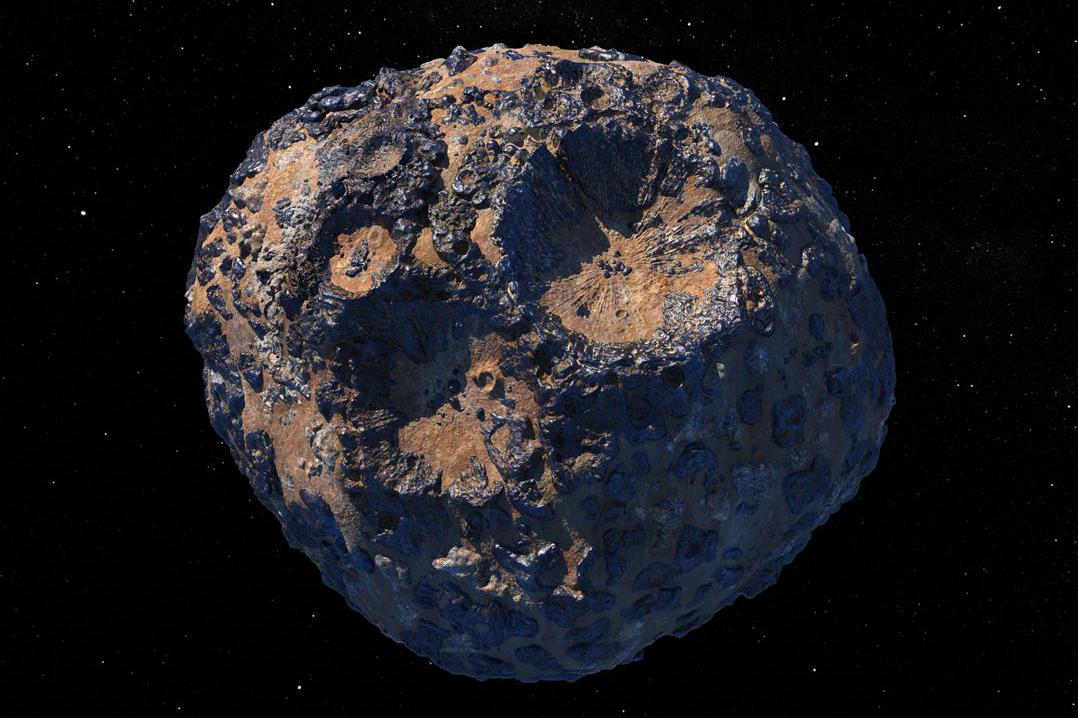
NASA launched a mission in 2023 to map and study Psyche. The asteroid belt is far from Earth. Recent studies suggest that space missions in this area could take over two years, but more studies are needed (Frontiers in Astronomy and Space Sciences, 2023).
Vera Rubin Observatory’s Discoveries
The Vera Rubin Observatory recently announced that its new telescope detected over 2,000 new asteroids and seven near-Earth objects in just 10 hours. Globally, ground and space observatories discover approximately 20,000 asteroids annually.
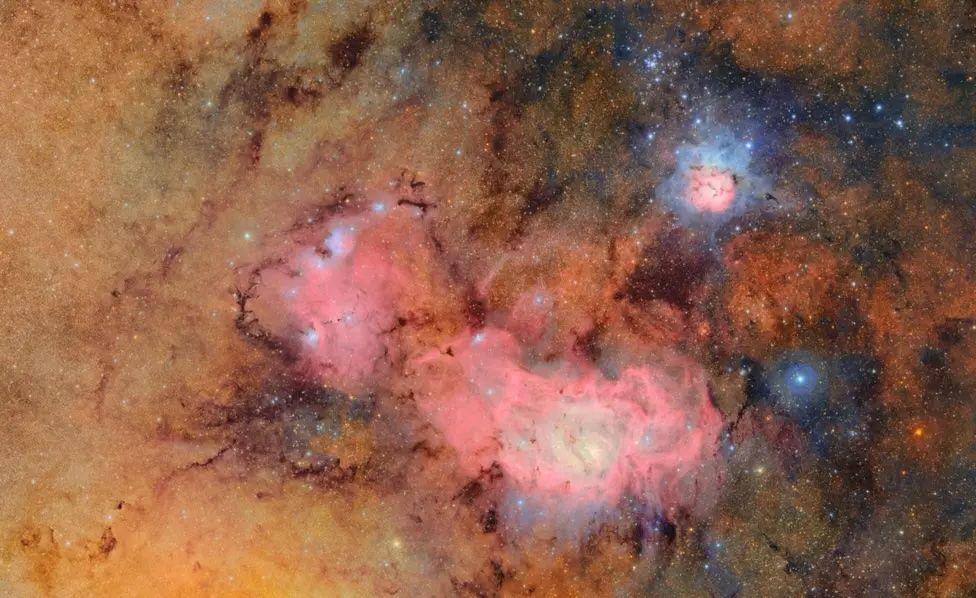
**Professor Grady** stated, “If you want to map the entire night sky, you need a very, very wide view. This is exactly what the Vera Rubin Observatory telescope has.”
The observatory anticipates discovering millions of new asteroids in its initial years, providing scientists with more targets for observation and deepening our understanding of the solar system.
