
why is Space Dark? The Science Behind the Night Sky
Jakarta – Despite the brilliance of billions of stars, the night sky appears dark. This seemingly simple observation sparked a centuries-old puzzle known as Olbers’ paradox: if the universe is infinite and filled with stars, why isn’t the entire sky ablaze with light?
Initial attempts to resolve the paradox, such as those proposed by German astronomer Heinrich Olbers, suggested intervening dust clouds absorbed starlight. However,this idea conflicted with the first law of thermodynamics,which dictates that absorbing material would re-emit energy as heat and light.
The 20th century brought a solution with the discovery of the universe’s expansion. This expansion causes the light from distant galaxies to shift towards the infrared, ultraviolet, and radio wave spectrums - wavelengths invisible to the human eye. Essentially, the universe would appear brighter if we could detect these microwaves.
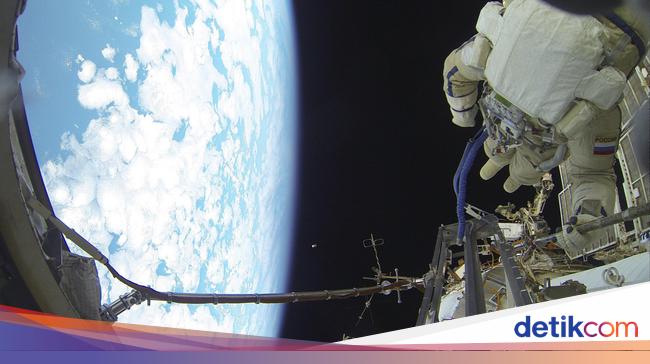
However, the complete explanation, as reported by detikinet citing Today Orbitals, lies in the presence of an atmosphere.In the near-vacuum of space, light lacks a medium for reflection.
On Earth, sunlight interacts with the atmosphere, causing light to scatter across the visible spectrum. This interaction between photons and atmospheric atoms, molecules, and dust creates the phenomenon of a bright sky. Earth’s atmosphere preferentially scatters blue light due to its shorter wavelength, resulting in a blue daytime sky. A similar, though less intense, effect occurs on Mars.
Conversely, planets or satellites lacking substantial atmospheres – like the Moon or Mercury – exhibit black skies even in direct sunlight, as documented by photographs from the Apollo missions.
(asj/fyk)
