
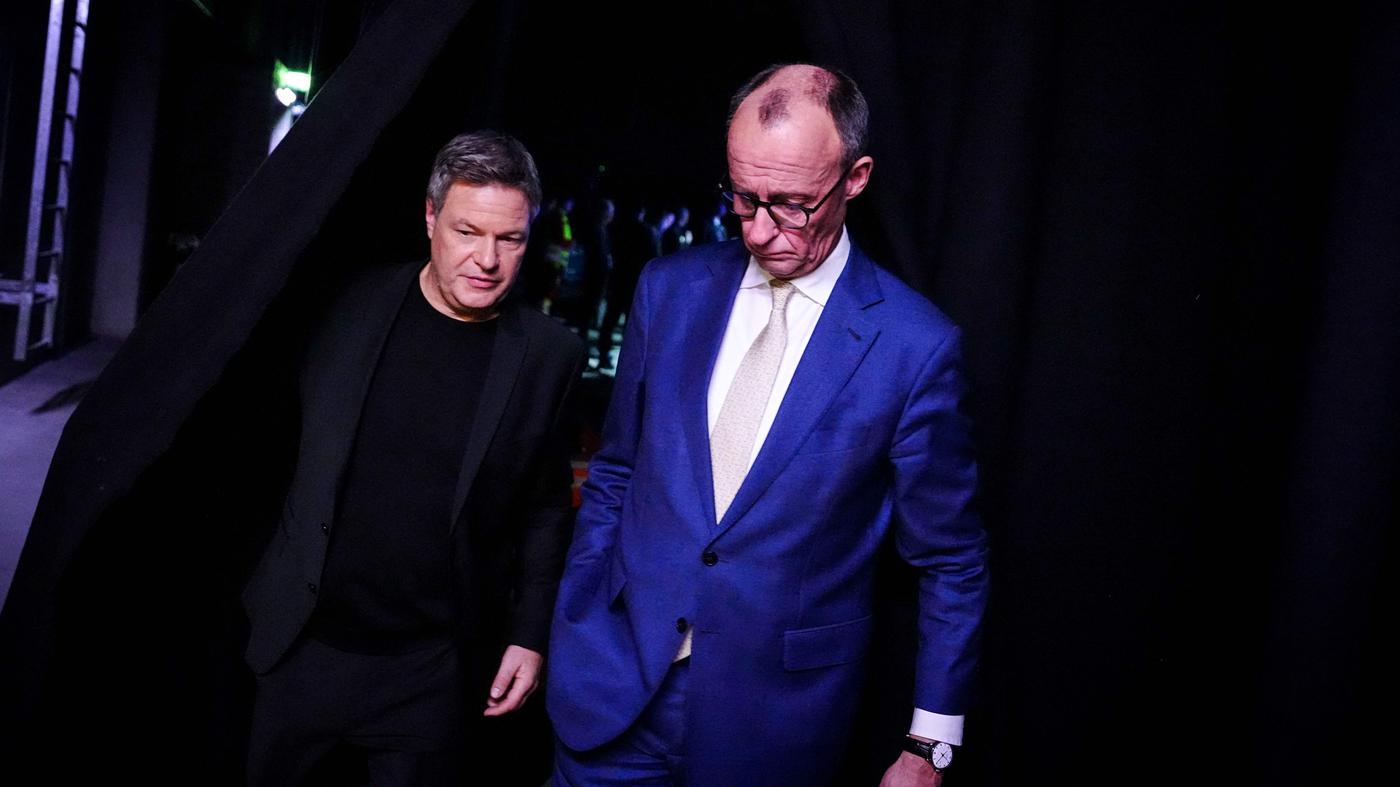
From Critic to Implementer: How Friedrich Merz is Quietly Adopting Robert habeck’s policies
Berlin – Just eleven months ago,Friedrich Merz,now Chancellor of Germany,relentlessly attacked then-economics Minister Robert Habeck,branding him “the face of the economic crisis” and dismissing his policies as a “complete disaster.” Today, a striking reversal is underway. Merz’s governing coalition – a partnership between the Union and SPD - is rapidly adopting key proposals originally championed by Habeck, now a professor in the United States.
The shift is becoming increasingly apparent. This week alone, the coalition committee reached agreements on an industrial electricity price and a “Germany Fund” – initiatives first outlined in working papers presented by Habeck as far back as May 2023 and last fall, respectively. Both were initially met with staunch opposition from Merz and the CDU.
“this strengthens our industrial location in international competition and secures good jobs,” Merz declared on X (formerly Twitter) regarding the industrial electricity price, a proposal he previously insisted should only be considered after important reductions in government-imposed costs on energy.
The about-face extends beyond energy policy. Merz’s government is now pursuing the construction of gas power plants and the implementation of CCS (Carbon Capture and Storage) technology – both concepts Habeck advocated for, despite initial resistance from the Union. Even the suspension of the debt brake for defense spending, a move Merz’s party now supports, was initially proposed by Habeck.
Green Criticism, Familiar Tune
The irony hasn’t escaped the Green Party. Franziska Brantner, the party’s current leader, offered a pointed critique of the Chancellor’s selective adoption of Green policies.
“Mr. Merz is right to introduce the industrial electricity price – but unfortunately does not reduce the electricity tax for everyone,” Brantner told Tagesspiegel. “He is right to invest in the municipal energy infrastructure with the Germany Fund, but unfortunately he squanders almost half of the special fund on election gifts.”
Brantner added with a touch of wryness: “If Mr. Merz is inspired by green economic policy,he should not forget the market economy aspects.”
A Pattern of Adoption
This isn’t an isolated incident. Throughout the past two years, Merz has demonstrably shifted his position on several key policies initially proposed by Habeck, often after publicly criticizing them. The question now is whether this represents a genuine evolution in Merz’s economic thinking, or simply a pragmatic embrace of effective solutions, irrespective of their origin.
The political landscape has undeniably changed. But as Merz’s government increasingly implements the policies he once derided, the narrative is shifting, and
