
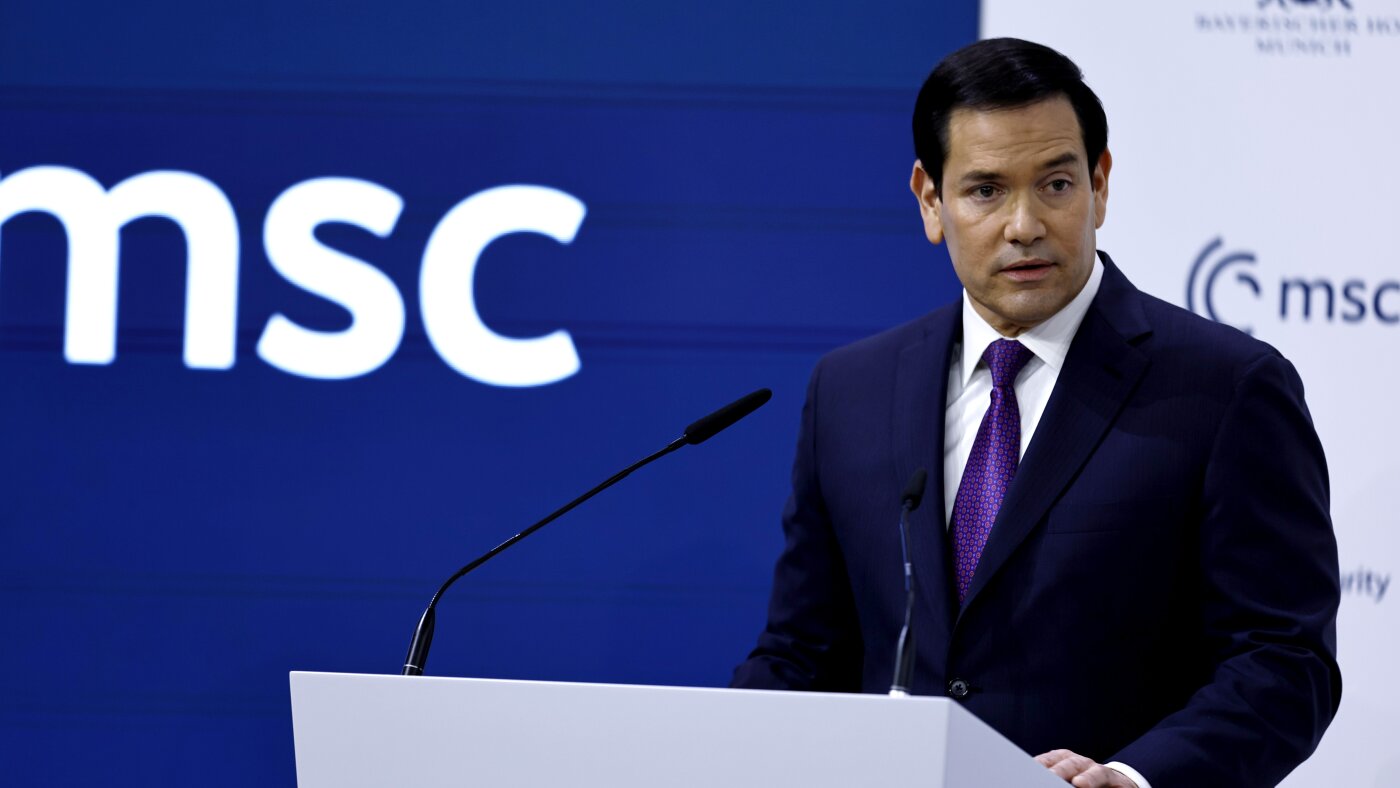
MUNICH — A standing ovation. It was a gesture offered to U.S. Secretary of State Marco Rubio at the Munich Security Conference on February 14, but one that belied a growing sense of divergence between the United States and its European allies. The applause followed a speech in which Rubio attempted to bridge transatlantic divides, but ultimately underscored a European resolve to chart its own course, even as it acknowledges its continued reliance on American security guarantees.
Rubio’s address departed from the approach taken by Vice President Vance at last year’s conference, where criticism of European migration policies sparked considerable friction. Instead, Rubio acknowledged the challenges posed by immigration in both the U.S. And Europe, framing it as a shared concern. He argued that the post-Cold War era had fostered “a dangerous delusion” – the belief that liberal democracy would universally prevail and that economic ties alone would supersede national identity. This, he contended, had contributed to “an unprecedented wave of mass migration that threatens the cohesion of our societies, the continuity of our culture and the future of our people.”
The Secretary of State sought to connect the American experience to European history, highlighting the contributions of various European nationalities to the development of the United States. He cited the Scots-Irish influence, linking them to figures like Davy Crockett and Neil Armstrong, and acknowledged the role of German farmers in building the American Midwest. He also referenced the contributions of Italians, French, and Spanish settlers. But, his recounting omitted the displacement and devastation inflicted upon Native Americans, the exploitation of African slaves, and the contributions of Chinese laborers who built the transcontinental railroad, a point noted by observers at the conference.
While the standing ovation signaled a willingness to hear a message of renewed transatlantic partnership, it did not necessarily reflect agreement. European Union High Representative for Foreign Affairs and Security Policy Kaja Kallas offered a pointed counterpoint, stating on February 15, “Contrary to what some may say, woke, decadent Europe is not facing civilizational erasure.” Her remarks, delivered on the final day of the conference, highlighted a resistance to the narrative presented by Rubio and a determination to define Europe’s future on its own terms.
Perhaps the most forceful articulation of this European resolve came from German Chancellor Friedrich Merz. In a speech on February 13, Merz delivered a stark assessment of the international order, describing it as no longer existing. He criticized what he termed “large power politics” pursued by the U.S., China, and Russia, characterizing it as a “dangerous game” where natural resources and technologies are used as bargaining chips. Merz drew a direct line to Germany’s historical experience, asserting that Europe had learned from the failures of past “big power” governance.
Merz urged European nations to pool their resources and build an economy that could rival those of the major powers while upholding democratic values. He pointed to the significant economic disparity between Russia and the European Union – the EU’s GDP is nearly ten times larger – but lamented that Europe had not fully translated its economic strength into political and military influence. He acknowledged the demand for increased military spending and called for a fundamental shift in mindset, urging Europe to “turn the switch in our minds now.”
The Munich Security Conference concluded with a clear indication that, while European leaders may offer polite gestures to visiting American officials, a fundamental shift is underway. Europe is increasingly prepared to act independently, even as it navigates a complex geopolitical landscape and acknowledges its continued dependence on the United States. The conference did not yield any concrete agreements or policy changes, but it served as a public demonstration of Europe’s evolving strategic outlook.
