
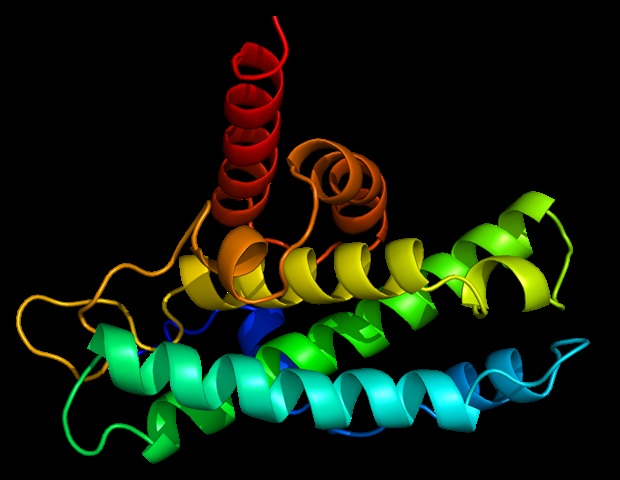
Unlocking the Secrets of Protein Language Models: A Leap Forward for Drug Discovery
Table of Contents
Cambridge, MA – In a groundbreaking development poised to reshape the landscape of biological research, scientists at the Massachusetts Institute of Technology have devised a novel technique to decipher the inner workings of protein language models. This advancement promises to accelerate the identification of potential drug targets and the design of innovative therapeutic antibodies.
The Challenge of ‘Black Box’ AI
Protein language models, powered by large language models (LLMs), have rapidly become indispensable tools for predicting protein structure and function. These models excel at assessing a protein’s suitability for specific applications, yet their decision-making processes have remained largely opaque. Researchers have struggled to understand how these models arrive at their conclusions and which protein features exert the most influence.
“We would get out some prediction at the end,but we had absolutely no idea what was happening in the individual components of this black box,” explained bonnie Berger,senior author of the study and Simons Professor of Mathematics at MIT.
A Novel Approach to model Transparency
The MIT team, led by graduate student Onkar Gujral, employed a technique called sparse autoencoding to illuminate the “black box.” This method adjusts how proteins are represented within a neural network, expanding the portrayal to reveal underlying patterns. Sparse autoencoders work by increasing the number of nodes within the network,allowing for a more distributed and interpretable representation of protein features.
Did You Know? The first protein language model was introduced in 2018 by Berger and former MIT graduate student Tristan Bepler, laying the groundwork for subsequent advancements like AlphaFold, ESM2, and OmegaFold.
Decoding Protein Features with AI Assistance
After generating sparse representations of numerous proteins, the researchers utilized an AI assistant, Claude, to analyze the data. Claude compared these representations with known protein characteristics-such as molecular function,protein family,and cellular location-to identify correlations.This analysis revealed that the models prioritize protein family and specific functions, including metabolic and biosynthetic processes, when making predictions.
“In a sparse representation, the neurons lighting up are doing so in a more meaningful manner,” Gujral stated. “Before the sparse representations are created, the networks pack information so tightly together that it’s hard to interpret the neurons.”
implications for Future Research
this breakthrough has meaningful implications for the future of biological research. By understanding which features protein language models prioritize, scientists can select the most appropriate models for specific tasks and refine their input data for optimal results. Furthermore, this knowledge could unlock new biological insights, possibly revealing previously unknown relationships between protein features and function.
pro Tip: Consider the specific task when selecting a protein language model.Understanding the model’s strengths and weaknesses can significantly improve the accuracy of yoru predictions.
The study, appearing this week in the Proceedings of the National Academy of Sciences, also involved contributions from MIT graduate student Mihir Bafna and MIT professor of biological engineering Eric alm.
Key Findings at a Glance
| Area of Research | Key Finding |
|---|---|
| Model Transparency | Sparse autoencoding successfully opened the “black box” of protein language models. |
| Feature Prioritization | Models prioritize protein family and specific functions (metabolic, biosynthetic). |
| AI Assistance | Claude AI assistant proved instrumental in analyzing sparse representations. |
| Future Applications | Improved model selection and potential for novel biological insights. |
What new avenues of research do you think this breakthrough will open up in the field of proteomics? And how might this impact the development of personalized medicine?
The Rise of Protein Language Models
The development of protein language models represents a paradigm shift in structural biology. Prior to these models, determining protein structure was a laborious and time-consuming process, often relying on experimental techniques like X-ray crystallography and cryo-electron microscopy. The ability to accurately predict protein structure from amino acid sequence alone-as demonstrated by AlphaFold-has revolutionized the field, accelerating research in areas such as drug discovery, materials science, and synthetic biology. The ongoing refinement of these models, coupled with techniques like sparse autoencoding, promises to further unlock the secrets of the proteome and drive innovation across a wide range of disciplines.
Frequently Asked Questions
- What are protein language models? Protein language models are AI systems that predict protein structure and function based on amino acid sequences.
- Why is understanding these models critically importent? Understanding how these models work allows researchers to choose the best tools and interpret results more effectively.
- What is sparse autoencoding? Sparse autoencoding is a technique used to make the inner workings of neural networks more interpretable.
- How can this research help drug discovery? By identifying key protein features, researchers can more efficiently identify potential drug targets.
- What role did AI play in this study? The AI assistant Claude was used to analyze the sparse representations of proteins and identify correlations with known features.
This research marks a pivotal moment in our ability to harness the power of artificial intelligence for biological discovery. We encourage you to share this article with your colleagues and join the conversation about the future of protein research.
