
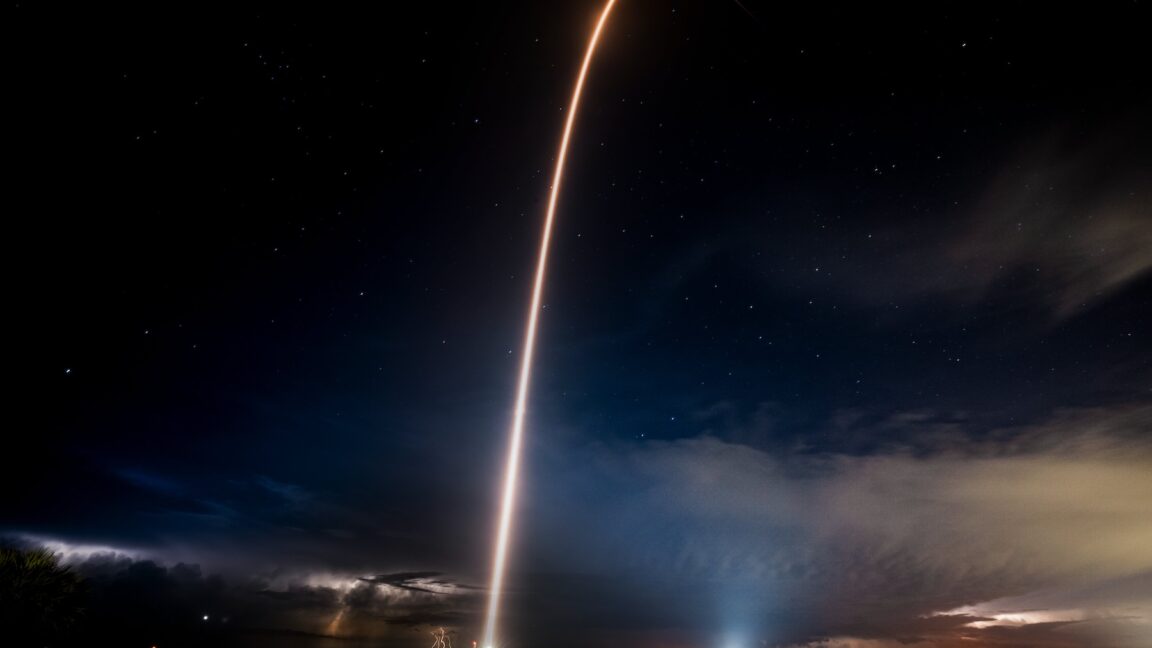
SpaceX’s Fram2 Mission Achieves Unprecedented Feats in Private Spaceflight
April 1, 2025
SpaceX’s Fram2 mission, launched on March 31, 2025, is not only pushing the boundaries of human spaceflight but also marking several historic firsts. From its unique crew composition to its innovative approach to spacecraft recovery, Fram2 is setting new standards for private space exploration.
Fram2: A Mission of Firsts
SpaceX’s Fram2 mission is indeed breaking new ground in several areas [[1]]. It distinguishes itself as the first human spaceflight mission to low-Earth orbit without a trained pilot on board, showcasing the increasing accessibility of space travel to individuals beyond conventional astronaut corps.
Adding to its unique profile, Fram2 is also the first crewed spaceflight that excludes astronauts from the United States, Russia, or China. this milestone signifies a diversification of participation in space exploration, highlighting the growing international interest and capabilities in space travel.
Commander Chun Wang noted the personal significance of the mission, sharing that his launch on March 31st marked “his 1000th flight of all time” [[3]].
West Coast Splashdown: A New Era for Crew Dragon Recovery
Later this week, Fram2 is scheduled to make history again as SpaceX’s first Crew Dragon mission to splash down off the west Coast. This strategic shift, announced by SpaceX last year, involves relocating its fleet of recovery ships from Florida to California, enabling Dragon capsules to return to the Pacific Ocean [[1]].
This move addresses growing concerns about the unpressurized trunk section of the Dragon spacecraft reentering the atmosphere in an uncontrolled manner. Previously, all Crew Dragon flights, including the prior 16 missions, jettisoned the disposable trunk in orbit before reentry and splashdown off the coast of florida. This practice led to unpredictable reentry patterns, with some missions scattering debris over land, raising safety and environmental concerns.
By switching to a West Coast recovery, SpaceX will keep the trunk attached to the Dragon capsule until just before reentry. At that point, the trunk will be cast away to fall into the remote Pacific Ocean, minimizing the risk of debris impacting populated areas. This change reflects SpaceX’s commitment to safety and environmental responsibility in its space operations.
This strategic decision mirrors the approach taken by NASA during the Apollo era, where capsules splashed down in the Pacific Ocean and were recovered by U.S. Navy ships. The controlled disposal of the trunk section also aligns with international guidelines for space debris mitigation, aimed at preserving the space environment for future generations.
Polar Views and Citizen Science
One of the unique objectives of the Fram2 mission is to provide the four-person crew with the prospect to view Antarctica and the North Pole through Dragon’s windows. While satellites routinely observe the poles, and astronauts on the ISS occasionally capture glimpses of Greenland and Antarctica at oblique angles, Fram2 will offer a direct, human outlook of these remote regions.
According to Mikkelsen, “I’m looking forward to being the first human in history to be able to point my camera at the North Pole and South Pole from space.”
Mikkelsen is also leveraging her expertise to capture immersive,3D imagery from Dragon,with guidance on camera settings from NASA astronaut Don Pettit,a renowned spaceflight photographer currently stationed on the ISS. This collaboration highlights the synergy between private space missions and NASA’s expertise, fostering innovation and knowledge sharing.
Furthermore, the Fram2 mission incorporates a citizen science component, inviting individuals on Earth to participate in auroral observations. Mikkelsen explained, “This is also a mission where people on the ground on planet Earth can attend, and we’ve reached out to 2.2 million auroral citizen scientists. Anyone can join, where you go outside and if there is aurora where you live, you note where you live, and you register on the SolarMaX mission website, and you will take a photo of the aurora at the same time as we in Fram2 fly over the aurora.”
This initiative connects space exploration with terrestrial observations, engaging the public in scientific data collection and fostering a sense of shared discovery. The data collected by citizen scientists will complement the imagery captured by Mikkelsen from space, providing a comprehensive view of auroral activity and contributing to a better understanding of space weather phenomena.
Pushing Boundaries and Sharing Knowledge
The Fram2 mission embodies a spirit of exploration and collaboration, reflecting the evolving landscape of space travel. As Chun Wang stated,”Fram2 isn’t just about going to space,it’s about pushing boundaries and sharing knowledge.”
The mission’s unique crew composition, innovative recovery approach, and citizen science component demonstrate a commitment to expanding access to space and fostering scientific discovery. As private spaceflight continues to mature, missions like Fram2 will play a crucial role in shaping the future of space exploration and inspiring the next generation of scientists, engineers, and explorers.
SpaceX’s Fram2: Pioneering Private Spaceflight and Redefining Human Exploration
Senior Editor, World Today News (WTN): Welcome, Dr. Anya Sharma, an expert in orbital mechanics and human spaceflight, to World Today news. SpaceX’s Fram2 mission has everyone talking. What’s the single most groundbreaking aspect of this mission that truly sets it apart, and why does it matter?
Dr. Anya Sharma: Thanks for having me. The most groundbreaking aspect of the Fram2 mission is its inclusive model,broadening access to space beyond conventional astronaut corps, particularly the involvement of a crew without trained pilots. This signals a profound shift. In a world of rapid technological advancement such as private spaceflight, missions like these reflect the culmination of years of development. This isn’t just about billionaires in space; it’s about fostering scientific inquiry by engaging diverse perspectives – from citizen scientists to explorers with unique backgrounds. It’s about ensuring the future of space isn’t limited to a select few but open to a new generation of spacefarers from around the globe.
WTN: The article highlights several “firsts” for Fram2. Can you elaborate on the significance of the mission not having any American, Russian, or chinese astronauts? What does this signal in the current state of space exploration?
Dr. Sharma: It is truly an exciting period. The absence of astronauts from the usual spacefaring nations – the U.S., Russia, and China – is a pivotal moment. It highlights a growing global interest in space and evolving international capabilities when it comes to space travel. This points toward a more collaborative and diverse future for space exploration, where nations and private entities are taking the reins in partnership to advance the science and possibility of space. Increased global participation fosters innovation and reduces reliance on any single space program, creating greater resilience in our combined exploration efforts.
WTN: The article mentions a west coast splashdown for the Crew Dragon capsule.Why is this change in recovery location a notable development? And what are the implications for safety and environmental responsibility?
Dr. Sharma: The shift to a West Coast splashdown signifies SpaceX’s increased focus on safety and environmental responsibility. The decision to move recovery operations from Florida to California is a strategic one. Keeping the spacecraft’s trunk attached until just before reentry addresses crucial safety concerns. The separation of the trunk previously led to unpredictable reentry paths. Now, directing it into the remote Pacific Ocean minimizes the risk of debris impacting populated areas.This aligns with international guidelines for space debris mitigation and mirrors practices used during the Apollo era when capsules splashed down in the Pacific. These changes, in the long run, will make for a more enduring approach that reduces potential hazards in space exploration, ensuring long-term safety.
WTN: Fram2 includes a citizen science component.Can you explain the importance of citizen science in space missions,and how this initiative with auroral observations contributes to the broader scientific understanding of space whether?
Dr. Sharma: citizen science is invaluable. The inclusion of a citizen science component in Fram2, focused on auroral observations, is particularly exciting. Data from the ground can be paired with data from space to help create a extensive view of auroral activity. It allows ordinary people to become active participants in the scientific process. The data gathered by these citizen scientists complements the imagery from space. The combined data enriches our understanding of space weather. These observations hold immense value in our efforts to protect crucial technologies on Earth.
WTN: Looking ahead, what lasting impact do you predict Fram2 will have on the future of space exploration?
Dr. Sharma: Fram2 represents an important milestone that will have a far-reaching and positive impact on the future of space exploration.
It will expand accessibility: By showing that space is no longer limited to career astronauts, it can inspire a new generation to design, build, and explore.
It promotes worldwide collaboration: The inclusion of crew members from multiple nations emphasizes partnership.
* It sets up a framework for responsible space travel: With the emphasis on environmental safety and debris mitigation, Fram2 offers a model for other missions.
WTN: Dr. Sharma, thank you for your insightful analysis. Your viewpoint gives us a richer understanding of the mission and its potential to change the future.
Dr. Sharma: My pleasure.
WTN: What are your thoughts on SpaceX’s Fram2 mission and its impact on private spaceflight? Share your opinions in the comments. Don’t forget to share this interview on your social media!
