
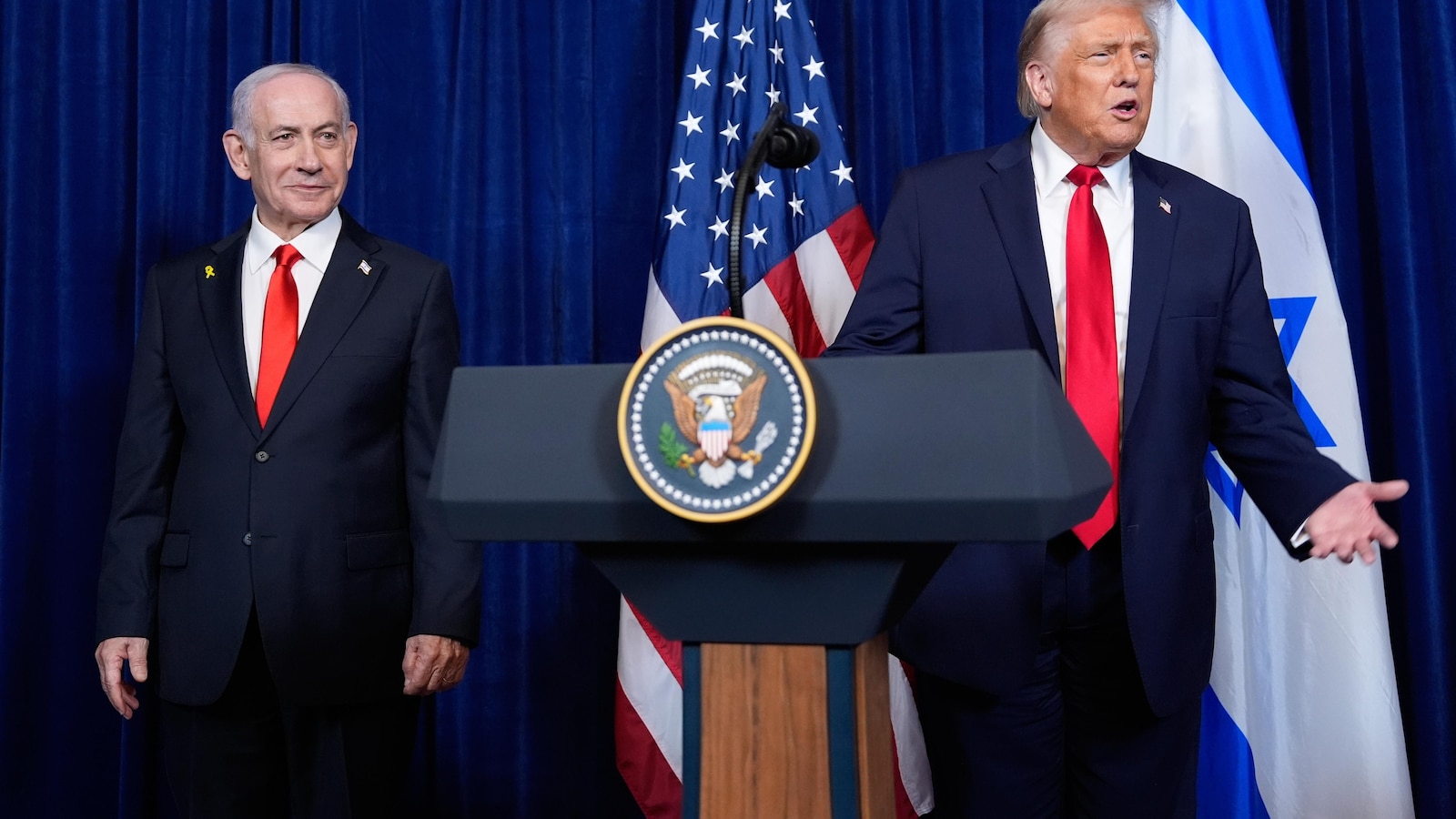
TEL AVIV, Israel — Prime Minister Benjamin Netanyahu departed for Washington on Tuesday seeking to broaden the scope of U.S. Negotiations with Iran, as the two countries navigate a period of heightened tensions and a recent American military buildup in the region. The visit, confirmed by Netanyahu’s office, comes after indirect talks between U.S. And Iranian negotiators in Oman last week, described by President Donald Trump as “very great.”
Israel has consistently advocated for a more comprehensive approach to any agreement with Iran, demanding not only limitations on uranium enrichment but also restrictions on its ballistic missile program and an end to support for regional proxy groups. Iranian officials have previously stated they would only consider limits on their nuclear program in exchange for sanctions relief, a position that appears unchanged.
Netanyahu’s trip through Wednesday follows a meeting in Jerusalem two weeks prior with U.S. Special Envoy Steve Witkoff and Jared Kushner, Trump’s son-in-law and Middle East advisor. The discussions centered on the parameters of a potential deal, with Israel pushing for a harder line. According to Netanyahu’s office, the Prime Minister believes any negotiations “must include limiting ballistic missiles and ending support for the Iranian axis,” referring to groups like Hamas and Hezbollah.
The timing of the visit is significant, occurring after a period of intense unrest in Iran following a bloody crackdown on mass protests last month. While it remains unclear whether the internal turmoil has altered Iran’s negotiating position, the U.S. Responded to the unrest by deploying military assets to the region, including the aircraft carrier USS Abraham Lincoln. Trump had previously threatened military action against Iran, but appeared to pull back from imminent strikes amid concerns from regional allies.
Last year, the U.S. And Israel conducted 12 days of strikes targeting Iranian military and nuclear sites, a move that reportedly significantly damaged Iran’s nuclear infrastructure. Iranian Foreign Minister Abbas Araghchi stated in November that Iran was no longer enriching uranium due to the damage sustained in those strikes, though independent verification remains elusive. The extent of the damage is unknown, as inspectors from the International Atomic Energy Agency have been unable to access the bombed sites. Satellite imagery has indicated continued activity at two of the locations.
Experts suggest Israel fears the U.S. Might pursue a narrow agreement with Iran focused solely on temporarily halting uranium enrichment. Sima Shine, an Iran expert formerly with Israel’s Mossad spy agency, warned that such a deal, while offering Trump a potential political win, would ultimately be insufficient. She believes any agreement that doesn’t address Iran’s nuclear program and ballistic missile arsenal will necessitate further Israeli military action.
Netanyahu, facing elections later this year, has long emphasized his close relationship with Trump, portraying him as Israel’s strongest ally in the White House. This week’s meeting provides an opportunity to reinforce that image domestically. “The issue of relations between Netanyahu and Trump will be the issue of the campaign, and he is saying, ‘Only I can do this, it’s only me,’” Shine said.
The visit was originally scheduled to coincide with the February 19 launch of Trump’s Board of Peace initiative, intended to address global crises. Netanyahu agreed to participate but expressed reservations about the inclusion of Turkey and Qatar, countries he views as having ties to Hamas. Moving the meeting up allows Netanyahu to avoid the launch without directly confronting Trump, according to Yohanan Plesner, head of the Israel Democracy Institute.
