
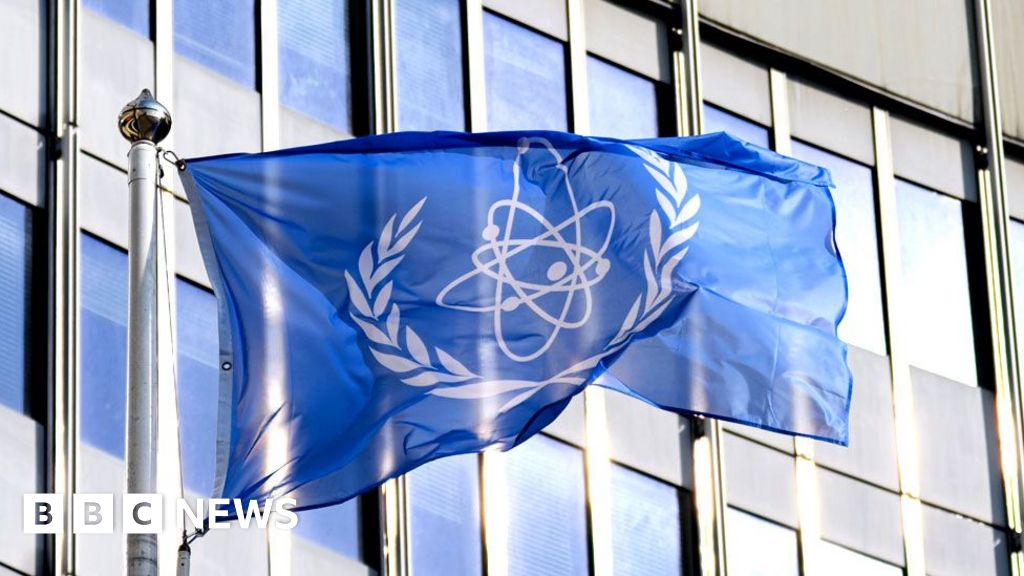
Iran Nuclear Program: IAEA Declares Non-Compliance, Raising International Tensions
The International Atomic Energy Agency (IAEA) board of governors has formally censured Iran for failing to fully cooperate with investigations into undeclared nuclear activities, marking the first such declaration in two decades. The resolution, backed by a majority of the 35-nation board, intensifies international scrutiny of Iran’s nuclear program and raises questions about potential repercussions, including possible referral to the UN Security Council.
nineteen countries, including the United states, United kingdom, France, and Germany, voted in favor of the motion, citing Iran’s “many failures” to provide complete answers regarding undeclared nuclear material and activities. Russia, China, and Burkina Faso opposed the resolution, while eleven nations abstained, according to BBC News. The IAEA’s concerns center on Iran’s stockpile of enriched uranium, which, while usable for reactor fuel, can also be processed for nuclear weapons.
IAEA Resolution Details and Iran’s Response
The IAEA resolution expresses “deep regret” over Iran’s lack of full cooperation,stating that its failures since 2019 constitute non-compliance with its obligations under the Nuclear Non-Proliferation treaty (NPT) Safeguards Agreement.The agency asserts it cannot verify the absence of diverted nuclear material, raising concerns about the exclusively peaceful nature of Iran’s nuclear program. This situation, the IAEA argues, falls within the purview of the UN Security Council, which could potentially reinstate sanctions lifted under the 2015 nuclear deal.
In response, Iran’s Atomic Energy Organisation (AEOI) and foreign ministry jointly condemned the resolution as a “political action” lacking technical and legal basis. They announced plans to establish a new uranium enrichment facility at a “secure location” and replace existing centrifuges with advanced models at the Fordo facility. These actions signal a further escalation in Iran’s nuclear activities and a potential setback for diplomatic efforts.
Did You Know? The Nuclear Non-proliferation Treaty (NPT),which Iran has signed,aims to prevent the spread of nuclear weapons and promote disarmament. As of 2024, 191 states have joined the treaty, highlighting its near-universal acceptance.
The 2015 Nuclear Deal and Subsequent Developments
The current crisis stems from the unraveling of the 2015 Joint Comprehensive Plan of Action (JCPOA), commonly known as the iran nuclear deal. Under this agreement,Iran agreed to limit its nuclear activities and allow IAEA monitoring in exchange for sanctions relief. Though,in 2018,then-US president Donald Trump withdrew the United States from the JCPOA,reinstating sanctions and prompting Iran to gradually roll back its commitments under the deal.
As 2019, Iran has exceeded JCPOA restrictions, particularly concerning enriched uranium production. The IAEA reported that Iran possesses enough uranium enriched to 60% purity – a short technical step from weapons-grade – to potentially create nine nuclear bombs. Iran maintains that its nuclear program is solely for peaceful purposes and denies any intention to develop nuclear weapons.
Pro Tip: Understanding the history of the JCPOA is crucial for grasping the current tensions. Research the key provisions of the agreement and the reasons behind the US withdrawal to gain a deeper understanding of the situation.
Geopolitical Implications and Potential Outcomes
The IAEA resolution and Iran’s response further complicate ongoing efforts to revive the JCPOA. Negotiations between tehran and Washington have stalled, with significant disagreements remaining on key issues, including sanctions relief and guarantees against future US withdrawals. The possibility of the UN security Council intervening and potentially reinstating sanctions looms large, potentially exacerbating regional tensions.
The situation is further complex by heightened tensions in the middle East. The US has advised non-essential staff at some embassies in the region to depart, and reports suggest Israel is prepared to strike Iranian nuclear facilities. Iran has warned of a strong response to any attack, threatening to target US military bases within range. The convergence of these factors creates a volatile and unpredictable environment.
Key Players and Their Positions
Several key actors are involved in the ongoing crisis, each with distinct interests and perspectives:
- Iran: Maintains its nuclear program is peaceful and seeks sanctions relief.
- United States: Demands Iran verifiably dismantle its nuclear weapons program.
- IAEA: Seeks to verify the peaceful nature of Iran’s nuclear program thru inspections and cooperation.
- european Powers (UK, France, Germany): Advocate for a diplomatic solution and adherence to the JCPOA.
- Russia and China: Oppose further sanctions on Iran and support the JCPOA framework.
- Israel: Views a nuclear-armed Iran as an existential threat and has hinted at military action.
The following table summarizes the key events and milestones in the Iran nuclear issue:
| Date | Event | Significance |
|---|---|---|
| 2015 | JCPOA Signed | Limited Iran’s nuclear program in exchange for sanctions relief. |
| 2018 | US Withdraws from JCPOA | Reinstated sanctions on Iran, leading to escalating tensions. |
| 2019 | Iran Begins Breaching JCPOA | Increased uranium enrichment and reduced IAEA cooperation. |
| Present | IAEA Resolution | Formally declared Iran in non-compliance, raising the stakes. |
The situation remains fluid, and the coming weeks and months will be critical in determining the future of the Iran nuclear program and its impact on regional and global security.
What actions do you think are most likely to de-escalate the current tensions?
How will this affect the average global citizen?
Evergreen Insights: Understanding the Iran Nuclear Issue
The iran nuclear issue is a complex and long-standing challenge with roots in the country’s nuclear program, which began in the 1950s with US assistance. Following the 1979 islamic Revolution, the program was suspended but later revived. Concerns about Iran’s intentions intensified in the early 2000s, leading to international sanctions and diplomatic efforts.
The JCPOA represented a significant diplomatic achievement, providing a framework for monitoring and limiting Iran’s nuclear activities.Though, the US withdrawal from the agreement and subsequent escalation have brought the issue back to the forefront of international concerns. The current situation underscores the challenges of nuclear non-proliferation and the importance of diplomatic solutions in addressing complex security issues.
According to the Stockholm International Peace Research Institute (SIPRI), as of early 2024, nine states-the United States, Russia, China, France, the United Kingdom, Pakistan, India, Israel and North Korea-possessed approximately 12,121 nuclear weapons, of which an estimated 9,585 were in military stockpiles for potential use. This highlights the global context of nuclear proliferation concerns and the importance of international efforts to prevent the spread of nuclear weapons.
Frequently Asked Questions About the Iran Nuclear Program
- Why is the IAEA concerned about Iran’s nuclear program?
- the IAEA is concerned as Iran has not fully cooperated with investigations into undeclared nuclear activities and possesses a stockpile of enriched uranium that could be used for nuclear weapons.
- what is the JCPOA, and why is it crucial?
- The JCPOA (Iran nuclear deal) is an agreement that limited Iran’s nuclear program in exchange for sanctions relief. It is importent becuase it provided a framework for monitoring and preventing Iran from developing nuclear weapons.
- What happens if the Iran nuclear issue is referred to the UN Security Council?
- If referred to the UN Security Council, sanctions that were lifted under the JCPOA could be reinstated, further escalating tensions and potentially harming Iran’s economy.
- What are the potential consequences of a military strike on Iran’s nuclear facilities?
- A military strike could trigger a wider conflict in the Middle East, with potentially devastating consequences for regional and global security.
- What is Iran’s official position on developing nuclear weapons?
- Iran insists its nuclear activities are entirely peaceful and that it would never seek to develop or acquire nuclear weapons.
- How dose the IAEA verify Iran’s compliance with nuclear agreements?
- The IAEA uses inspections, monitoring technologies, and analysis of Iran’s declarations to verify its compliance with nuclear agreements.
- What are the main obstacles to reviving the JCPOA?
- The main obstacles include disagreements between Iran and the US over sanctions relief, guarantees against future US withdrawals, and the scope of Iran’s nuclear program.
Disclaimer: This article provides news and background data and should not be considered legal or policy advice.
Share this article to spread awareness and join the conversation! What are your thoughts on the latest developments in the Iran nuclear issue? Leave a comment below.
