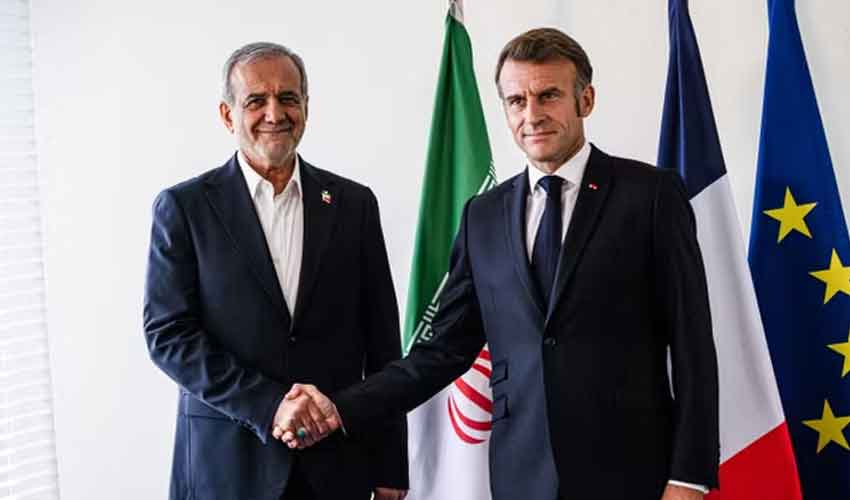
Global Leaders Push for US-Iran Ceasefire and Regional Stability
French President Emmanuel Macron and Turkish President Recep Tayyip Erdoğan are coordinating diplomatic pressure on Iran to engage in the “Islamabad Talks,” a strategic effort to secure a regional ceasefire and ensure freedom of navigation in the Strait of Hormuz to stabilize global energy markets and prevent a broader Middle Eastern conflict.
The geopolitical tension surrounding the Strait of Hormuz isn’t just a diplomatic puzzle; it is a systemic risk to the global supply chain. When the world’s most critical oil chokepoint is threatened, the ripple effects are felt instantly in municipal fuel prices from Rotterdam to Singapore. The current push for a ceasefire between the U.S. And Iran, brokered through intermediaries in Islamabad, represents a fragile attempt to decouple regional proxy wars from global economic stability.
For businesses, this volatility creates a nightmare for long-term planning. The unpredictability of maritime security forces shipping companies to hike insurance premiums overnight. To mitigate these risks, multinational firms are increasingly relying on international trade attorneys to restructure their contracts and include robust force majeure clauses that protect them from state-level disruptions.
The Islamabad Framework: A High-Stakes Gamble
The “Islamabad Talks” serve as a neutral ground where the interests of the West, Turkey, and the Islamic Republic can intersect without the optic of direct submission. President Pezeshkian has signaled a “determination and seriousness” regarding talks with the U.S., but the devil remains in the details of sanctions relief and nuclear monitoring.
France and Turkey are acting as the essential “bridge” here. Macron’s urgency stems from the European Union’s desperate need for energy price stability, while Erdoğan views himself as the primary arbiter of Anatolian and Persian influence. If this ceasefire is sabotaged, we aren’t just looking at a diplomatic failure; we are looking at a potential blockade of the Hormuz Strait, through which roughly one-fifth of the world’s total oil consumption passes.
“The stability of the Hormuz Strait is not a regional luxury; it is a global necessity. Any disruption here triggers a domino effect that elevates inflation across every continent, regardless of their direct involvement in the conflict.”
Here’s where the “Information Gap” becomes critical. While news outlets focus on the handshake between Macron and Erdoğan, the macro-economic reality is that the International Monetary Fund (IMF) has long warned that oil price shocks of this magnitude could trigger a global recessionary period. The risk is not just war, but a synchronized economic downturn.
Regional Anchoring: From Tehran to the Gulf
The impact of these talks is felt most acutely in the port cities of the Gulf. In cities like Dubai and Muscat, the local economy is hyper-sensitive to the “freedom of navigation” rhetoric. A single skirmish in the Strait can freeze port operations, delaying the delivery of essential goods and construction materials.

Local infrastructure in these regions is currently in a state of high alert. The push for a truce is driving a surge in demand for specialized logistics consultants who can help regional firms diversify their transit routes to avoid the chokepoint entirely. The goal is “resilience through redundancy”—creating alternative corridors that bypass the volatile waters of the Gulf.
The legal ramifications are equally complex. As Iran navigates its relationship with the U.S., the “snap-back” mechanism of international sanctions remains a looming threat. This creates a legal minefield for any company operating in the region. To avoid catastrophic fines, firms are engaging compliance specialists to ensure every transaction adheres to the latest OFAC regulations and international law.
Comparing the Strategic Objectives
| Entity | Primary Objective | Key Leverage Point |
|---|---|---|
| France (Macron) | Energy Price Stability | EU Diplomatic Bloc |
| Turkey (Erdoğan) | Regional Hegemony | Geographic Proximity/Mediation |
| Iran (Pezeshkian) | Sanctions Relief | Control of the Strait of Hormuz |
| United States | Nuclear Non-Proliferation | Financial System Dominance |
The coordination between Macron and Erdoğan is a calculated move to ensure that the U.S.-Iran ceasefire is not “sabotaged,” as Erdoğan explicitly warned. The fear is that a hardline faction within any of these governments could trigger a localized incident that spirals into a general war.
The Human Cost of Geopolitical Friction
Beyond the boardrooms and embassies, there is a human element to this tension. In the Levant, particularly Lebanon and Gaza, the “truce” discussed by Macron and Erdoğan is the only thing preventing a total humanitarian collapse. The interdependence of these conflicts means that a breakthrough in Islamabad can lead to a ceasefire in Beirut.
“We are seeing a shift where diplomacy is no longer just about treaties, but about managing the risk of systemic collapse. If the Islamabad talks fail, the humanitarian corridors in the Middle East will effectively vanish.”
This instability has led to a surge in displaced populations and a corresponding need for international humanitarian NGOs and legal aid clinics to manage the influx of refugees and the complex asylum processes that follow regional conflicts.
For a deeper understanding of the legal frameworks governing these waters, one can reference the United Nations Convention on the Law of the Sea (UNCLOS), which defines the rights of “transit passage” through international straits. The tension arises when political goals override these established legal norms.
The world is watching the Islamabad talks not because they love diplomacy, but because they fear the alternative. The thin line between a stabilized energy market and a global price shock depends on whether Macron, Erdoğan, and Pezeshkian can maintain a fragile consensus. In an era of “permacrisis,” the ability to navigate these geopolitical waters is the only true currency of power.
As these developments unfold, the need for verified, expert guidance becomes paramount. Whether you are a corporation hedging against maritime risk or a civic leader managing regional instability, the solution lies in connecting with proven professionals. The World Today News Directory remains the definitive resource for finding the legal experts, logistics specialists, and diplomatic consultants equipped to navigate the fallout of this evolving global crisis.