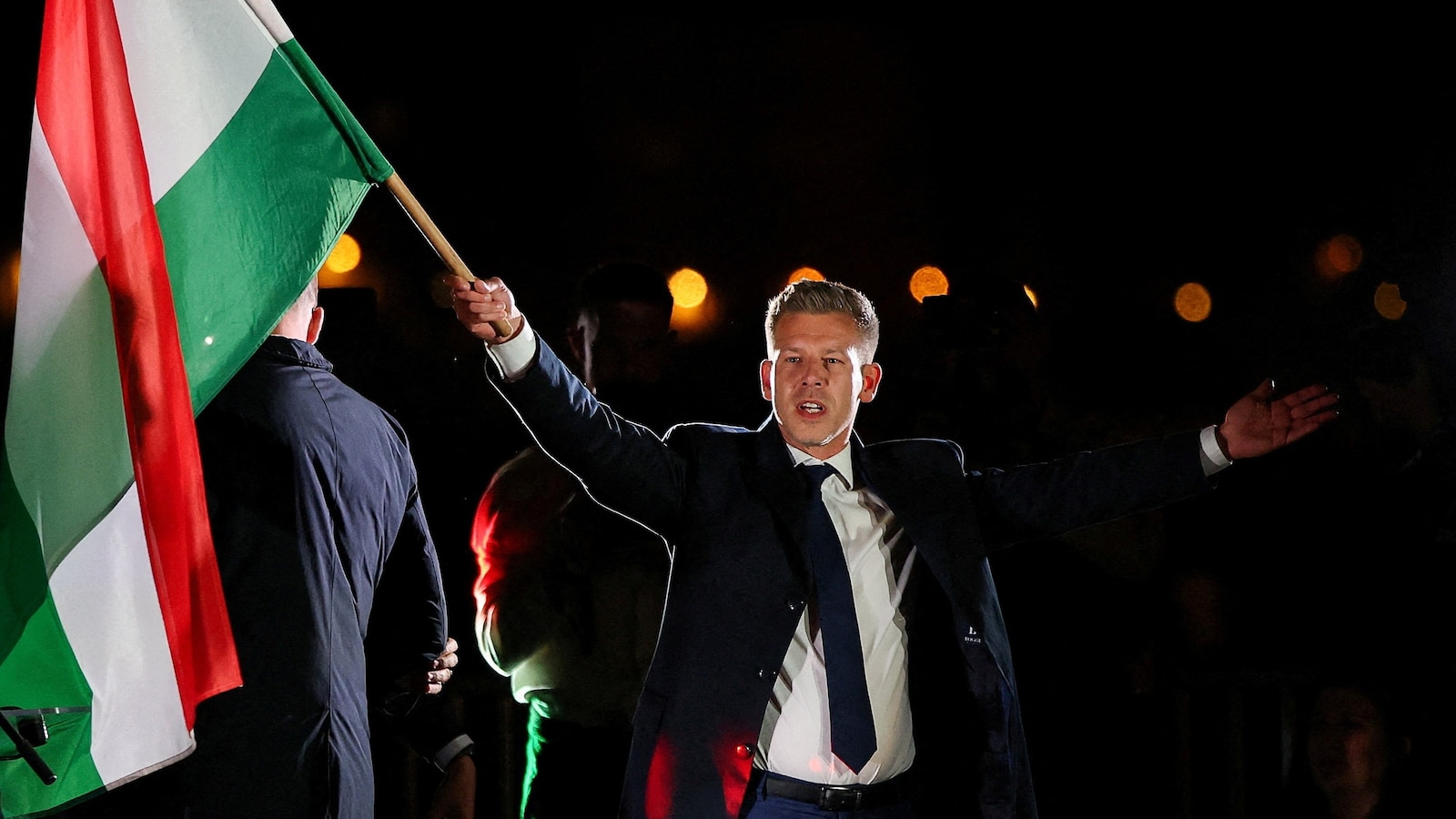
Far-Right Leader Allied With Trump Ends 16-Year Power Streak
Viktor Orbán has been ousted from power in Hungary after 16 years of dominance, following a seismic electoral shift on April 13, 2026. The defeat marks a definitive end to his far-right leadership and signals a massive geopolitical realignment within the European Union, fundamentally altering Central Europe’s political trajectory.
This isn’t just a change in administration. it is a systemic shock. For nearly two decades, Orbán constructed a “system of national cooperation” that blurred the lines between the state, the ruling Fidesz party, and a loyalist business elite. Now, that architecture is collapsing in real-time.
The immediate problem is the vacuum. When a leader who has centralized all executive authority is suddenly removed, the machinery of government often freezes. Investors are spooked, and the legal status of thousands of state-funded contracts is now in question. For businesses operating in Budapest and beyond, the primary challenge is no longer navigating Orbán’s bureaucracy, but surviving the inevitable audit of his legacy.
The Brussels Windfall and the Rule of Law
For years, the European Commission played a high-stakes game of financial poker with Budapest, freezing billions in recovery funds over concerns regarding judicial independence and democratic backsliding. The “Orbán Era” was defined by a constant friction between Hungarian sovereignty and EU mandates. With the electoral earthquake of 2026, the floodgates are expected to open.
The new government faces an immediate mandate: dismantle the “illiberal” legal framework. So rewriting electoral laws, restoring independence to the courts, and purging cronyism from the public tender process. However, the transition is fraught with risk. A rapid purge of the previous administration’s appointees could lead to a total collapse of municipal services in regional hubs like Debrecen and Szeged.
“We are not merely changing a Prime Minister; we are attempting to excise a decade and a half of institutional decay. The challenge is to remove the rot without killing the patient.”
The geopolitical ripples extend far beyond the borders of Hungary. Orbán served as the primary bridge between the Kremlin and the European right, and a key ideological ally to Donald Trump’s movement in the United States. His departure removes a critical wedge within the EU, potentially unifying the bloc’s strategy toward Eastern Europe and Ukraine.
Economic Volatility and the Legal Minefield
The transition period will be characterized by extreme legal volatility. Under Orbán, many state contracts were awarded to a close-knit circle of oligarchs. As the new government initiates “corruption cleanses,” these contracts may be declared void or subject to retroactive litigation.
This creates a precarious environment for international firms. Companies that operated under the previous regime’s “special arrangements” now find themselves in a legal gray zone. Navigating these shifting sands requires more than just standard accounting; it requires high-level strategic litigation. Many are already seeking specialized corporate law firms to audit their local partnerships and ensure compliance with the new administration’s transparency standards.
To understand the scale of the shift, consider the following projected transitions in Hungarian governance:
| Sector | Orbán Era (2010-2026) | Post-Orbán Projection (2026+) |
|---|---|---|
| EU Relations | Antagonistic / Transactional | Collaborative / Integrationist |
| Judiciary | Executive Influence | Independent Oversight |
| Media | State-aligned Conglomerates | Pluralistic / Decentralized |
| Foreign Policy | East-West Balancing | Strictly Pro-EU / Atlanticist |
The shift is not without its casualties. The sudden pivot may lead to temporary capital flight as the “oligarch class” attempts to move assets offshore before seizures begin. This instability affects everything from commercial real estate values in Budapest to the stability of the Forint.
Local Infrastructure and the Path to Recovery
The impact is most visceral at the municipal level. Many regional infrastructure projects were tied to Fidesz-linked contractors. With those firms now facing investigation or bankruptcy, critical road and utility projects across the Great Hungarian Plain are stalling.

Local mayors, many of whom were forced to align with the center to receive funding, are now scrambling to find new partners. The demand for vetted infrastructure consultants and independent project managers has spiked as cities attempt to decouple their development plans from the defunct political machinery of the past.
the social fabric of rural Hungary remains fractured. The “electoral earthquake” was not uniform; whereas urban centers swung violently against the far-right, some rural pockets remain deeply loyal to the old guard. This creates a volatile domestic atmosphere where the new government must balance justice for the past with stability for the future.
For a deeper dive into the legal precedents of this transition, the European Parliament’s guidelines on democratic resilience provide a roadmap for how member states recover from autocratic drift. Reports from AP News and official documents from the European Commission highlight the specific benchmarks Hungary must meet to fully unlock its frozen funds.
The Long-Term Horizon
The removal of Viktor Orbán is a victory for the ballot box, but the victory is only the beginning of a grueling process. The “Orbánist” system was not just a political party; it was a comprehensive restructuring of the Hungarian state. Removing the man at the top does not automatically restore the institutions he dismantled.
The coming months will be defined by a tension between the desire for swift retribution and the need for institutional stability. If the new government leans too heavily into purges, they risk creating the same atmosphere of fear and exclusivity that they sought to replace. If they are too lenient, they fail to satisfy a public that has waited 16 years for accountability.
The global community is watching Hungary as a litmus test: can a modern European state successfully “de-autocratize” without sliding into chaos? The answer will depend on the quality of the professionals stepping in to rebuild the ruins. Whether it is restructuring a bankrupt state enterprise or navigating a new set of transparency laws, the demand for verified, ethical expertise has never been higher. Those who can bridge the gap between the old regime’s wreckage and the new regime’s aspirations will be the true architects of Hungary’s future. For those seeking to navigate this transition, the World Today News Directory remains the definitive resource for locating the verified legal, financial, and civic professionals capable of managing this historic volatility.
- Safely landing a large commercial passenger jet without training is virtually impossible, according
- NFL Legend Mike Ditka Dies at 86, His Family Announced
- The Trump administration imposed sweeping sanctions against the International Criminal Court on Oct (newsy-today.com)
- Houthi Strikes on Riyadh Airport Kill Three as Trump Rules Out Pre-Midterm Action (archyde.com)