
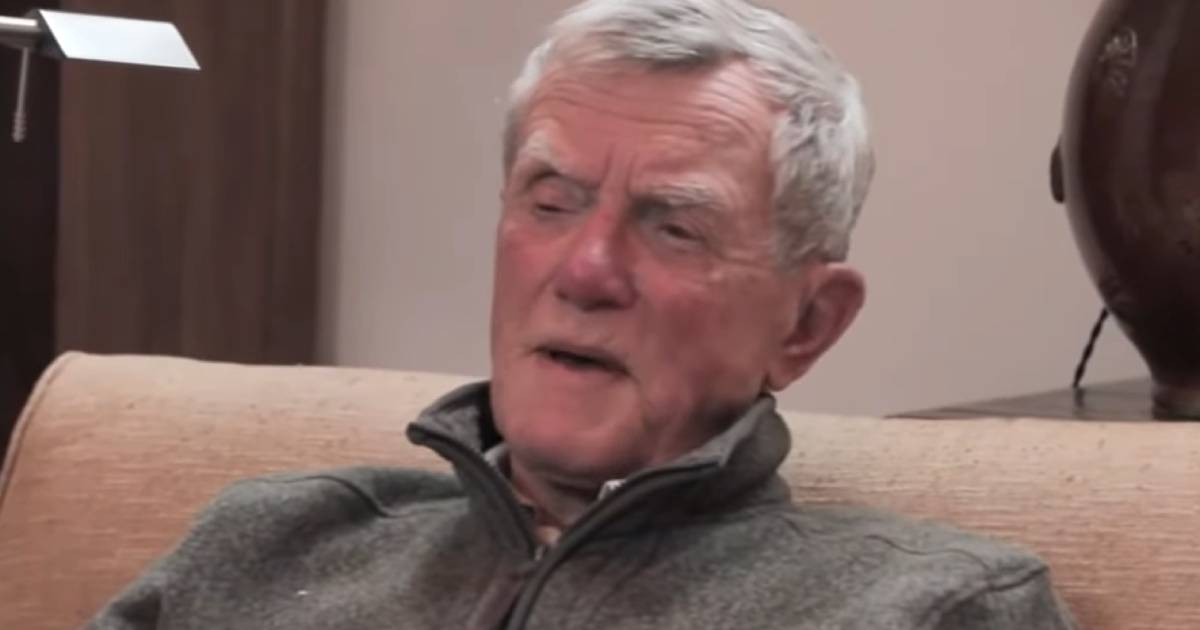
A Rancher’s Cold war: Fifteen Years Lost in Castro‘s Cuba
Lawrence kirby Lunt Jr.’s life reads like a Cold War thriller, yet unfolded in the vibrant, than volatile, landscape of post-revolutionary Cuba. His story, recently detailed by the Cowboy State Daily, is a compelling blend of patriotic fervor, clandestine operations, and a family’s enduring struggle against a formidable regime.
In the 1950s, Lunt, a veteran of both World War II and the Korean War, established a 2,000-hectare cattle ranch north of havana, utilizing inherited land through his belgian wife’s family. He settled into a peaceful existence, raising livestock and enjoying a quiet life until a fateful encounter wiht the CIA dramatically altered his destiny.
Recruited by the agency, Lunt became a key asset in the burgeoning struggle against Soviet influence in the Western Hemisphere. He skillfully gathered intelligence, cultivating a network of informants and meticulously tracking Soviet military activity on the island. His ranch served as a discreet hub for covert operations, even playing a role in the crucial effort to photograph Soviet missile installations in Cuba.
However, as Fidel Castro’s government solidified its power, the risks escalated. In 1965, while attempting to return to the United States for his parents’ anniversary, Lunt was detained by Cuban authorities. Within days, he was formally arrested by State Security, initiating a harrowing fourteen-year ordeal.
His arrest,reported by The New York Times in May 1965,signaled a broader crackdown on foreigners. A year later, Lunt was convicted of espionage and sentenced to thirty years in prison.
The news ignited a relentless campaign for his release, spearheaded by his family. His father passed away without witnessing his freedom, but his brother, a Wyoming rancher and physician, dedicated himself to the cause. This pursuit involved appeals to the highest levels of government, including presidential memoranda and clandestine negotiations, even exploring a potential exchange involving Puerto Rican activist Lolita Lebron.
Lunt endured brutal conditions throughout his captivity: relentless interrogations, sleep deprivation, starvation, and physical abuse. He was transferred between numerous prisons, forced to work in quarries, and witnessed the harsh realities of the Cuban penal system, including executions for acts of compassion.
Despite the immense suffering,Lunt remained unbroken. “I don’t regret what I did,” he later affirmed, “My love for my country kept bitterness far from my heart.”
The impact on his family was profound. His youngest son, Larry, was just three years old when his father was imprisoned. He remembers Cuban soldiers occupying the family ranch before his mother fled with the children to Belgium, initially believing the separation would be brief – a year, perhaps. It stretched into nearly fifteen.
freedom finaly arrived in 1979, secured through a negotiated exchange facilitated by Wyoming Governor Ed Herschler and finalized under the Carter governance. Lunt, along with three other Cuban political prisoners, was released into U.S. custody. “The Cubans saw us as merchandise to be exchanged when it was convenient,” he remarked upon his return.
Following his release, Lunt divided his time between Tucson, Belgium, and Saratoga, Wyoming. He chronicled his experiences in his memoir, “Leave Me My Spirit,” acknowledging his youthful perception of espionage as an adventure, while confronting the harsh reality of paying for that “idealism” with a decade and a half of imprisonment.
In 1986, Congressman Dick Cheney championed federal compensation for his captivity, and his family reports he eventually received approximately $250,000.
Lawrence Kirby Lunt Jr. passed away in 2017 at the age of 92. He is remembered by his son as a man of unwavering principle, deeply proud of his country and committed to defending democratic ideals. He was a spy who served his nation, but also a husband and father who sacrificed his family life and lost years of his life to the political turmoil of a changing world, a world where his American identity and thriving ranch became unforgivable offenses in the eyes of a new regime.
