
Ancient Nova Confirmed in Ming Dynasty Records
Celestial Event Witnessed During Emperor Yongle’s Reign
A brilliant, yellow star observed in the night sky over China in 1408 has been definitively identified as a nova, a stellar explosion, thanks to newly analyzed historical records. The discovery sheds light on both ancient astronomy and a pivotal period in Chinese history.
Auspicious Omen for the Emperor
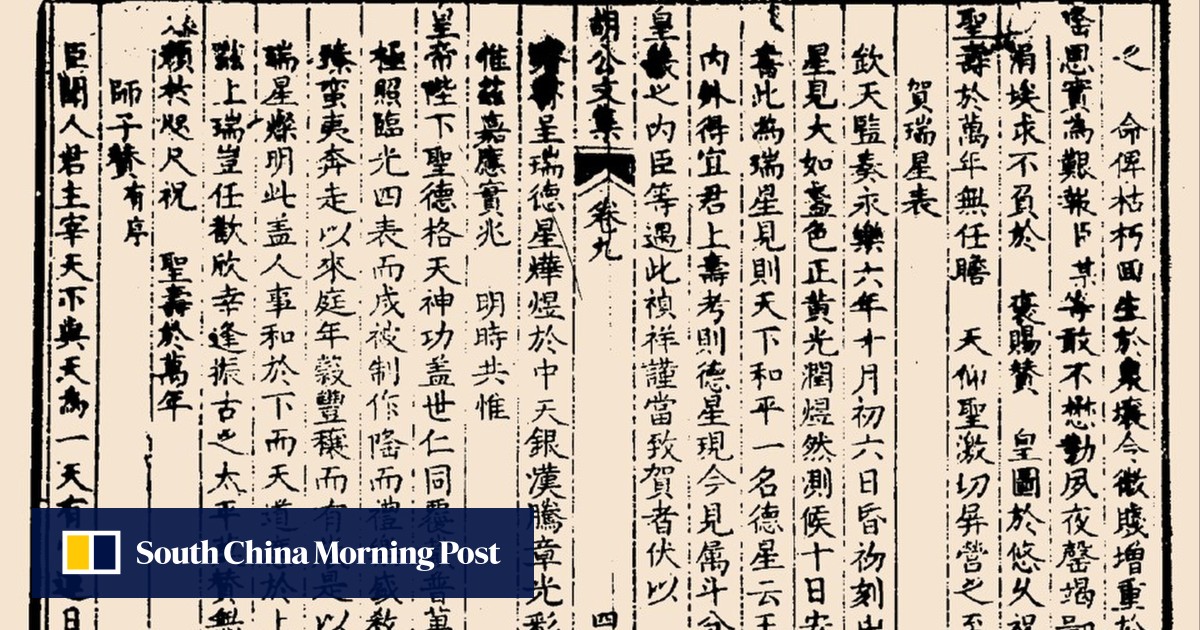
Just after sunset on an October evening, astronomers at the Chinese court noticed a new star shining brightly near the Milky Way. Hu Guang, a scholar at the Hanlin Academy, documented the event in a formal report to Emperor Yongle, interpreting it as a positive sign for the ruler’s ambitious projects.
“We, your ministers, have encountered this auspicious sign, and respectfully offer our congratulations … This splendid omen is truly a sign of an enlightened era,”
—Hu Guang, Hanlin Academy Scholar
Emperor Yongle’s reign was marked by significant undertakings, including the launch of Zheng He’s treasure fleets, which extended China’s influence across the Indian Ocean and as far as Africa. The star’s appearance was seen as a heavenly endorsement of these endeavors.
Decades-Long Mystery Solved
The newly rediscovered memorial details that the star “was about the size of a cup-shaped oil lamp, with a pure yellow colour, smooth and bright.” Astronomers meticulously tracked the phenomenon for ten days, noting its stationary position. Previous records lacked sufficient detail to determine whether the event was a nova, comet, or meteor.
Researchers from China, Germany, and Chile published their findings last week in The Astronomical Journal. The detailed observations—including the star’s size and luminosity—allowed the team to pinpoint its likely location.
The study builds on a growing field of ‘astrohistory’ which uses historical records to understand past astronomical events. Currently, astronomers are tracking over 300 potential novae candidates in our galaxy, with new events occurring several times per year. (Source: Space.com, 2024)
Understanding Novae
Unlike supernovae, which mark the complete destruction of a star, novae involve a temporary increase in brightness caused by the fusion of hydrogen on the surface of a white dwarf star. This process doesn’t destroy the star, and it can repeat over time. The 1408 nova provides valuable data for understanding these stellar events and their frequency.
This discovery highlights the sophisticated astronomical observations made by Chinese scholars centuries ago and demonstrates the enduring value of historical records in modern scientific research. Further study of similar events could reveal more about the evolution of stars and the history of our galaxy.
