
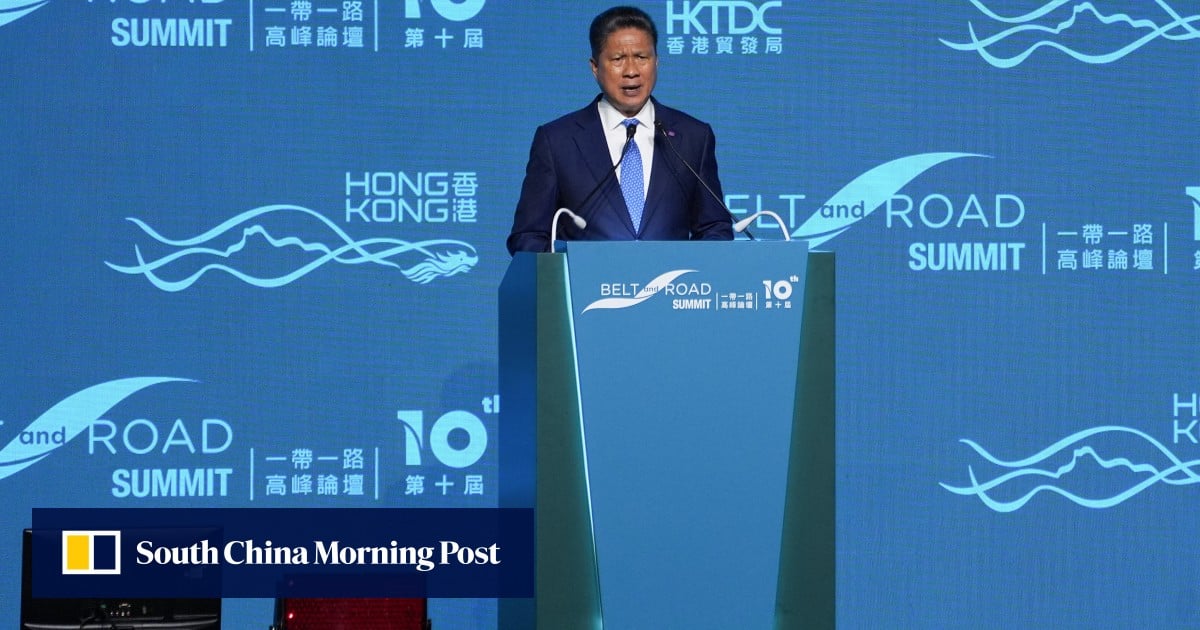
Cambodian Deputy Prime Minister Defends China‘s Belt and Road Initiative as ‘Lifeline’ for Advancement
HONG KONG – Cambodia‘s deputy Prime Minister Sun Chanthol emphatically rejected accusations that China’s Belt and Road Initiative (BRI) constitutes a “debt trap” for developing nations, asserting wednesday that the infrastructure program has been instrumental in his country’s economic advancement. Speaking at the Belt and Road Summit in Hong Kong, Chanthol highlighted roads, an airport, an expressway, and a planned canal – all projects funded through the BRI - as beneficial to the Cambodian people.
“The belt and Road Initiative is not a debt trap. I repeat, it’s not a debt trap,” Chanthol stated to an audience of hundreds. “On the contrary, it is a lifeline for [our] social and economic development. It is a strategic investment towards Cambodia’s long-term future.” The comments come amid ongoing debate regarding the initiative’s impact on recipient countries and their financial stability.
The Belt and Road Initiative, launched by Chinese President Xi Jinping, is a massive infrastructure strategy aimed at improving regional connectivity and accelerating trade across Asia, Africa, and Europe. It has faced scrutiny from Western governments and media,who allege it saddles participating countries with unsustainable debt,potentially leading to loss of control over strategic assets.The term “debt-trap diplomacy” gained prominence in 2017, fueled by reports of Sri Lanka leasing its Hambantota port to a Chinese company for 99 years after struggling to repay loans used for its construction.
In a separate statement on Wednesday, President Xi Jinping reaffirmed china’s commitment to an “open world economy” and expanding high-level opening-up, according to state news agency Xinhua, in a letter to the china International Fair for Trade in Services. He pledged to align with international economic and trade rules and further open China’s service market.
