
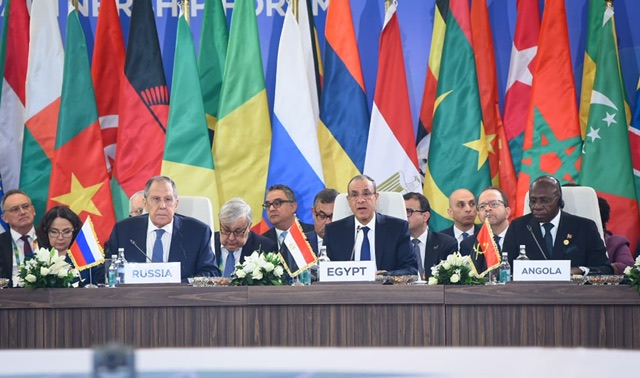
Egypt, as the convenor of the Russia‑Africa Partnership Forum, is now at the center of a structural shift involving Africa’s strategic alignment with extra‑regional powers.The immediate implication is a deepening of Moscow’s political and economic foothold on the continent, which could recalibrate the balance of influence among global actors.
The Strategic Context
The Russia‑Africa dialog, launched in 2019 and reinforced in 2023, reflects a broader multipolar trend in which non‑Western powers seek to institutionalise ties with the Global South. Africa’s demographic surge, projected to add over 1 billion people by 2050, and the ongoing implementation of the African Continental free Trade Area (AfCFTA) create a market attractive to external investors. Together, Western donors face fiscal constraints and strategic fatigue after prolonged engagements in the Sahel and Horn of Africa, opening space for alternative partnerships. The forum’s timing-preceding the third Russia‑Africa summit-signals an attempt to translate diplomatic rhetoric into a multi‑year action plan that aligns with the African Union’s Agenda 2063 and the Ezulwini Consensus on UN Security Council reform.
Core Analysis: Incentives & Constraints
Source Signals: The meeting gathered foreign ministers from over 50 African states, Russia, and the African Union chair. Egypt’s foreign minister, speaking for President Sisi, called for reform of the international system, highlighted Africa’s demographic weight, advocated full activation of AfCFTA, and emphasized infrastructure, space, and climate projects led by Egypt. He also voiced concern over security threats, foreign interventions, and water security, while reaffirming Egypt’s role in Gaza ceasefire mediation.Russia’s foreign minister delivered a message from President Putin, and the AU chair participated.
WTN Interpretation: Egypt leverages its geographic position, diplomatic clout, and leadership of AU‑linked institutions to position itself as the gateway for Russian engagement, thereby extracting political capital and growth financing. Russia seeks to diversify its strategic partnerships beyond Europe, gain access to African markets, natural resources (e.g., minerals, energy), and secure diplomatic support for its positions in international fora, including UN Security Council reform. African states, facing financing gaps for infrastructure and climate resilience, view the partnership as a pragmatic alternative to Western aid, especially where conditionalities are perceived as restrictive. Constraints include the need to maintain balanced relations with the EU, United States, and China; domestic political sensitivities to foreign military presence; and the operational challenges of AfCFTA implementation. For Russia,sanctions and Western diplomatic pushback limit the depth of security cooperation it can offer without provoking counter‑measures.
WTN Strategic Insight
“The Russia‑Africa Forum is less a bilateral aid program than a structural lever in the emerging multipolar order, where demographic weight translates into diplomatic bargaining chips at the United Nations.”
Future Outlook: Scenario Paths & Key Indicators
Baseline Path: If the 2026‑2029 action plan proceeds without major geopolitical shocks, Russia will deepen economic ties through joint infrastructure, mining, and energy projects, while African states incrementally adopt AfCFTA mechanisms. Egypt will consolidate its role as the coordination hub, attracting Russian financing for climate‑resilient infrastructure. This trajectory reinforces a modest but steady shift of African foreign policy orientation toward a more balanced set of partners, without overtly antagonising western actors.
Risk Path: If Western powers intensify sanctions on Russia or increase aid competition in Africa, or if regional security crises (e.g., escalation in the Sahel or Red Sea tensions) worsen, African states may reassess the partnership’s viability.A backlash could manifest as reduced Russian investment, heightened diplomatic friction, and a pivot back toward Western or Chinese financing, potentially destabilising the nascent Russia‑Africa coordination mechanisms.
- Indicator 1: Schedule of the next Russia‑Africa summit (mid‑2026) and the content of its joint communiqué, especially references to security cooperation and investment commitments.
- Indicator 2: Progress reports on AfCFTA implementation (customs integration milestones, trade volume data) released by the african Union in the next 3‑6 months.
