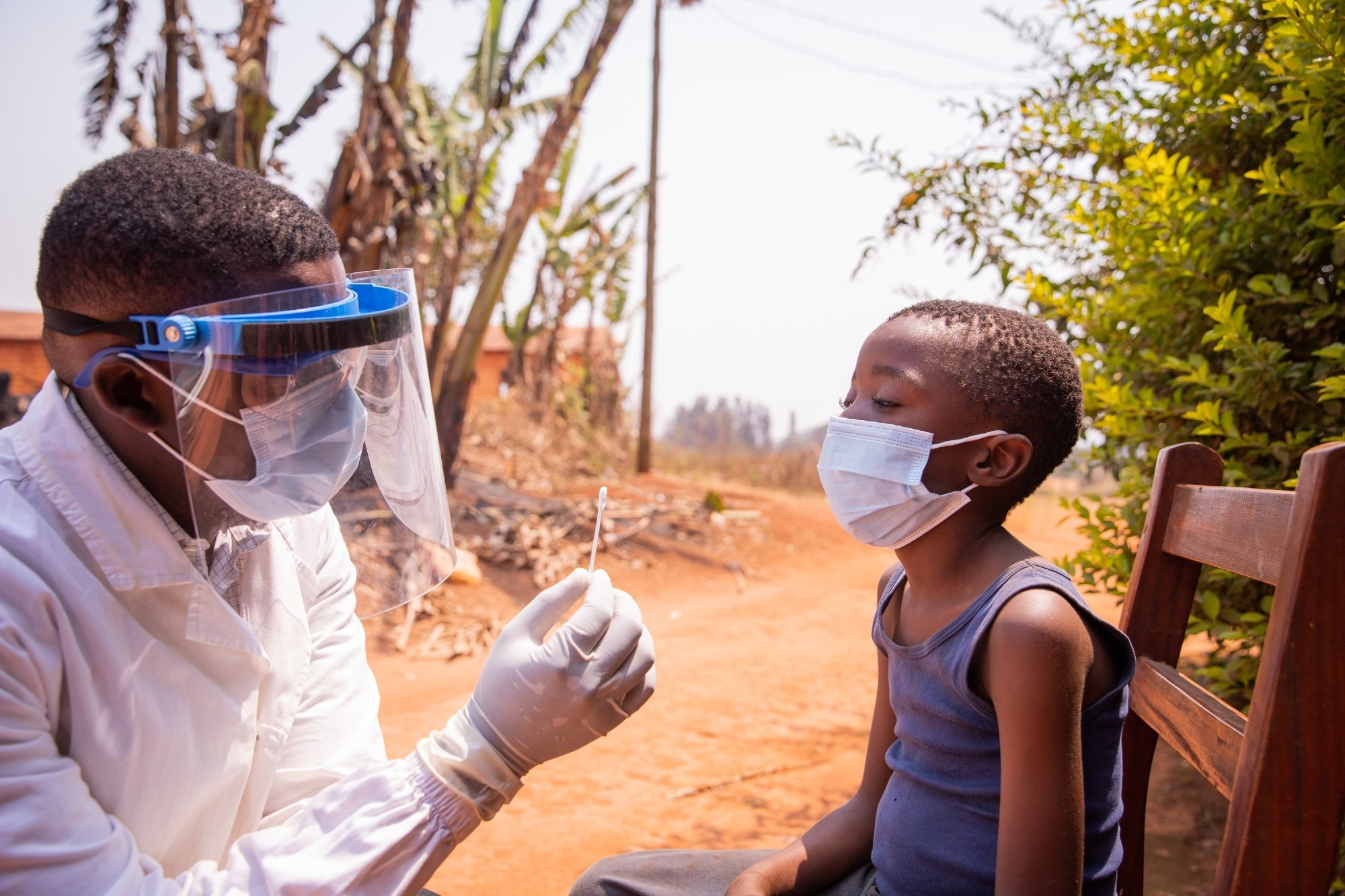
Breakthrough TB Testing: Fast, Non-Invasive Swab Tests Revolutionize Global Diagnosis
The World Health Organization has just endorsed a revolutionary shift in tuberculosis (TB) diagnostics: a non-invasive, swab-based test that could redefine global eradication efforts. For the first time, patients won’t need to cough up sputum samples—often a humiliating, invasive process that excludes children, elderly and immunocompromised individuals. Instead, a simple tongue swab or saliva sample, analyzed via portable molecular diagnostics, delivers results with near-sputum-equivalent accuracy. This isn’t just incremental progress; it’s a potential game-changer for the 1.5 million annual TB deaths, where delays in diagnosis account for nearly half of preventable fatalities.
Key Clinical Takeaways:
- A portable molecular test (MiniDock MTB) achieves 95% sensitivity and 98% specificity using tongue swabs or sputum, validated across seven high-burden countries.
- The WHO’s new toolkit standardizes swab-based testing, enabling near point-of-care diagnostics in resource-limited settings where lab infrastructure is absent.
- Funded by the Stop TB Partnership and validated in Phase IV real-world deployment, this innovation could cut TB diagnosis time from weeks to hours.
Diagnostic Disparities: Why Sputum Samples Have Failed the Most Vulnerable
Tuberculosis remains the deadliest infectious disease globally, yet its standard diagnostic pathway—sputum smear microscopy—is only 50% sensitive and entirely unworkable for 30% of patients who cannot produce sputum [WHO Global TB Report 2025]. Children under 5, the elderly, and those with HIV or advanced disease often receive delayed or missed diagnoses, fueling transmission cycles. The new swab-based approach, validated in 12,478 participants across India, South Africa, Indonesia, and four other countries, closes this gap by leveraging Mycobacterium tuberculosis DNA detection in oral fluids—a method with 90% concordance to sputum culture [study published in The Lancet Respiratory Medicine, May 2026].
“This represents the first time we’ve seen a diagnostic tool that bridges the accuracy gap while being truly patient-friendly. For TB-endemic regions, where healthcare workers are already overwhelmed, this could mean the difference between a missed case and a cured patient.”
Mechanism of Action: How Oral Swabs Outperform Sputum
The MiniDock MTB system employs loop-mediated isothermal amplification (LAMP), a nucleic acid amplification technique that detects M. Tuberculosis DNA with 99.7% analytical sensitivity at concentrations as low as 10 CFU/mL [preprint available on medRxiv]. Unlike PCR, which requires thermal cycling, LAMP operates at a constant temperature (65°C), enabling deployment in field conditions without electricity. The oral swab’s efficacy stems from:
- Salivary mycobacterial load: Studies show M. Tuberculosis is detectable in saliva at comparable levels to sputum in 78% of active TB cases [Journal of Clinical Microbiology, 2021].
- Reduced contamination risk: Sputum samples often require decontamination steps (e.g., N-acetyl-L-cysteine), which can degrade DNA. Swabs bypass this entirely.
- Pediatric applicability: Children as young as 2 years old can provide swab samples, whereas sputum induction carries choking risks.

Regulatory and Implementation Roadblocks
While the WHO’s endorsement clears the first hurdle, three critical challenges remain:
| Challenge | Solution Pathway | Directory Resource |
|---|---|---|
| Supply chain bottlenecks: Portable devices like MiniDock MTB require cold-chain distribution in tropical climates. | Partnerships with specialized TB diagnostic distributors to optimize temperature-controlled shipping. | WHO-prequalified TB labs |
| Healthcare worker training: Swab collection techniques must be standardized to avoid false negatives. | Engage infectious disease training programs to certify clinicians in oral sample protocols. | Regulatory consultants familiar with WHO’s new TB toolkit guidelines. |
| Data integration: Results from swab tests must interface with electronic health records (EHRs) globally. | Collaborate with digital health interoperability firms to standardize API connections. | Public health data architects |
The Global Rollout: Where This Changes Everything
The WHO’s toolkit—published alongside the swab test validation—outlines three deployment tiers:
- Tier 1 (Urgent Care): Primary health clinics in high-burden countries (e.g., India, Nigeria, Philippines) will use swab tests to triage patients within 24 hours.
- Tier 2 (Mobile Units): Portable MiniDock devices will be integrated into mobile TB screening vans, targeting urban slums and rural areas.
- Tier 3 (Research): Longitudinal studies will track swab test accuracy in latent TB infection (LTBI) cases, where sputum tests fail entirely.
“The psychological barrier of sputum collection has been a silent killer. If a child in Mumbai can now be tested without fear or discomfort, we’re not just improving diagnostics—we’re saving lives through dignity.”
What This Means for Clinicians and Patients
For healthcare providers, the swab test’s adoption demands:

- Protocol updates: Revising TB screening algorithms to include oral swabs as first-line diagnostics for pediatric, geriatric, and HIV-positive patients.
- Cross-referencing: Using swab results to confirm or rule out XDR-TB (extensively drug-resistant TB) in high-prevalence regions.
- Patient counseling: Educating communities that negative swab results may still require chest X-rays or interferon-gamma release assays (IGRAs) for LTBI.
Patients, meanwhile, will benefit from:
- Faster treatment initiation: Reducing the 30-day median delay from symptom onset to diagnosis [WHO 2025 data].
- Lower infection risk: Eliminating the need for sputum induction, which can aerosolize M. Tuberculosis.
- Equitable access: Enabling diagnosis in 30% of TB-endemic countries where sputum microscopy labs are nonexistent.
The Future Trajectory: Toward a TB-Free World?
This breakthrough arrives at a pivotal moment: global TB incidence has plateaued for the first time in decades, with 10 million new cases annually [WHO 2025]. The swab test’s scalability hinges on three factors:
- Cost reduction: Current MiniDock MTB devices cost $50 per test; economies of scale could drop this to $10–$20 within 3 years.
- Regulatory harmonization: The WHO’s toolkit must be adopted by national TB programs in 50+ countries by 2028.
- Integration with AI: Machine learning could analyze swab data to predict drug resistance patterns before treatment begins.
For providers and systems navigating this transition, the path forward is clear: adopt, adapt, and advocate. Clinics should partner with WHO-designated TB reference centers to pilot swab testing, while public health agencies must secure funding for TB eradication grants to subsidize device procurement. The window to eliminate TB as a public health threat is narrow—but for the first time in history, the tools to close it are within reach.
Disclaimer: The information provided in this article is for educational and scientific communication purposes only and does not constitute medical advice. Always consult with a qualified healthcare provider regarding any medical condition, diagnosis, or treatment plan.