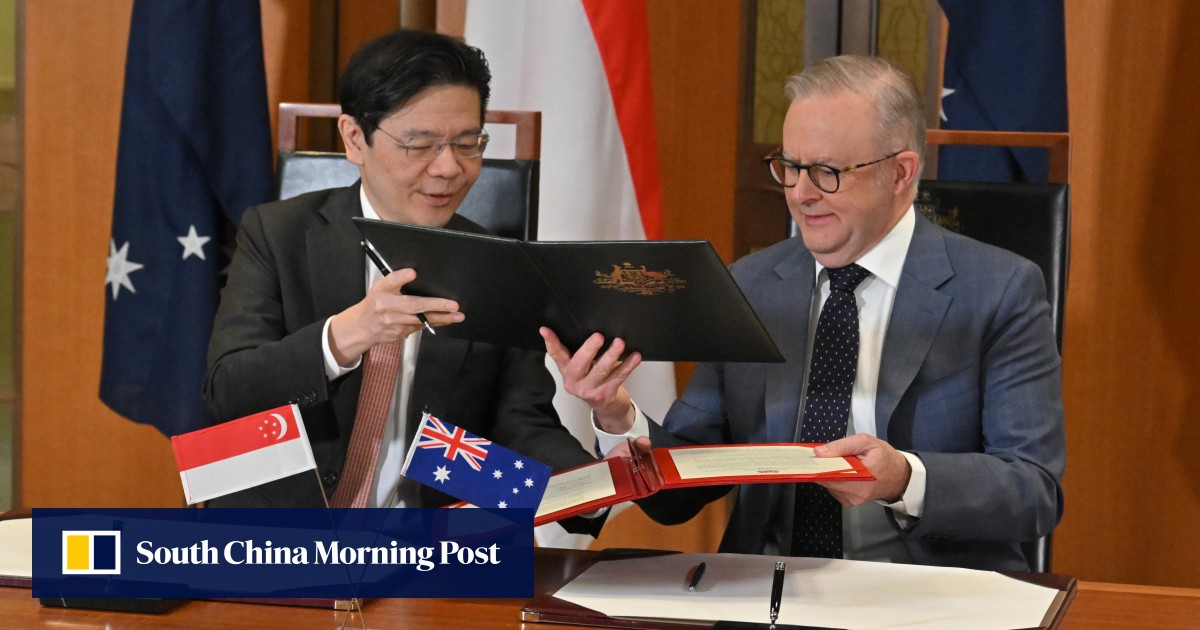
Australia Secures Fuel Export Guarantees From Singapore and Japan
Australia has secured critical fuel supply guarantees from Japan, South Korea and Singapore to stabilize energy markets disrupted by the war in Iran. Despite being a major fossil fuel exporter, Australia relies heavily on Asian refineries for refined oil, facing recent petrol station shortages and significant price spikes.
The current energy crisis exposes a jarring contradiction at the heart of the Australian economy. On one hand, the nation is a global powerhouse in fossil fuel exports; on the other, it is profoundly vulnerable to the whims of international supply chains for the very fuel that keeps its cities moving. This fragility has moved from a theoretical risk to a tangible reality, with hundreds of petrol stations reporting shortages across the country over the last week.
The dependency is stark.
The Asian Lifeline and the Refining Gap
The Australian government’s recent diplomatic push was not merely a formality—it was a necessity. Assistant Foreign Affairs and Trade Minister Matt Thistlethwaite spent the last week securing pledges from key Asian partners to ensure that fuel shipments continue without interruption. The fear was that these nations, facing their own pressures from the conflict in Iran, might curb exports to protect their domestic supplies.

“I met last week with the Japanese minister and requested that supply continue and they’ve given us an assurance,” Thistlethwaite stated, noting that similar guarantees were received from South Korean and Singaporean officials.
To understand why these guarantees are so vital, one must gaze at the breakdown of where Australia’s fuel actually comes from. The nation’s reliance on a handful of Asian neighbors creates a concentrated risk profile that is difficult to mitigate quickly. According to data from the Institute for Energy Economics and Financial Analysis, the import landscape looks like this:
- South Korea: Contributes approximately 25% (one quarter) of all fuel imports.
- Malaysia: Supplies roughly 13% of the nation’s refined oil products.
- Japan and Singapore: Act as primary strategic partners and guarantors of supply.
The most alarming statistic, however, is the domestic capacity. Only 17% of Australia’s oil products are refined onshore. This means that 83% of the fuel powering Australian vehicles and industry is subject to the volatility of international shipping lanes and the stability of foreign governments.
When supply chains fracture, the impact is immediate. For businesses operating on thin margins, these disruptions are more than an inconvenience—they are a threat to viability. Many are now consulting supply chain consultants to diversify their procurement strategies and build buffers against future shocks.
The Geopolitical Chokepoint: The Strait of Hormuz
The catalyst for the current instability is the war in Iran, which has effectively halted much of the trade flowing through the Strait of Hormuz. As one of the world’s most critical oil transit points, any disruption here sends shockwaves through global pricing and availability. Australia, despite its geographic distance from the Middle East, feels the impact through the refineries in Asia that process that oil before shipping the refined product south.
The result has been a double-edged sword: skyrocketing fuel prices at the pump and physical shortages of specific fuel types. Here’s the “just-in-time” delivery model failing in the face of geopolitical warfare.
The vulnerability is not just logistical; it is legal and contractual. As the government pivots its strategy, the complexity of shifting trade partners increases. Companies looking to hedge their risks are increasingly turning to international trade attorneys to navigate the regulatory hurdles of shifting supply contracts from Asia to the West.
Diversification as a National Security Strategy
Energy Minister Chris Bowen has signaled that the government is no longer content with relying on a narrow corridor of Asian suppliers. The strategy is now shifting toward diversification. Australia is actively seeking to purchase oil products from the United States and Mexico to reduce the systemic risk posed by the Iran conflict.
This pivot represents a fundamental shift in Australia’s energy security posture. By expanding its sourcing to the Americas, Australia is attempting to decouple its fuel security from the volatility of the Strait of Hormuz and the concentrated refining capacity of East Asia.
However, diversification takes time. It requires new shipping routes, new trade agreements, and new infrastructure. In the interim, the guarantees from Japan, South Korea, and Singapore act as a critical bridge, preventing a total collapse of fuel availability while the long-term strategy is implemented.
The transition to a more diversified energy source is an expensive and complex undertaking. Many regional municipalities and infrastructure firms are now engaging energy efficiency specialists to reduce the overall demand for refined fuels, attempting to lower the nation’s baseline dependency on foreign imports.
Australia’s current predicament serves as a powerful lesson in the dangers of “export-heavy, refine-light” economic models. While the diplomatic wins in Tokyo, Seoul, and Singapore provide immediate relief, the long-term solution lies in reducing the gap between what the country produces and what it can process at home.
The world is entering an era where energy is used as a primary weapon of war. For a nation that imports the vast majority of its refined fuel, the only true security is redundancy. Whether that comes through increased domestic refining or a broader web of global partners, the goal remains the same: ensuring that a conflict thousands of miles away cannot bring an Australian city to a standstill. For those navigating this volatile landscape, finding verified professionals through the World Today News Directory is the first step in building a resilient operational future.