
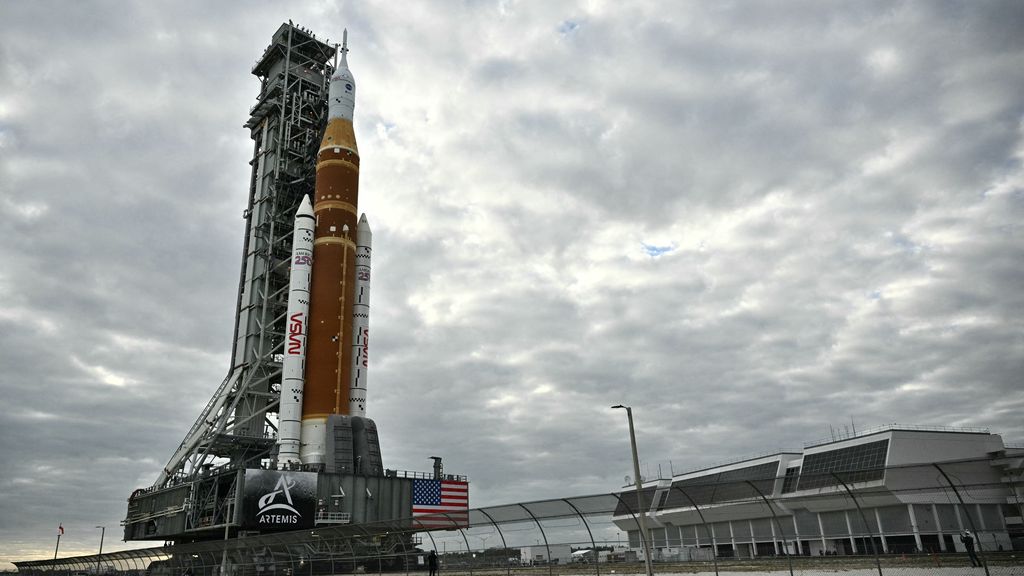
NASA has postponed the launch of the Artemis mission, the first crewed lunar voyage since 1972, due to newly discovered technical issues with the Space Launch System (SLS) rocket. The announcement came Friday, just days after a “wet dress rehearsal” – a full fueling and simulated launch sequence – had been deemed successful.
The problem centers on the rocket’s helium system, which is crucial for cooling and regulating pressure within the fuel tanks. According to NASA, issues arose during post-test analysis. Prior to this, concerns had been raised regarding filters and hydrogen leaks, which also threatened delays.
The Artemis mission aims to send four astronauts – three from the United States and one from Canada – on a ten-day flight around the Moon. It is intended as a precursor to a planned lunar landing in 2028.
With the March launch window now closed, NASA is targeting April as the next potential opportunity. Jared Isaacman, NASA Administrator since December 2025, acknowledged the disappointment but expressed continued optimism. “During the 1960s, when NASA achieved what almost no one thought possible, there were also many setbacks,” Isaacman stated, referencing the early challenges faced during the Apollo program, such as the aborted Gemini 8 mission led by Neil Armstrong. “But less than three years later, he was the first man on the Moon.”
Isaacman’s appointment as NASA Administrator followed a complex nomination process initiated by President Donald Trump in December 2024. The nomination was initially withdrawn in May 2025 amid a public dispute between Trump and Elon Musk, a close ally of Isaacman. However, Trump renominated Isaacman in November 2025, and his confirmation by the Senate followed on December 17, 2025.
Isaacman, a billionaire entrepreneur and pilot, is the first NASA administrator in decades to come from outside of government. He previously commanded Inspiration4, the first all-civilian orbital spaceflight, and Polaris Dawn, during which he became the first private citizen to perform a spacewalk. He founded Shift4 Payments and Draken International, and his leadership is seen as a shift towards greater commercial involvement in space exploration.
During his confirmation hearing, Isaacman emphasized the importance of returning to the Moon and establishing a permanent lunar base, aligning with Trump’s stated goals of resource extraction and positioning the U.S. For future missions to Mars. He also acknowledged the growing competition with China in the space race, stating that falling behind could have significant consequences on Earth.
As of now, NASA has not provided a specific date for the next launch attempt in April, and further assessments of the helium system are underway.
