
European Nations Bolster Arctic Presence Amidst US-Greenland Dispute
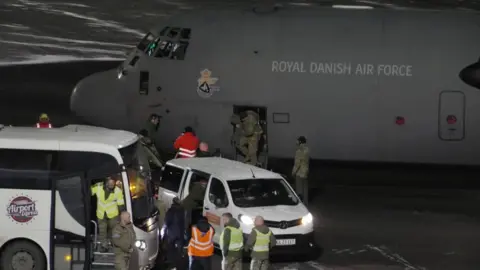
Nuuk, Greenland – January 20, 2026 – As former US President Donald Trump continues to voice interest in acquiring Greenland, a concerted effort by European NATO allies is underway to reinforce their military presence on the strategically important island.Several European nations have begun deploying personnel to Nuuk, Greenland’s capital, for what is being described as reconnaissance and joint military exercises, signaling a unified message of support for Denmark and a commitment to Arctic security. This move underscores growing concerns about the region’s geopolitical importance and the potential for increased competition among global powers.
A Show of Force and solidarity
The deployments, involving France, Germany, Sweden, Norway, Finland, the Netherlands, and the United Kingdom, are taking place under the umbrella of Danish-led joint exercises known as Operation Arctic Endurance. While the initial deployments are relatively small in scale – consisting of only a few dozen personnel – their symbolic weight is meaningful. French President Emmanuel Macron has announced plans to augment the initial contingent with “land, air, and sea assets,” demonstrating a willingness to invest further in the region.
Olivier Poivre d’Arvor, a senior French diplomat, explicitly stated the purpose of the mission: “This is a first exercise… we’ll show the US that Nato is present.” This statement highlights the European allies’ desire to reassure both Denmark and Greenland of their unwavering support, and to subtly counter what they perceive as an overreach by the United States.
Specific National Contributions
The deployments are unfolding as follows:
- france: Initially deployed 15 personnel, with plans for further reinforcement.
- germany: Sent an A400M transport plane with 13 soldiers, though their stay is limited to a few days.
- Finland: Dispatched two military liaison officers for a fact-finding mission.
- Sweden,Norway,Netherlands & UK: Each contributed a small number of military personnel – army officers,soldiers,and naval officers – to participate in the exercises.
The US Perspective and Greenland’s Position
The European response comes amidst renewed assertions by Donald Trump regarding his desire to acquire Greenland. Trump has repeatedly argued that Greenland is of vital “national security” interest to the United States, citing its strategic location and potential resources. While he initially floated the idea of a purchase, he has not ruled out other options, raising concerns among both Denmark and Greenland.
Following recent talks in Washington with US Vice-President JD Vance and Secretary of State Marco Rubio, Danish foreign Minister Lars Lokke Rasmussen acknowledged a “essential disagreement” with the US position. He criticized Trump’s bid to buy Greenland, while also recognizing shared security concerns.
Greenland’s prime minister, Jens-Frederik Nielsen, has been unequivocal in his rejection of any US acquisition. He emphasized that greenlanders overwhelmingly prefer maintaining their relationship with Denmark, stating, “Greenland does not want to be owned by the United States. Greenland does not want to be governed by the United States. Greenland does not want to be part of the United States.”
Geopolitical Implications and Russian Concerns
The situation in Greenland is unfolding against a backdrop of increasing geopolitical competition in the Arctic.The region is becoming more accessible due to climate change, opening up new shipping routes and potentially vast reserves of natural resources. This has attracted the attention of not only the United States and European nations but also russia and China.
Russia has expressed “serious concern” over the increased NATO presence in the Arctic, accusing the alliance of building up its military capabilities under the guise of countering threats from Moscow and Beijing. This highlights the potential for escalating tensions in the region.
Poland, while not participating in the current deployments, has warned that any US military intervention in Greenland would be a “political disaster,” potentially unraveling the security architecture of the NATO alliance.
The Importance of Greenland
Greenland’s strategic importance stems from several factors:
- Geographic Location: Situated between north America and Europe, Greenland controls key sea lanes and offers potential military advantages.
- US Military Presence: The US already operates a military base in Greenland, Thule Air Base, which plays a crucial role in missile defense and space surveillance.
- Natural Resources: Greenland is believed to possess significant reserves of minerals and hydrocarbons, though their exploitation remains challenging due to the harsh climate and logistical difficulties.
- Climate Change: As the Arctic warms, Greenland’s ice sheet is melting at an accelerating rate, contributing to sea-level rise and potentially opening up new economic opportunities.
Looking Ahead
The current deployments represent a clear signal of European resolve to maintain a strong presence in the Arctic and to support Denmark’s sovereignty over Greenland. While the immediate crisis sparked by Trump’s acquisition attempts may have subsided, the underlying geopolitical tensions remain. The danish government intends to establish a more permanent military presence on the island, rotating personnel from allied nations to bolster NATO’s footprint in the region.
The situation in Greenland will likely continue to be a focal point of international attention as global powers vie for influence in the increasingly important Arctic region.Continued dialogue and cooperation among all stakeholders will be essential to prevent escalation and ensure a peaceful and lasting future for the Arctic.
