
Iran is currently facing a period of intense nationwide protests, marking the moast significant challenge to the ruling regime in years. These demonstrations, which began nearly two weeks ago, have spread to approximately 180 cities and have drawn attention from international leaders, including vows from former President Trump to intervene should the government violently suppress the protesters.
the initial spark for these protests was Iran’s deteriorating economic situation, characterized by a severe freefall and escalating inflation. However, the demonstrations quickly evolved into a broader expression of discontent with the country’s hardline regime.
How the Iran Protests Started, and What They’ve Become
The current wave of protests originated in Tehran in late December, with shopkeepers initiating strikes and marching through the streets. Historically, small business owners have generally been supportive of the Iranian government. However, mounting frustration over spiraling inflation – with the national currency losing over 40% of its value in the past year – and the resulting inability for many to afford basic goods, fueled the initial demonstrations.
The protests rapidly gained momentum, spreading across the country as citizens took to the streets to denounce both the economic hardships and the broader political climate. Demonstrations have been reported on numerous university campuses, and strikes and closures have impacted markets in over a dozen cities, according to the Human Rights Activists News Agency (HRANA), a U.S.-based monitoring group founded by anti-regime activists.
How Iranian Authorities Have Responded
As of Friday, HRANA reported that over 2,300 people have been detained since the protests began, including at least 167 individuals under the age of 18. Tragically, the group also reports 65 deaths, including 50 protesters, at least seven minors, and 14 members of the security forces.
The Islamic Republic’s semiofficial Fars news agency claimed on Monday that approximately 250 police officers and 45 members of the Basij security force have been injured during the unrest. In response to the protests,Iranian authorities cut off phone service and internet access across the country on Thursday night,a nationwide internet blackout that remained in effect as of Friday,according to NetBlocks,an internet monitoring organization.
Maziar Bahari, editor of the independent IranWire news site, noted that even Starlink, a satellite communication system operated by Elon Musk, has been subjected to jamming, hindering communication for activists. SpaceX, which runs Starlink, has not yet responded to requests for comment.
Trump Warns He’ll Hit Iran “Very Hard” if it Kills Protesters
Former President Trump has repeatedly threatened intervention if Iranian authorities resort to killing demonstrators. Speaking at the White House on January 9th, he reiterated his willingness to take action, though not involving a ground invasion, stating, “We’ll be hitting them very hard where it hurts.” In a post on Truth Social on january 2nd, he declared that the U.S. would come to the rescue if Iran “shoots and violently kills peaceful protesters.”
Trump stated, “We are locked and loaded and ready to go.” Speaking on Fox News on January 8th, he affirmed the U.S. was “ready” to strike Iran hard if protesters were killed, but acknowledged that, “for the most part, they haven’t” been.
These statements come just over six months after Trump ordered airstrikes on three Iranian nuclear facilities amid a period of heightened conflict between Iran and Israel.The current unrest also occurs as Trump adopts a more assertive stance on the global stage, including a recent military operation in Venezuela that resulted in the capture of former President Nicolás Maduro, and suggestions of potential military action in Colombia and even the possibility of acquiring Greenland.
Alex Vatanka,a senior fellow at the Middle East Institute,suggests that Trump’s expressions of support could embolden Iranian protesters,perhaps serving as a crucial factor in sustaining the movement. Bahari of IranWire reported that iranian officials expressed concern about potential U.S. intervention even before the protests began, and that the recent U.S. operation in Venezuela has instilled fear among them, potentially influencing thier response to the protests, while simultaneously inspiring protesters who see the support of a global superpower.
iranian Leaders Acknowledge Problems, But Blame U.S.
In a televised address on Friday, Ayatollah Ali Khamenei, Iran’s Supreme Leader, vowed that his regime would “not back down,” called for national unity, and accused “a bunch of vandals” in Tehran of acting to appease the U.S. president.
Some iranian officials have attempted to strike a conciliatory tone, acknowledging the public’s economic concerns and asserting their right to peaceful protest. State media reported that President Masoud Pezeshkian directed security forces not to crack down on peaceful demonstrators. The government has also introduced limited economic relief measures, such as $7-a-month stipends for grocery purchases.
Iran’s Ministry of Foreign Affairs condemned Trump’s threats of intervention, accusing the U.S. of inciting violence and terrorism. Iranian army commander Major General Amir Hatami threatened on Wednesday to “cut off the hand of any aggressor.”
Iran’s History of Mass Protests
Mass protests and subsequent crackdowns are a recurring feature of Iran’s political landscape. The most recent major wave of protests occurred in 2022, sparked by the death of Mahsa Amini, a 22-year-old woman who died in police custody after being arrested for allegedly violating dress code regulations. Hundreds of people were killed during months of demonstrations.
Previous protest movements took place in 2019 and 2017, and Iran experienced a large-scale uprising in 2009 following a contested presidential election. Bahari notes that while the number of protesters may not be as high as in 2022, the current demonstrations are more widespread, extending to smaller cities that have not previously experienced such unrest, and that people are more desperate than before.
According to Mona Yacoubian, Director and Senior Adviser of the Middle East program at the Center for Strategic and International Studies, the current protests differ from previous rounds and may be more difficult to quell through concessions due to their roots in the country’s economic woes. She points out that in 2022, the regime was able to appease protesters by addressing concerns about women’s veiling. However, the current economic problems are more intractable, leaving the regime with limited options.
Bahari emphasizes that these protests are not solely about economic hardship but also about dignity and national pride, making them especially challenging for the regime to contain.
Iranian Crown Prince reza Pahlavi Cheers on the Protests
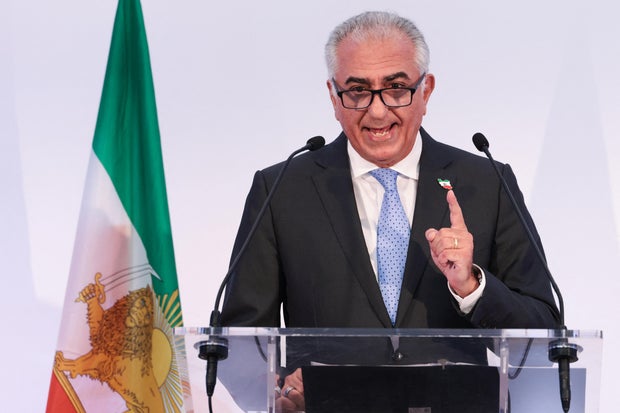
Iranian Crown Prince reza Pahlavi, son of the last Shah of Iran, has voiced support for the protests from exile, urging demonstrators to remain “disciplined” and maintain a large presence. He called for Iranians to chant against the country’s leadership at 8 p.m. local time on Thursday and Friday, and many responded.
Yacoubian suggests that Pahlavi’s call to action could be a turning point in the protest movement. She cautions that the regime is prepared to use lethal force, but the outcome will depend on whether the protests become overwhelming and if elements within the security forces sympathize with the protesters due to their own economic hardships.
