
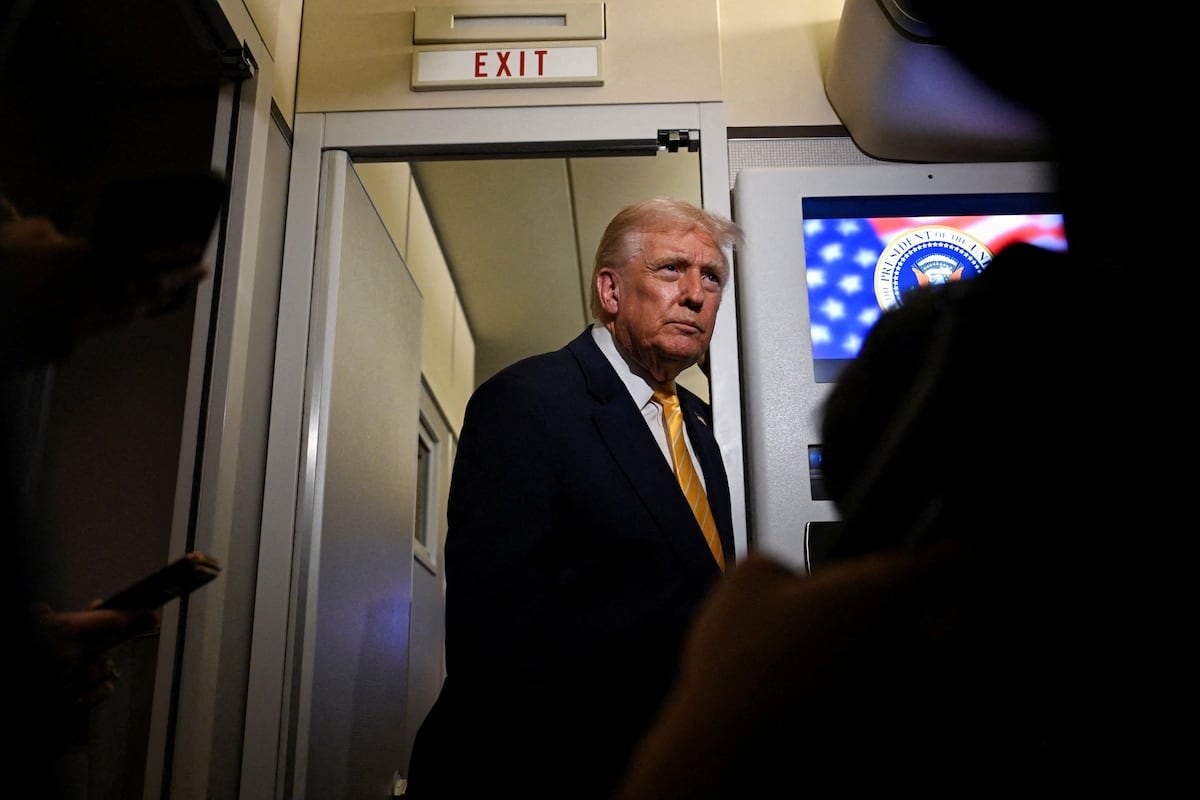
Trump Considers Options for Venezuela Amidst Escalating Caribbean Operations
Following briefings from defence Secretary Pete Hegseth and Chief of Staff Gen. Dan Caine, former President Trump is weighing potential responses to the situation in Venezuela, as the U.S. military continues “Operation Lanza del Sur” – a major operation against “narcoterrorism” in Latin America. The briefings, held Wednesday and Friday, come as U.S. forces have engaged in over twenty attacks against suspected drug boats in the Caribbean Sea and eastern Pacific, resulting in at least eighty fatalities. These operations are occurring in international waters, near the border with Venezuelan territorial waters.
Hegseth announced the launch of Operation Lanza del Sur on social media on november 13th, framing the attacks as part of this broader effort. While Trump initially stated the operations were successfully curbing drug flow to the U.S. and suggested potential “actions on land” as a next step, he has since moderated his rhetoric.
In a recent interview with 60 Minutes on CBS, Trump acknowledged that Venezuelan President Nicolás Maduro‘s time in power “are numbered,” but deemed a direct U.S. military conflict with Venezuela unlikely. Ten days prior, during a briefing on Capitol Hill led by Hegseth and Secretary of State Marco Rubio, Administration representatives denied any plans for an attack on Venezuela.
The U.S. government justifies the military campaign as a necessary measure to combat drug trafficking and the resulting deaths within the country. Though,the operation has drawn criticism from experts,human rights advocates,and legislators who argue it is indeed illegal due to a lack of Congressional authorization. The Administration has designated several cartels as international terrorist organizations, claiming its members are enemy combatants and thus justifying the operation as a “direct and non-international armed conflict” – negating the need for Congressional approval.
The scale of the deployment has fueled speculation that the true objective extends beyond drug interdiction, perhaps aiming to destabilize or force a change in the Chavista regime. Washington has increasingly linked Maduro to drug cartels, accusing him of leading these organizations and relying on drug smuggling revenue to survive international sanctions. The reward for Maduro’s capture was increased to $50 million in August.
Alongside the attacks on suspected drug boats, the U.S. is conducting bomber training flights near the Venezuelan coast and has authorized the CIA to undertake covert actions within Venezuela, further escalating pressure on the Maduro government.
