
European NATO members have projected naval power into the Indo-Pacific through aircraft carrier deployments in recent years, as China—a European Union trading partner and U.S. rival—undergoes a military buildup, challenging Washington and its allies.
Experts told Newsweek that by sending their largest and most capable warships, European countries—the United Kingdom, France and Italy—can assist the U.S. in keeping China in check while maintaining a naval presence at home, thereby contributing to Europe’s security.
Liu Pengyu, a spokesperson for the Chinese Embassy in Washington, D.C., told Newsweek on Tuesday, “The growing military deployment by countries from outside the region is detrimental to peace and stability in the Asia-Pacific.”
Why It Matters
Table of Contents
China has built the world’s largest navy by hull count—surpassing the U.S. Navy—with more than 370 ships and submarines. In June, the Chinese military—for the first time ever—deployed two aircraft carriers to the broader western Pacific simultaneously, flexing its naval power.
The expansion of China’s naval presence comes as the U.S. is preoccupied with tensions in the Middle East, prompting the repositioning of a pair of aircraft carriers—USS Carl Vinson and USS Nimitz—earlier this year and leaving a naval power gap in the western Pacific.
Meanwhile, the British aircraft carrier HMS Prince of Wales is conducting an eight-month deployment in the Indo-Pacific. As of earlier this month, the Royal Navy warship—carrying stealth fighter jets—was en route to Australia for an exercise before continuing on to Japan.
ROSLAN RAHMAN/AFP via Getty Images
According to Krzysztof Sliwinski, an associate professor in the Department of Government and International Studies at Hong Kong Baptist University, nine NATO nations established the European Carrier Group Interoperability Initiative in 2008, seeking to maintain a continuous presence in the Indo-Pacific through sequential deployments of aircraft carriers.
In addition to the ongoing deployment of the Prince of Wales, the U.K. sent HMS Queen Elizabeth in 2021 for a seven-month mission that brought the aircraft carrier and its strike group—including a destroyer and fighter jets deployed by the U.S.—to the Indo-Pacific.
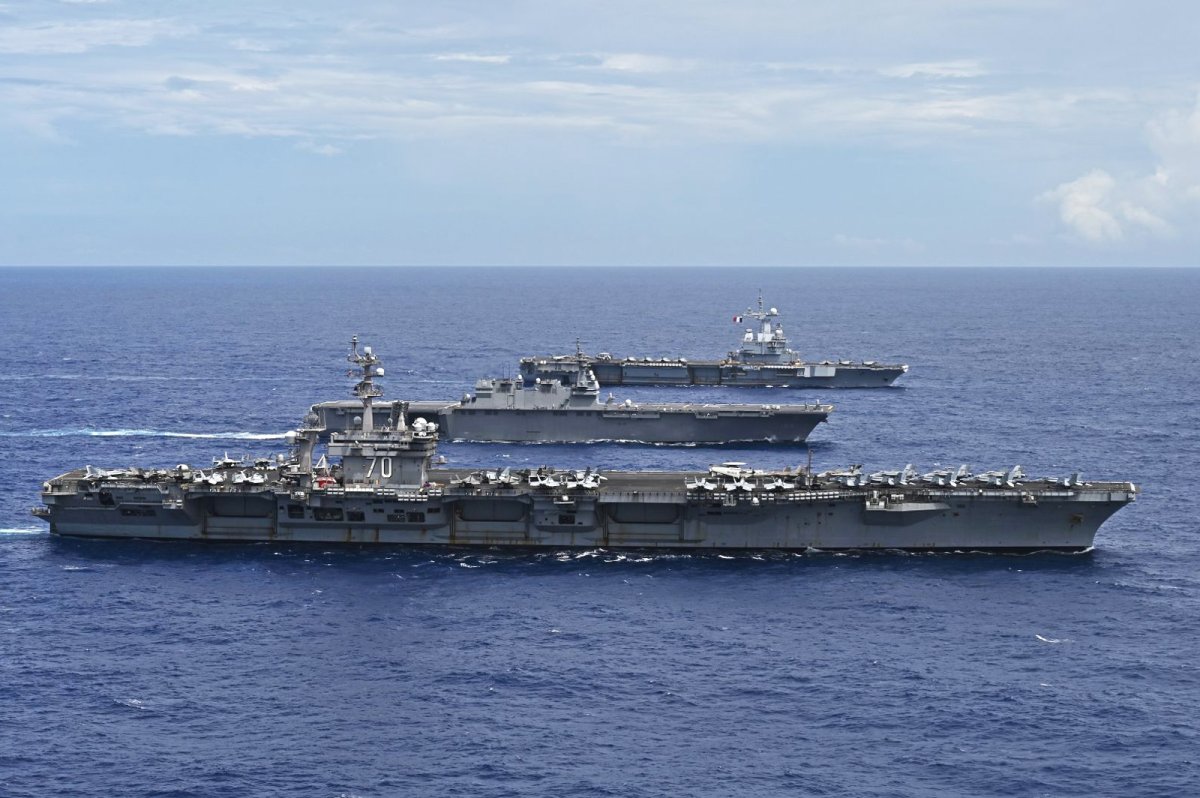
In April, the French aircraft carrier FS Charles de Gaulle concluded a five-month Indo-Pacific mission. During its deployment, it linked up with aircraft carriers from the U.S. and Japanese navies in the broader western Pacific east of the Philippines.
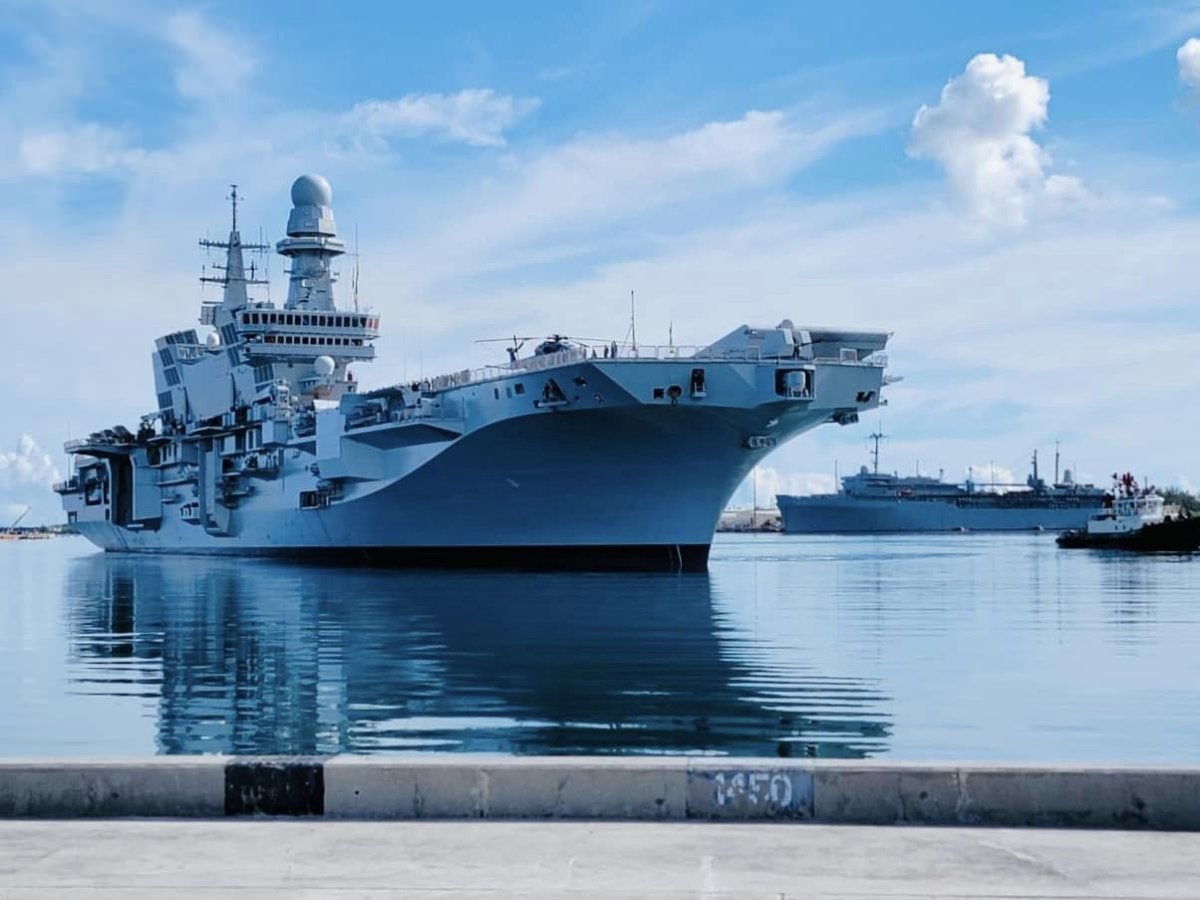
ITS Cavour, an Italian aircraft carrier, also led a strike group last year for a five-month deployment in the Indo-Pacific—a region outside the Italian navy’s traditional area of responsibility.
Japan Maritime Self-Defense Force
Rationales for Deployments
Sidharth Kaushal, a senior researcher at the Royal United Services Institute in the U.K., told Newsweek that the role of European aircraft carrier deployments is more diplomatic and strategic than strictly military—signaling, among other things, national commitments to engaging with regional partners and to principles such as freedom of navigation.
Naval presence operations are designed to shape the perceptions and behavior of potential adversaries, said Emma Salisbury, a researcher at the Council on Geostrategy in the U.K., by helping to deter aggression and demonstrate resolve without resorting to conflict.
The presence of the British aircraft carrier group in the Indo-Pacific “reflects not only a projection of military power and operational reach but also a commitment to international partnerships, regional stability, and the rules-based international order,” Salisbury said.
Trade is another factor behind British and Italian naval deployments, Sliwinski said. A significant portion of British trade with Asia depends on maritime routes that pass through Indo-Pacific choke points, while Italy—an advocate for a stable global order—also benefits from trade in the region, as its export-driven economy relies heavily on open sea lanes.
U.S. Navy
With Pacific territories such as New Caledonia and French Polynesia, France seeks to safeguard its maritime interests and mitigate what Sliwinski described as the “negative impacts” of China’s growing economic, political and military presence in the region.
Confronting China’s Threat
China’s growing naval activities come as the East Asian power and its neighbors remain involved in territorial disputes over contested waters—including the East China Sea, the Taiwan Strait and the South China Sea—which frequently lead to standoffs and clashes.
Citing tensions across the Indo-Pacific—Washington’s priority theater—U.S. Defense Secretary Pete Hegseth previously warned that China was increasingly willing to resort to force and called for enhanced joint defense cooperation to deter Chinese aggression.
Aircraft carrier deployments in the Indo-Pacific show European countries taking on a “shared strategic responsibility,” Sliwinski said, which enables the U.S. to allocate its resources on other vital areas while European naval forces help ensure regional stability.
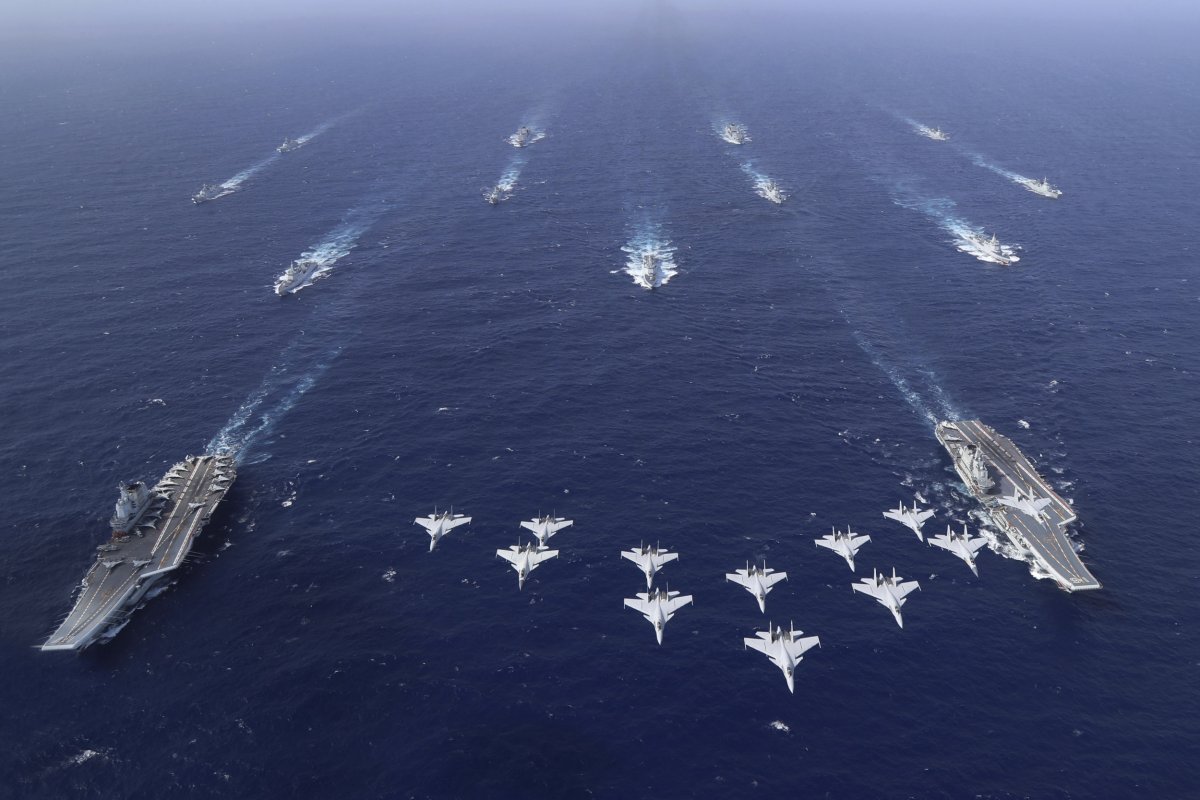
The deployment of multiple allied aircraft carriers amplifies deterrence against potential Chinese hostilities, he said. “A collective display of naval strength complicates China’s ability to act aggressively, as it would encounter a unified response from various countries.”
“Exercises conducted during these deployments provide the practical experience and shared procedures necessary to improve joint operational effectiveness,” Salisbury said, which ensures that allied forces are better prepared to respond to security challenges.
Chen Mengxi/Xinhua via AP
However, Kaushal said European aircraft carriers played a largely “supporting role” in the western Pacific, as they had limited direct combat utility in the region—where they lacked the munitions and local logistics needed to operate near China, which he described as having “the world’s most sophisticated anti-access/area denial bubble.”
According to the Pentagon, anti-access prevents an advancing enemy force from entering an operational area, while area denial restricts an enemy’s freedom of action within that area.
Balancing Commitments
While Europe projects its naval power well beyond its region, the Trump administration is calling on NATO allies to take greater responsibility for European security as Washington refocuses its attention toward the Indo-Pacific, signaling a potential retreat from Europe.
Given the pressing and ongoing need to deter and monitor Russia’s navy, it would be understandable to assume that aircraft carrier deployments in the Indo-Pacific might be deprioritized, Salisbury said. However, the U.K.’s continued commitment to such missions underscores the importance it places on its role in supporting global security.
“Since carrier deployments to the Pacific are a diplomatic instrument rather than the markers of a military commitment, they do not necessarily commit resources which would be needed in a European contingency to being employed against [China] in Asia,” Kaushal said.
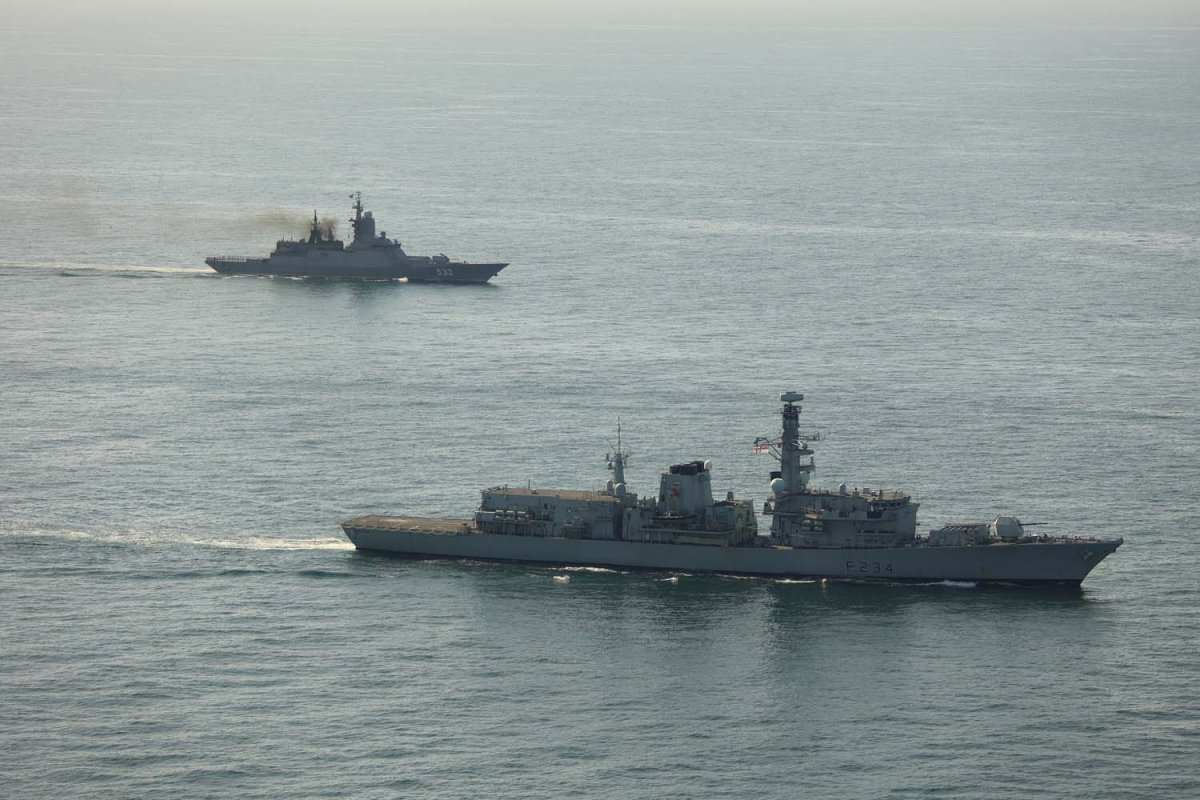
Sliwinski said the U.K., France and Italy had allocated naval assets to Europe while also focusing on the Indo-Pacific—including addressing threats in the North Sea and the Mediterranean and supporting NATO’s deterrence efforts in Eastern Europe.
Royal Navy
What People Are Saying
Liu Pengyu, a spokesperson for China’s Embassy in Washington, D.C., said: “Cold War mentality, bloc confrontation, and zero-sum thinking are out of touch with the times and lead nowhere. … China will firmly safeguard its sovereignty, security and development interests and will continue to contribute to regional peace and stability through concrete actions.”
Sidharth Kaushal, a senior research fellow for sea power at the Royal United Services Institute in the U.K., said: “These deployments entail costs both financially and in terms of vessel and crew readiness, and their utility will have to be weighed against these costs as Europe takes on a greater share of its own defensive burdens.”
Emma Salisbury, a sea power research fellow at the Council on Geostrategy in the U.K., said: “The deployment of British and European allied carrier strike groups to the Indo-Pacific, rather than limiting engagement to smaller-scale missions, represents a deliberate and symbolically significant strategic choice.”
Krzysztof Sliwinski, an associate professor in the Department of Government and International Studies at Hong Kong Baptist University, said: “European carriers play a crucial role in maintaining open access to international waters, particularly in disputed regions such as the South China Sea. This effort challenges China’s broad maritime claims and supports essential global trade routes that are important to both the U.S. and Europe.”
What Happens Next
It remains to be seen which European aircraft carrier will be dispatched next for an Indo-Pacific mission following the conclusion of the Prince of Wales‘ deployment.
