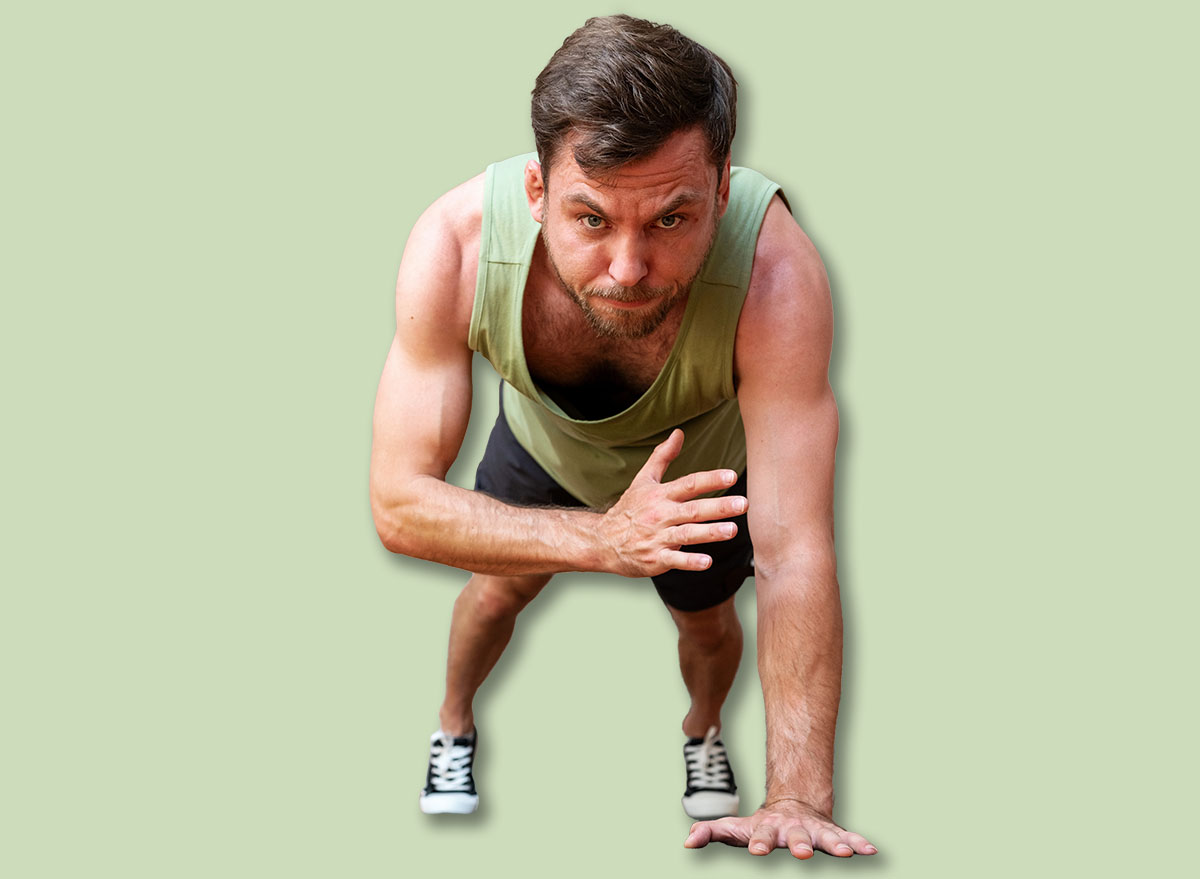
6 No-Equipment Strength Exercises That Rival Weight Training After 60
Maintaining musculoskeletal integrity after age 60 requires consistent mechanical loading, yet many older adults face barriers to traditional gym-based resistance training. Emerging clinical research confirms that bodyweight-based resistance, when executed with precise biomechanical control and intentional tempo, provides sufficient stimulus to mitigate sarcopenia and improve functional mobility. According to a longitudinal study published in the International Journal of Exercise Science, simple bodyweight protocols significantly enhance cardiorespiratory and muscular fitness with minimal time commitment, effectively replicating the physiological benefits typically associated with external load training.
Key Clinical Takeaways:
- Bodyweight exercises provide effective resistance for muscle hypertrophy and strength gains when performed with slow, controlled tempo and increased range of motion.
- Consistent engagement in functional movements—such as squats, lunges, and planks—directly improves activities of daily living (ADLs) and postural stability.
- Strength maintenance after age 60 requires 3 to 5 sessions per week to achieve the necessary signaling for muscle protein synthesis and neuromuscular adaptation.
The Physiological Rationale for Bodyweight Resistance
The standard of care for age-related muscle loss, or sarcopenia, historically prioritizes progressive overload via external weights. However, the American College of Sports Medicine (ACSM) notes that for aging populations, the primary goal is often the preservation of functional independence. Bodyweight training achieves this by requiring the musculoskeletal system to manage center-of-mass shifts, which engages deep core musculature and improves proprioception—elements often bypassed by fixed-path gym machines. Research funded by the National Institutes of Health (NIH) indicates that consistent exercise timing and adherence are stronger predictors of long-term health outcomes than the specific modality of resistance used.
For individuals navigating chronic pain or limited mobility, the transition to a home-based routine requires careful assessment of joint health. If you are experiencing persistent discomfort during movement, it is imperative to consult with a board-certified physical therapist to ensure your exercise form does not exacerbate existing orthopedic conditions. Tailored programming can prevent common injuries associated with improper joint alignment during high-repetition movements.
Targeting Major Muscle Groups Without Equipment
Effective training requires targeting large muscle groups through movements that mimic daily life. The chair squat serves as a foundational movement for quadriceps and gluteal engagement. By using a chair as a tactile depth cue, practitioners ensure consistent range of motion. Dr. Elena Rossi, a specialist in geriatric exercise physiology, notes: “The utility of the chair squat lies in its ability to safely train the eccentric phase of the movement, which is critical for preventing falls during stair descent and sitting.”
For upper body strength, the incline push-up offers a scalable alternative to floor-based variations. By utilizing a wall or elevated surface, the practitioner modulates the load relative to their current strength capacity. This modification is essential for maintaining shoulder health while building the pectorals, triceps, and serratus anterior. When these exercises are performed with a focus on the 2-to-3-second lowering phase, the mechanical tension on the muscle fibers remains high, facilitating adaptation without the need for external iron.
Advanced Modulation and Progressive Overload
To prevent physiological plateaus, trainees must implement progressive overload. This does not always mean adding weight; it involves manipulating variables such as tempo, leverage, and stability. Incorporating single-leg movements, such as the reverse lunge or single-leg glute bridge, forces the core to stabilize against rotational instability. This increases the demand on the stabilizers of the hip and lower back, which are essential for maintaining gait speed and balance.

The wall sit march provides a unique stimulus by combining isometric contraction with dynamic movement. This protocol demands continuous activation of the hip flexors and core musculature. If you find that your current routine lacks sufficient intensity or if you are recovering from a recent procedure, seeking guidance from a specialized orthopedic rehabilitation center can help you integrate these movements into a safe, sustainable clinical framework.
Clinical Considerations for Long-Term Adherence
Consistency remains the most significant variable in geriatric fitness. According to a study in the Translational Journal of the American College of Sports Medicine, structured, time-specific exercise routines improve adherence rates by lowering the cognitive load associated with workout planning. By eliminating travel time to a fitness facility and the setup required for weight-based equipment, adults over 60 are more likely to achieve the 3-to-5-day weekly frequency required to maintain muscle mass.
.jpg/560px-International_Durastar_4400_(16279366960).jpg "Clinical Considerations for Long-Term Adherence")
As the clinical understanding of aging evolves, the emphasis has shifted from high-intensity, high-impact training to sustainable, high-tension, low-impact exercise. This transition reduces the risk of injury while maintaining the physiological adaptations necessary for longevity. For those managing complex comorbidities, such as hypertension or metabolic syndrome, it is vital to coordinate your exercise regimen with your primary care physician to ensure it aligns with your broader health management strategy. If you are in need of a comprehensive health assessment before beginning a new fitness program, connecting with a preventative medicine clinic provides the necessary diagnostic oversight to ensure your path to strength is both safe and evidence-based.
Future research is expected to further refine the dosage-response relationship between bodyweight training and bone mineral density in post-menopausal women and men over 70. Until then, the clinical consensus remains clear: intentional, controlled, and consistent movement is the most effective tool available for maintaining physical autonomy into later life.
Disclaimer: The information provided in this article is for educational and scientific communication purposes only and does not constitute medical advice. Always consult with a qualified healthcare provider regarding any medical condition, diagnosis, or treatment plan.