
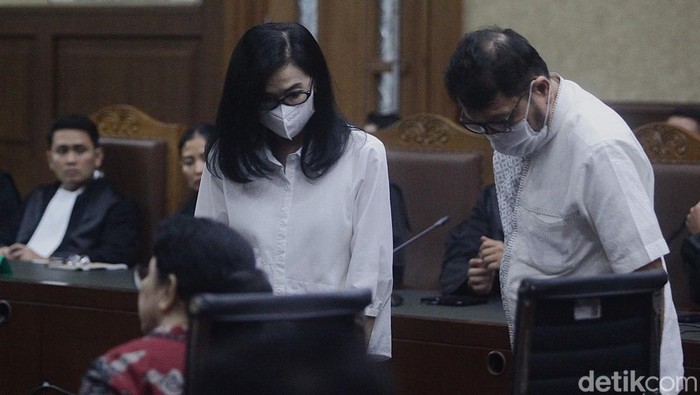
Ex-Supreme Court Official Zarof Ricar Sentenced to 16 Years for Corruption, Money Laundering
Table of Contents
Zarof Ricar, a former high-ranking official within Indonesia’s Supreme court, has been sentenced to 16 years in prison for corruption and money laundering.the sentence follows an investigation that uncovered illicit assets totaling nearly Rp 1 trillion (approximately $61.5 million USD) and 51 kg of gold, raising serious questions about judicial integrity.
Details of the case
The case against Zarof Ricar began to unfold following a controversial acquittal in a murder case involving Gregory Ronald Tannur. Prosecutors, suspecting foul play, launched an investigation that led them to Zarof, who was believed to be a key figure in brokering favorable verdicts.
Zarof Ricar’s career trajectory within the Supreme Court included positions such as Director of Pranata and Criminal Case Management and Secretary of the Directorate General of the General Court.Before his retirement on February 1, 2022, he served as the Head of the Research and Progress and Education Agency and Legal and Judicial Training. His arrest in Jimbaran,Bali,in October 2024,marked a significant turning point in the investigation.
Subsequent searches of Zarof’s residence revealed staggering amounts of cash in various currencies, equivalent to Rp 915 billion, along with 51 kg of gold. These findings led to charges of corruption and money laundering, as Zarof was unable to provide legitimate sources for the wealth.
Did You Know? The total value of the confiscated assets, including gold, exceeded Rp 1 trillion, highlighting the scale of the alleged corruption.
The Ronald Tannur Case Connection
The investigation revealed that Zarof Ricar had allegedly accepted Rp 5 billion from Lisa rachmat to influence the Ronald Tannur case cassation. However, instead of using the money for its intended purpose, Zarof reportedly used it to finance a film project titled ‘Sang Sadile’.
The judges stated that Lisa gave rp.5 billion to Zarof to be handed over to Chief Justice Soesilo regarding the arrangement of Ronald’s cassation. The judge said Zarof met Soesilo in Makassar and delivered Lisa’s request to strengthen Ronald’s free decision.
Supreme Court Judge Soesilo ultimately issued a dissenting opinion in the Ronald Cassation Decision. The Rp 5 billion from Lisa was not handed over by Zarof to Soesilo but used for the cost of the film ‘The Schedule’.
Pro Tip: Dissenting opinions in court decisions can frequently enough signal deeper disagreements or concerns within the judiciary.
Key Evidence and Court Findings
During the trial, prosecutors presented evidence that Zarof Ricar could not account for the origin of the Rp 915 billion and 51 kg of gold found at his home. The court ruled that these assets were the proceeds of corruption and ordered their seizure by the state.
Chief Justice Rosihan Juhriah Rangkuti stated, “the assets confiscated from the defendant according to the assembly have been proven from the results of corruption because there is no legal source of income that can explain the ownership of assets in the form of cash in various currencies equivalent to Rp 915 billion and 51 kg of precious metal gold for a civil servant.”
The court emphasized that Zarof failed to demonstrate that the assets were obtained legally through inheritance, grants, businesses, or other legitimate sources of income.
Impact and Implications
The sentencing of Zarof Ricar sends a strong message about the Indonesian government’s commitment to combating corruption within its judicial system.The case has sparked public outrage and calls for greater clarity and accountability among public officials.
The investigation and trial have also highlighted the challenges of uncovering and prosecuting corruption cases, particularly when they involve high-ranking officials and complex financial transactions.
Summary of Key Details
| Key Detail | Description |
|---|---|
| Defendant | Zarof Ricar, former Supreme Court official |
| Sentence | 16 years in prison |
| Charges | Corruption and money laundering |
| Illicit Assets | Rp 915 billion in cash, 51 kg of gold |
| Ronald Tannur case | Allegedly accepted Rp 5 billion to influence cassation |
Questions for Discussion
what measures can be implemented to prevent corruption within the judiciary and ensure greater accountability among public officials?
How can the process of investigating and prosecuting corruption cases be improved to ensure that justice is served effectively and efficiently?
Evergreen Insights
Corruption in the judiciary undermines the rule of law and erodes public trust in government institutions. Cases like Zarof ricar’s highlight the need for robust anti-corruption measures, including asset declaration requirements, whistleblower protection, and independent oversight bodies.Transparency International consistently ranks countries based on perceived levels of public sector corruption, providing a benchmark for assessing progress and identifying areas for advancement Transparency International.
The fight against corruption requires a multi-faceted approach involving law enforcement, regulatory agencies, and civil society organizations.International cooperation is also essential to track and recover illicit assets that may be hidden in offshore accounts or used to finance criminal activities.The United Nations Convention Against Corruption (UNCAC) provides a framework for international cooperation in preventing and combating corruption United Nations.
Frequently Asked Questions
Who is zarof Ricar?
Zarof Ricar is a former high-ranking official within Indonesia’s Supreme Court who was recently sentenced to 16 years in prison for corruption and money laundering.
What were Zarof Ricar’s charges?
Zarof Ricar was charged with corruption and money laundering after an investigation revealed he possessed illicit assets worth nearly Rp 1 trillion and 51 kg of gold.
What was the Ronald Tannur case connection?
Zarof Ricar allegedly accepted Rp 5 billion to influence the Ronald Tannur case cassation but instead used the money for a film project.
What assets were confiscated from Zarof Ricar?
Authorities confiscated Rp 915 billion in cash and 51 kg of gold from Zarof Ricar, which were deemed to be the proceeds of corruption.
What is the meaning of this case?
The sentencing of Zarof Ricar underscores the Indonesian government’s commitment to combating corruption within its judicial system and sends a message about accountability among public officials.
what measures can prevent judicial corruption?
Implementing robust anti-corruption measures,such as asset declaration requirements,whistleblower protection,and independent oversight bodies,can help prevent corruption within the judiciary.
Disclaimer: This article provides general information and should not be construed as legal or financial advice. Consult with a qualified professional for specific guidance.
Share your thoughts on this case and the fight against corruption in the comments below. Subscribe for more updates on crucial news stories!
