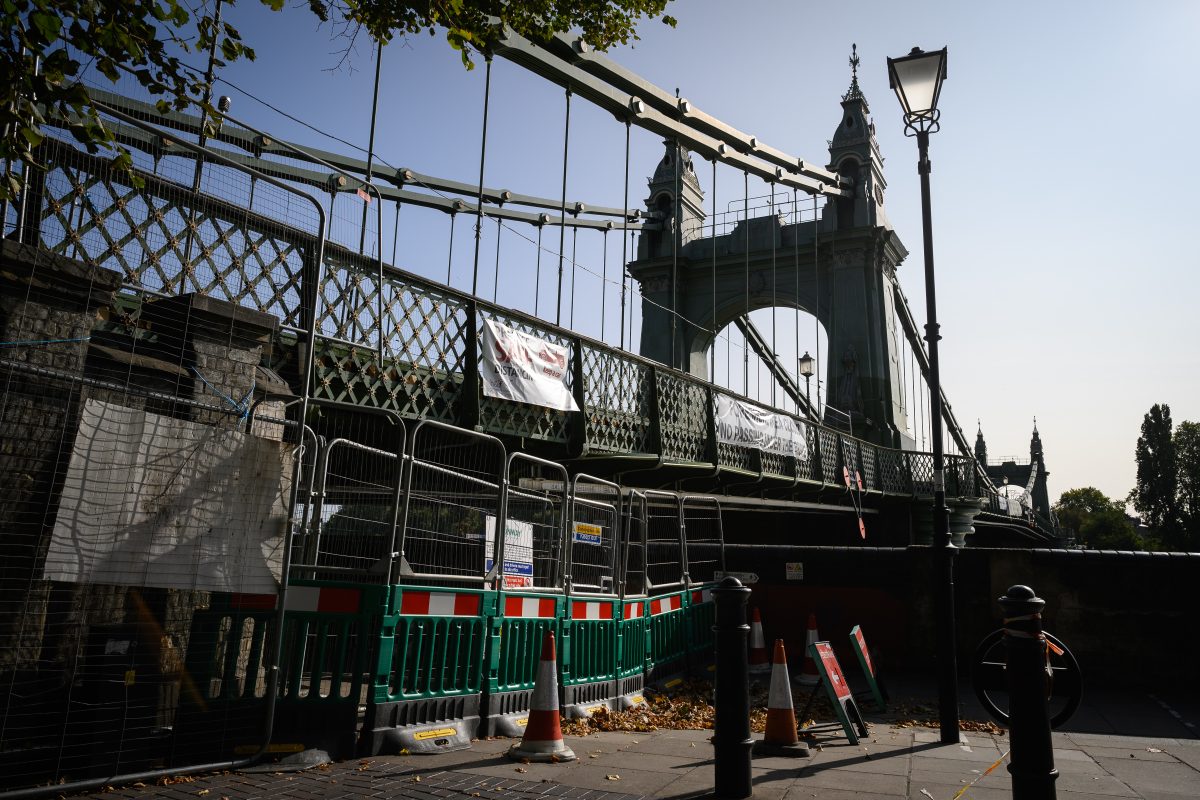
Why Reopening Hammersmith Bridge is a Test for Labour’s Growth Agenda
Seven years after the structure was shuttered to vehicular traffic, the lack of a funded restoration plan highlights a persistent disconnect between regional development rhetoric and infrastructure delivery in the capital.
The Economic Cost of Infrastructure Inertia
Hammersmith Bridge was once a primary artery for approximately 22,000 vehicles daily. Its closure has not eliminated this traffic; instead, it has displaced the volume onto surrounding residential routes in Putney, Barnes, and Richmond. This displacement generates systemic inefficiencies, including increased congestion, extended commute times, and degraded air quality.
According to data regarding local business impacts, a majority of area enterprises report that the bridge’s closure has negatively affected their access to staff, suppliers, and customers. For a city that contributes a significant share of the United Kingdom’s total tax revenue, these cumulative delays represent a significant drag on national productivity.
Shifting Political Responsibility and Funding Gaps
The political landscape surrounding the bridge has undergone a complete transformation since the 2019 general election. At that time, local campaigns were built on the premise that central government intervention was required to fund repairs. Today, the Labour Party holds authority at every relevant level: Hammersmith & Fulham Council, the Greater London Authority, and 10 Downing Street.
Despite this alignment, the financial burden remains a point of contention. With the Department for Transport managing a dedicated Structures Fund, the decision to prioritize stop-gap measures over a long-term economic solution has drawn criticism regarding value for money.
An analysis of current transport policy notes that the bridge symbolizes the wider debate between regional favoritism and national economic strategy, arguing that place-based growth must apply to infrastructure connecting people and businesses, regardless of whether it is in London or the North.
Navigating the Regulatory and Municipal Hurdle
The “Manchesterism” approach—a term used to describe the government’s focus on regional devolution—faces a clear test in Hammersmith. If the strategy only empowers regions outside of London while neglecting productive infrastructure within the capital, it risks being perceived as regional favoritism rather than a cohesive economic policy. Growth, as argued by local observers, should not be a zero-sum game.
The Path Forward for Infrastructure Investment
The current impasse suggests that the primary obstacle is no longer a lack of jurisdiction or political fragmentation, but rather a lack of political will. Reopening the bridge to all transport modes would provide a tangible proof point for the government’s growth agenda. Without a definitive, funded plan, the economic drag caused by the bridge’s closure will continue to weigh on the productivity of one of the nation’s most vital economic engines.
Ultimately, the Hammersmith Bridge situation serves as a warning: economic growth strategies are only as effective as the infrastructure that supports them. If the government cannot bridge the gap between its stated goals and the reality of London’s decaying transport links, its vision for a more productive, connected Britain may remain stalled indefinitely.