
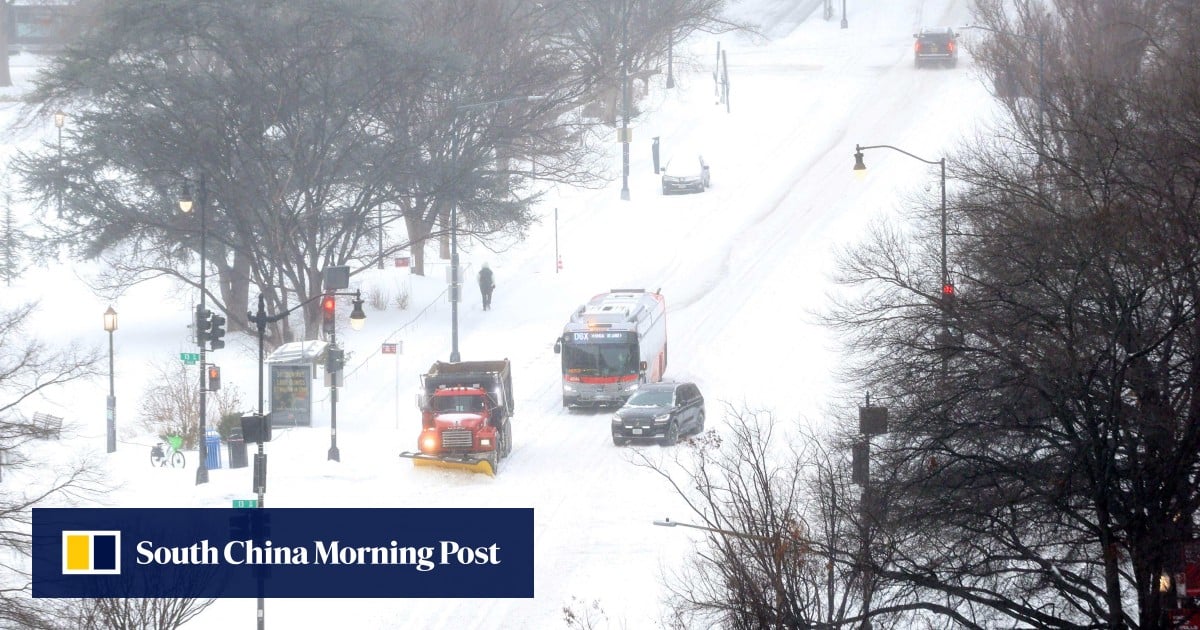
Major Winter Storm Disrupts Travel, Prompts States of emergency Across the US
A powerful winter storm is sweeping across the United States, bringing heavy snowfall, icy conditions, and widespread travel chaos. The storm is already impacting major metropolitan areas like New York and Washington D.C., with numerous states declaring states of emergency as conditions deteriorate. As of Sunday, over 15,000 flights have been cancelled, and local authorities are warning of potentially days-long disruptions to transportation networks.
Storm’s Impact: From Coast to Coast
The storm’s reach extends far beyond the initial impact zones. While the Northeast is currently bearing the brunt of the snowfall, the system is forecast to move eastward, impacting the Mid-Atlantic and potentially the Southeast in the coming days. The National Weather Service https://www.weather.gov/ has issued winter storm warnings and advisories stretching from the Midwest to the Eastern Seaboard.
New York City is experiencing snowfall as of Sunday morning, with accumulations expected to continue throughout the day. Washington D.C. is also seeing important snowfall, creating hazardous conditions for commuters. Further inland, states like Pennsylvania, New York, and maine have declared states of emergency, activating emergency response teams and mobilizing resources to address the storm’s impact. These declarations allow states to access federal aid and streamline emergency procedures.
Travel Disruption: A Weekend of Cancellations
The most immediate and widespread impact of the storm is the disruption to air travel. According to FlightAware https://flightaware.com/,more than 15,000 flights have been cancelled as of Sunday,with thousands more delayed.Major airports, including those in New York, Boston, and Chicago, are experiencing significant disruptions. Airlines are proactively cancelling flights to avoid further delays and ensure passenger safety.
Travelers are strongly advised to check with their airlines for the latest flight status before heading to the airport.Many airlines are offering waivers for change fees and cancellations, allowing passengers to reschedule their travel without penalty. Beyond air travel, the storm is also impacting ground transportation.
Risky Road Conditions and Local Impacts
Local authorities are reporting hazardous road conditions due to heavy snowfall and ice accumulation. Traffic disruptions and road closures are widespread, and officials are urging residents to avoid needless travel. The presence of “extremely dangerous” ice deposits, as reported by local authorities, substantially increases the risk of accidents.
“The combination of snow and freezing temperatures creates a particularly treacherous situation for drivers,” explains meteorologist Bill Karins of Fox News Weather https://www.foxweather.com/. “Black ice, which is a thin, clear layer of ice, is especially tough to detect and can cause vehicles to lose control.”
Beyond transportation, the storm is also impacting power grids.Heavy snow and strong winds can down power lines, leading to outages. Utility companies are preparing for potential outages and have crews on standby to restore power as quickly as possible.Residents are advised to have emergency kits prepared, including flashlights, batteries, and non-perishable food.
Understanding the Science: Nor’easters and Winter Storms
The current storm is exhibiting characteristics of a Nor’easter, a type of mid-latitude cyclone that forms along the Atlantic coast of North America. Nor’easters are known for their intense snowfall, strong winds, and coastal flooding. They derive their name from the direction of the winds, which typically blow from the northeast.
Several factors contribute to the formation of a Nor’easter:
* Cold Air Mass: A cold air mass originating from Canada moves south.
* Warm, Moist Air: Warm, moist air from the Atlantic Ocean rises and interacts with the cold air.
* Jet Stream: The jet stream,a high-altitude wind current,plays a crucial role in steering the storm and intensifying it’s growth.
The interaction of these factors creates a powerful storm system capable of producing significant snowfall and hazardous conditions. The National Oceanic and Atmospheric Governance (NOAA) provides detailed data on Nor’easters and winter storm formation https://www.noaa.gov/education/resource-collections/weather-climate/nor-easters.
Preparing for Winter Weather: A Checklist
Being prepared for winter weather is crucial for ensuring safety and minimizing disruptions.Here’s a checklist to help you prepare:
* Emergency Kit: Assemble an emergency kit with flashlights, batteries, a first-aid kit, non-perishable food, water, and a battery-powered radio.
* Vehicle Preparation: ensure your vehicle is winterized with snow tires, antifreeze, and a full tank of gas. Keep a shovel, ice scraper, and sand or salt in your trunk.
* Home Preparation: Insulate pipes to prevent freezing, and ensure you have adequate heating fuel.
* Stay Informed: Monitor weather forecasts and heed warnings from local authorities.
* Communication Plan: Develop a communication plan with family members in case of emergencies.
Looking Ahead: Continued Monitoring and Potential for Further Impacts
The winter storm is expected to continue impacting the Eastern United States throughout the weekend
