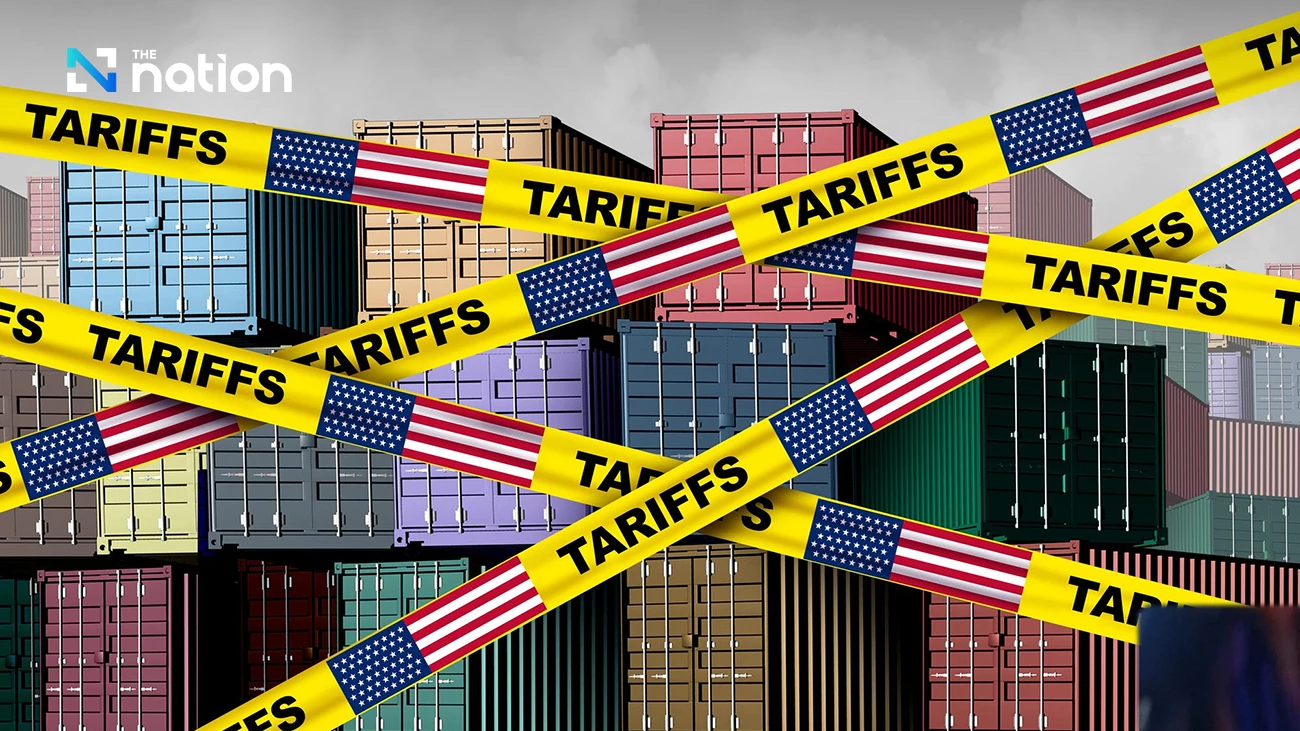
US Urges Thailand to Remove Trade Barriers Amid Section 301 Review
On April 17, 2026, the United States formally urged Thailand to eliminate non-tariff barriers affecting U.S. Exports of automobiles, pharmaceuticals, and agricultural products, marking a critical escalation in bilateral trade tensions that could reshape supply chains across Southeast Asia and force Thai industries to confront long-standing regulatory inefficiencies.
The Cost of Compliance: How Thai Barriers Distort U.S. Market Access
Thailand’s current regulatory framework imposes duplicative testing requirements on imported vehicles, mandates local clinical trials for foreign drugs already approved by the FDA or EMA, and enforces phytosanitary standards on U.S. Farm goods that exceed international norms without scientific justification. These measures, while framed as consumer protections, function as de facto quotas that inflate costs for American exporters by an estimated 15-25% according to USTR analyses, directly contradicting Thailand’s obligations under the WTO’s Agreement on Technical Barriers to Trade. The U.S. Trade Representative’s office has identified these barriers as among the most restrictive in ASEAN, particularly noting that Thai automotive tariffs remain bound at 80% under WTO schedules while non-tariff measures effectively block over 60% of potential U.S. Vehicle sales in the Thai market.
Historical Context: A Pattern of Protectionism Masked as Safety
This is not Thailand’s first confrontation with U.S. Trade officials over regulatory barriers. In 2019, a similar USTR investigation under Section 301 led to Thailand agreeing to streamline cosmetic product registrations after facing potential retaliatory tariffs. Yet progress has been uneven: while Thailand reduced cosmetic registration timelines from 180 to 90 days, it simultaneously introduced new mandatory testing for automotive emissions that disproportionately affect U.S.-built trucks and SUVs. The country’s strategy appears calibrated to protect domestic industries—particularly its state-influenced automotive assembly sector and pharmaceutical monopolies—while maintaining the appearance of compliance with international trade rules. As one former Thai trade negotiator noted privately, “We use technical standards as a volume dial, not an on/off switch.”

Ground-Level Impact: From Bangkok Ports to Provincial Farms
The human scale of this dispute extends far beyond ministerial offices in Bangkok. At Laem Chabang Port, Thailand’s largest cargo terminal, customs clearance times for U.S.-origin auto parts average 72 hours compared to 24 hours for intra-ASEAN shipments—a delay that adds approximately $400 per container in demurrage fees, according to port authority data. In the agricultural sector, U.S. Wheat exporters report repeated rejections of shipments at Bangkok’s Bang Sue rail yard due to aflatoxin thresholds set at 5 parts per billion, half the Codex Alimentarius standard and unattainable without costly post-harvest treatments that render the grain economically unviable. Meanwhile, in Chiang Mai’s pharmaceutical distribution hubs, local importers describe a Kafkaesque process where FDA-approved oncology drugs must undergo redundant bioequivalence testing in Thai laboratories, adding 6-8 months to patient access timelines.
“These aren’t safety measures—they’re market access barriers dressed in lab coats. When a life-saving cancer drug approved in the EU and U.S. Sits in quarantine for eight months because we demand a Thai-specific trial, it’s not patients being protected—it’s local manufacturers being shielded from competition.”
The Section 301 Countdown: Suphajee’s Mission and the Seven-Day Ultimatum
This current pressure coincides with Thai Deputy Prime Minister and Minister of Commerce Phumtham Wechayachai’s scheduled visit to Washington in early May to respond to the USTR’s formal Section 301 petition—a mechanism rarely used against allies but invoked here due to perceived systemic unfairness. Thai officials have signaled willingness to discuss automotive standards harmonization but remain entrenched on pharmaceutical testing, arguing that ethnic genetic differences necessitate local validation—a claim rejected by the FDA and unsupported by peer-reviewed pharmacogenomic studies on Southeast Asian populations. As Suphajee, Thailand’s chief trade negotiator, prepares for these talks, she faces a narrow window: the USTR has indicated a decision on potential retaliatory measures could approach within seven days of the May meeting, raising the specter of 10-25% tariffs on Thai exports including seafood, rubber, and canned pineapple—goods that collectively accounted for $4.2 billion in U.S. Imports in 2025.
Regional Ripple Effects: Why Vietnam and Malaysia Are Watching Closely
Thailand’s response will reverberate across ASEAN’s supply chains. Vietnam, which has aggressively courted U.S. Automotive investment by adopting UNECE vehicle standards without local additives, stands to gain if Thailand maintains its barriers—potentially capturing displaced investment in EV battery assembly and auto parts manufacturing. Similarly, Malaysian palm oil exporters, already benefiting from faster U.S. Customs clearance under the proposed Indo-Pacific Economic Framework, could observe increased market share if Thai agricultural barriers persist. Regional economists at the ASEAN Secretariat warn that a prolonged dispute risks fragmenting the bloc’s nascent efforts to establish mutual recognition agreements for product standards, undermining years of work toward a unified ASEAN Economic Community.

The Directory Bridge: Who Solves This Problem?
For U.S. Exporters stalled at Thai borders, the path forward requires navigating a complex web of regulatory compliance, local advocacy, and legal strategy. Companies seeking to challenge discriminatory testing mandates often engage international trade law firms with expertise in WTO dispute resolution and Section 301 proceedings. Simultaneously, those aiming to rebuild supply chains or establish local production to circumvent barriers consult supply chain resilience advisors who specialize in ASEAN market entry and regulatory mapping. On the ground in Bangkok, importers facing customs delays turn to licensed customs clearance agents with proven relationships at Laem Chabang and Suvarnabhumi ports to expedite releases and avoid costly demurrage—services that have seen a 30% surge in demand since the USTR’s initial Section 301 notice was filed in March.
As Thailand weighs the short-term protection of domestic industries against the long-term cost of being labeled an unreliable trade partner, the outcome of these negotiations will determine whether the country continues to rely on opaque technical barriers or embraces the transparency and predictability that modern global supply chains demand. The choice is not merely about cars, drugs, or wheat—it is about whether Thailand will compete on innovation and efficiency or retreat into the familiar shelter of regulatory obscurantism.