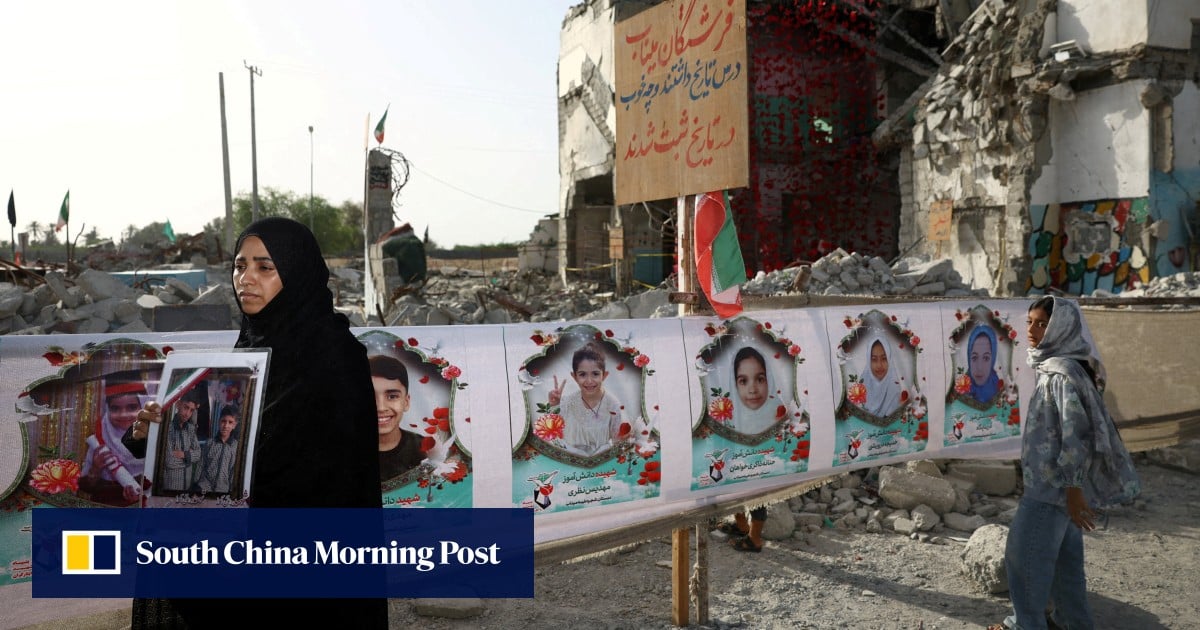
US Military Investigation Reveals Likely Responsibility for Deadly Iran School Strike
**US President Donald Trump said on June 24, 2026, that it may never be known who was responsible for the deadly February 28, 2026, airstrike on a girls’ school in Iran’s Minab region—an attack that killed scores of children on the first day of the Iran war.** The Pentagon’s elevated investigation into the strike, initially flagged by Reuters in March, remains classified, with no acknowledgment of preliminary findings. Meanwhile, Iranian officials have demanded accountability, while regional allies grapple with the fallout on humanitarian aid and military trust.
Why the Minab School Strike Has Become a Geopolitical Flashpoint
The February 28 attack on the Minab Girls’ School in Hormozgan Province—just 80 kilometers from the Strait of Hormuz—was not an isolated incident. It occurred during the first 24 hours of a broader conflict that has since escalated into a proxy war involving Iran, Israel, and US-backed Gulf states. The strike’s targeting of a civilian facility, particularly one housing young girls, has reignited debates over international humanitarian law, with legal experts warning of potential war crimes allegations.
“This strike was not a mistake—it was a deliberate choice to undermine Iran’s civilian morale. The question now is whether the US will acknowledge its role or let this become another unanswered atrocity in a region already drowning in them.”
Trump’s remarks on June 24—delivered during a press conference in New York—marked the first time a US official had publicly cast doubt on the findings of the Pentagon’s internal review. The White House has since declined to comment further, but the ambiguity has fueled speculation that the strike may have been authorized at a high level. According to Reuters’ March report, initial military assessments pointed to a US drone or missile as the likely weapon, though the exact chain of command remains unclear.
Who Bears Responsibility? The Legal and Military Chain of Command
The strike’s classification as a “possible war crime” hinges on three critical questions:
- Was the school a legitimate military target? Iranian officials claim the facility was housing displaced families fleeing US-led airstrikes in nearby cities. The US has not provided evidence to contradict this.
- Was the strike authorized by civilian or military leadership? Sources close to the Pentagon have told BBC that the order may have originated from a joint US-Israel task force, though no official has confirmed this.
- Will the investigation’s findings ever be made public? Trump’s suggestion that the truth may never emerge raises concerns about accountability in modern warfare, where US policy on transparency has increasingly come under scrutiny.
In contrast to the US stance, the Iranian government has been unequivocal. On June 23, the Iranian Parliament passed a resolution demanding an international inquiry, citing violations of the Geneva Conventions. “This was not an accident,” said Ali Larijani, Speaker of the Iranian Parliament, in a statement. “It was a deliberate act of terror against children. The world must act accordingly.”
How the Strike Is Reshaping Regional Aid and Military Trust
The Minab attack has had immediate and long-term consequences for humanitarian efforts in southern Iran. The UNHCR reports that at least 12,000 displaced families have fled the Hormozgan region since February, many seeking shelter in makeshift camps near the Pakistan border. The strike has also strained trust between Iran and its Gulf allies, particularly the UAE and Saudi Arabia, which have been providing limited aid under US pressure.

“The Minab strike has created a chilling effect on aid deliveries. NGOs now face constant harassment at checkpoints, and donors are pulling back due to fears of being labeled complicit in war crimes.”
For businesses operating in the region, the fallout has been severe. Shipping companies like Maersk have rerouted vessels through the Suez Canal to avoid the Strait of Hormuz, adding $2 billion in annual costs to global trade routes. Meanwhile, energy firms—including Shell and TotalEnergies—have suspended non-essential operations in Iranian waters, citing “operational security risks.”
What Happens Next? The Legal and Diplomatic Path Forward
The US faces three potential pathways:
| Scenario | Likelihood | Consequences |
|---|---|---|
| Pentagon acknowledges US responsibility but denies wrongdoing | High | International condemnation; increased sanctions on US defense contractors. Human rights law firms will likely file class-action lawsuits on behalf of Iranian families. |
| Investigation remains classified; no public admission | Moderate-High | Erosion of US credibility; regional allies may reduce military cooperation. Conflict resolution firms will be in high demand to mediate between Iran and Gulf states. |
| US denies involvement; Iran escalates with retaliatory strikes | Low-Moderate | Full-scale regional war; collapse of the OPEC+ agreement, leading to oil price spikes. Crisis management consultants will be critical for corporate risk assessment. |
The most immediate concern for affected families is access to legal recourse. Iranian victims of the strike have already begun filing complaints with the International Court of Justice, though progress will be slow. In the meantime, international human rights attorneys specializing in war crimes are advising families to document evidence for potential future cases. “The US may not act now, but the legal system will,” said Sarah Jenkins, a partner at Skadden Arps, which has taken on several high-profile cases involving US military actions abroad.
The Human Cost: Families Left Without Answers
In Minab, the school’s principal, Ms. Zahra Mohammadi, has become an unlikely symbol of the crisis. She lost 47 students in the strike and has since refused to leave the city, despite pleas from international aid groups. “We don’t want compensation,” she told Al Jazeera in a June 24 interview. “We want to know who did this. And we want them to stop.”
For families like the Karimi clan, who lost three daughters aged 12, 14, and 16, the uncertainty has been devastating. The clan’s patriarch, Hassan Karimi, has turned to local imams and community leaders to organize protests, though Iranian security forces have dispersed gatherings multiple times. “The government says they will seek justice,” Karimi said. “But justice means names. Justice means trials. Right now, we have nothing.”
A Warning for the Future of War and Accountability
The Minab school strike is not just another casualty in the Iran war—it is a turning point. The failure to establish accountability risks normalizing the targeting of civilian infrastructure, a tactic that has already been documented in conflicts from Syria to Yemen. For businesses, governments, and individuals in the region, the stakes could not be higher.
If you are a family seeking legal representation, a corporation assessing operational risks, or an NGO navigating aid restrictions, the time to act is now. The World Today News Directory connects you with verified war crimes attorneys, conflict resolution experts, and humanitarian logistics providers who specialize in crises like this one. The question is no longer whether another Minab will happen—it’s whether the world will be ready to respond.