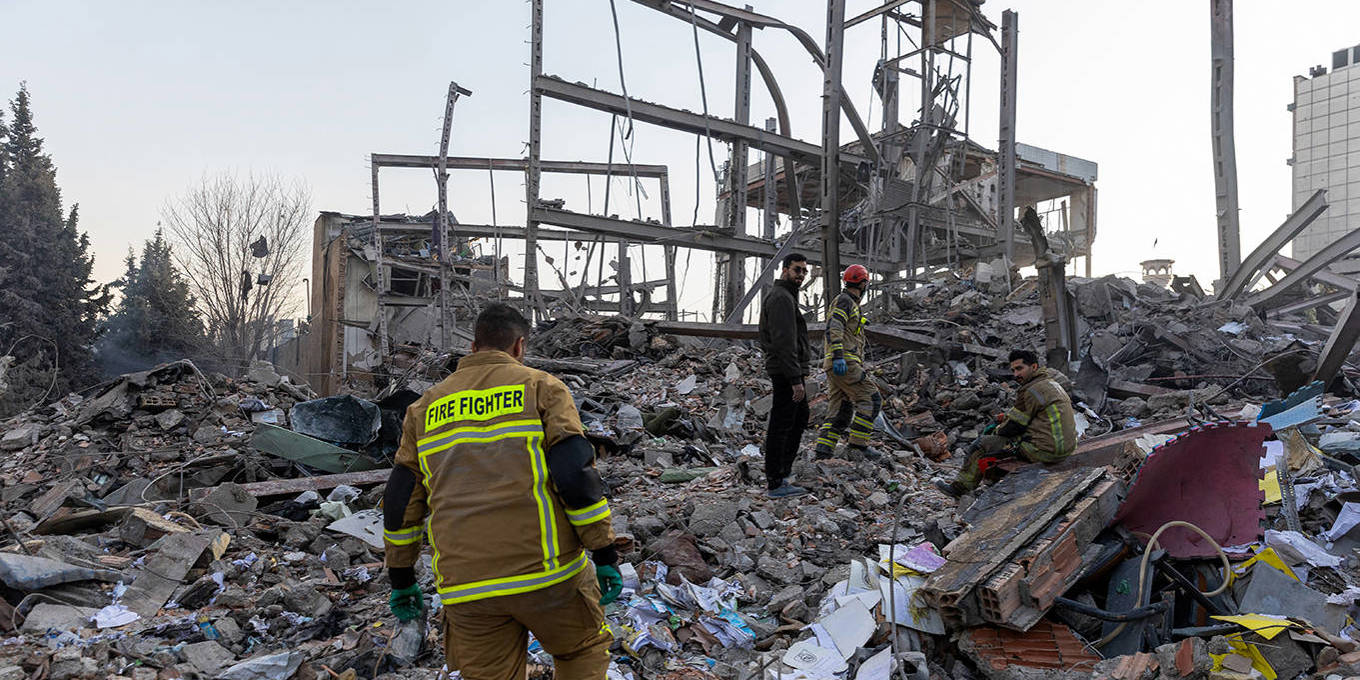
US-Israeli Attacks Trigger Legal Collapse and Instability in Iran
Iran faces a systemic collapse of state enforcement and infrastructure following targeted US-Israeli strikes. This volatility threatens global energy security, spikes sovereign risk premiums, and creates a legal vacuum for foreign entities, forcing a pivot toward aggressive risk mitigation and supply chain diversification across the Middle East.
The collapse of a state’s legal enforcement mechanism is a nightmare scenario for any C-suite executive with exposure to the region. When the courts stop functioning and contracts become unenforceable, the “rule of law” is replaced by the “rule of the strongest.” For the multinational firms still operating on the fringes of the Iranian market or those reliant on the Strait of Hormuz, the problem isn’t just the kinetic warfare—This proves the total evaporation of counterparty reliability.
This is no longer a diplomatic skirmish. It is a liquidity and legality crisis.
The immediate fiscal casualty is the predictability of energy pricing. As infrastructure degrades, the market is pricing in a permanent “geopolitical risk premium.” According to the latest U.S. Energy Information Administration (EIA) Short-Term Energy Outlook, any sustained disruption in Iranian crude exports—even those flowing through “gray market” channels—triggers an immediate volatility spike in Brent Crude, often adding $5 to $10 per barrel in speculative premiums within a single trading session.
Corporate treasury departments are now scrambling to hedge against this instability. The lack of a functional legal system in Tehran means that force majeure clauses are being triggered globally, leaving B2B partners in a deadlock over who absorbs the loss of disrupted shipments.
To navigate this legal wasteland, firms are increasingly relying on international corporate law firms to restructure their regional agreements and insulate their assets from contagion.
The Macro Breakdown: Three Pillars of Systemic Contagion
The breakdown of Iranian state authority doesn’t stay within its borders. It ripples through the global financial architecture in three distinct ways:
- The Sovereign Credit Spiral: With the legal system in shambles, Iran’s ability to service any remaining shadow debts or negotiate future restructuring is zero. We are seeing a massive widening of Credit Default Swap (CDS) spreads for regional neighbors as investors fear a “domino effect” of instability. When a state cannot enforce its own laws, its sovereign bonds become toxic waste.
- The Energy Arbitrage Shift: The market is shifting from a “just-in-time” delivery model to a “just-in-case” stockpiling strategy. This creates a liquidity crunch in the spot market. Refineries in Asia, which have historically relied on discounted Iranian crude, are now facing EBITDA margin compression as they are forced to buy more expensive, compliant alternatives from the GCC or the Americas.
- The Logistics Force Majeure Cascade: As infrastructure fails, insurance premiums for maritime shipping in the Persian Gulf are skyrocketing. Underwriters are rewriting policies in real-time, adding “war risk” surcharges that eat directly into the bottom line of global shipping conglomerates.
The numbers tell a bleak story. In emerging market portfolios, the “Iran Risk” has transitioned from a manageable variable to a binary outcome: total loss or total exit.
“We are seeing a fundamental decoupling of risk and reward in the region. The traditional hedges are failing because we aren’t dealing with a market correction; we are dealing with the disintegration of a state’s operational capacity. When the legal framework vanishes, the valuation of every physical asset in that jurisdiction drops to zero overnight.”
— Marcus Thorne, Head of Emerging Markets Strategy at a Tier-1 Global Investment Bank.
How Infrastructure Decay Crushes B2B Margins
The destruction of Iranian infrastructure is a catalyst for a broader supply chain reconfiguration. It isn’t just about oil. The interruption of regional transit corridors creates bottlenecks that increase the landed cost of goods across Eurasia. For B2B firms, this manifests as a sudden increase in Working Capital requirements. When lead times double because of regional instability, companies must hold more inventory, tying up cash that would otherwise be used for R&D or expansion.

The fiscal problem is clear: increased operational expenditure (OpEx) combined with unpredictable revenue streams. The solution is a total overhaul of the regional footprint.
Forward-thinking enterprises are bypassing the chaos by engaging geopolitical risk consultants to map out “safe-harbor” logistics routes that avoid the volatility of the Persian Gulf entirely.
Looking at the International Monetary Fund (IMF) World Economic Outlook, the drag on regional GDP growth is expected to be significant, but the real damage is in the private sector’s loss of confidence. Capital flight is no longer a trickle; it is a flood. Institutional investors are rotating out of Middle Eastern equities and into “safe haven” assets, causing a liquidity trap for local firms that were once the backbone of the region’s industrial base.
The legal vacuum is the most dangerous variable. Without functional enforcement, intellectual property is unprotected, and debt recovery is impossible.
This environment necessitates a move toward global logistics strategists who can implement redundant supply chains, ensuring that a breakdown in one node—like the Iranian corridor—doesn’t paralyze the entire global operation.
The trajectory for 2026 is one of managed retreat and strategic redirection. Iran may endure as a political entity, but as a functional economic partner, it is currently a black hole. The winners of this era will not be those who bet on a quick recovery, but those who build a business model that assumes the instability is permanent.
As the map of global trade is redrawn in the wake of this breakdown, the ability to find vetted, resilient partners is the only real hedge. For firms looking to insulate their operations from the next systemic shock, the World Today News Directory remains the primary resource for connecting with the B2B architects of corporate resilience.