
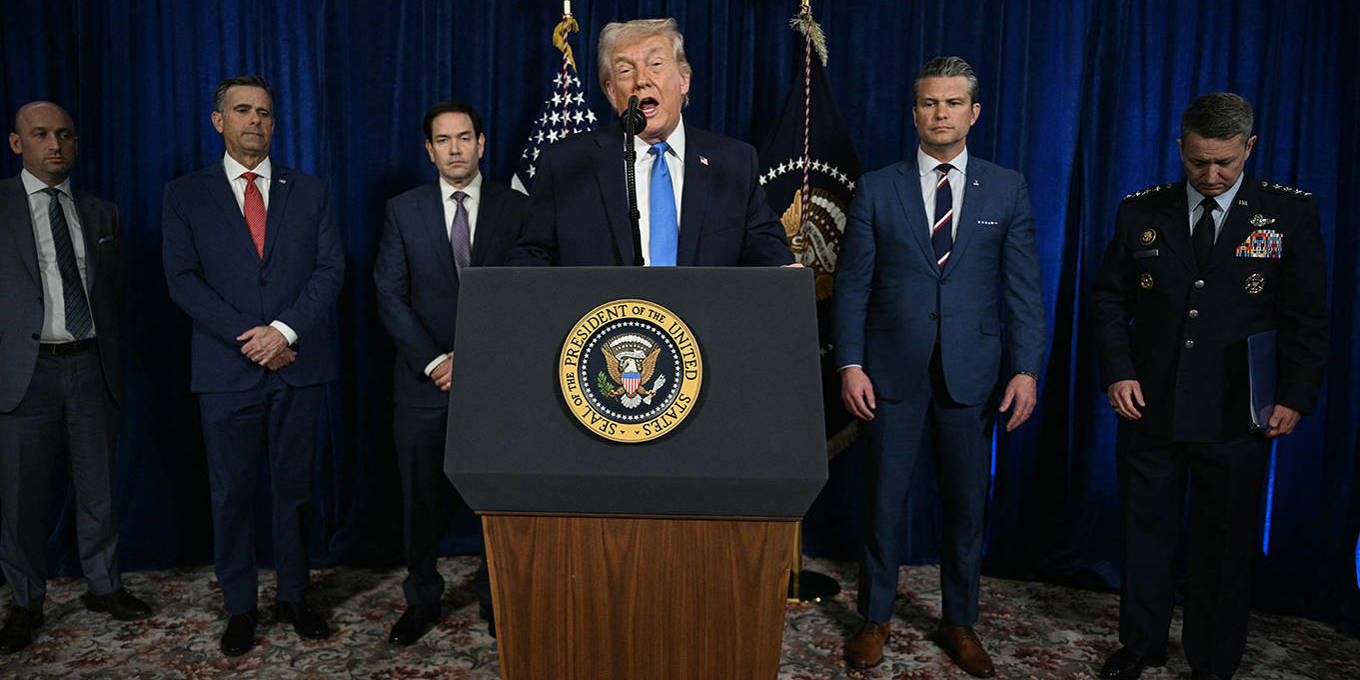
Trump’s Venezuela Actions Signal a Shift in US Foreign Policy, Raising Concerns Over International Law
PRETORIA – The recent actions taken by the United States regarding Venezuela, specifically the pursuit of President Nicolás Maduro on drug-trafficking charges, represent a significant departure from conventional US foreign policy and have sparked international concern over the erosion of the rules-based international order. While US interventionism is a long-established pattern, the overt prioritization of strategic interests – namely, access to Venezuela’s vast oil reserves – over stated commitments to human rights and democracy marks a stark shift, one that echoes ancient power dynamics familiar to many nations in the Global South.
The pursuit of Maduro, and the manner in which it has been conducted, has been widely criticized for undermining the authority of international institutions, especially the United Nations. The US has historically positioned itself as a champion of international law, playing a key role in the establishment of the UN and its associated legal frameworks. However, actions like the alleged abduction and transfer of a foreign head of state to face charges in the US legal system bypass established protocols for extradition and due process, setting a perilous precedent.
“This isn’t simply about Venezuela; it’s about the future of international law,” explains Dr. Mark Weisbrot, Co-Director of the Center for Economic and Policy Research [https://cepr.net/]. “The US is demonstrating a willingness to disregard international norms when it perceives its interests to be at stake. This weakens the entire system designed to prevent unilateral actions and promote peaceful resolution of disputes.”
A History of intervention, A New Level of Candor
US intervention in Latin America and elsewhere is well-documented. Throughout the 20th and 21st centuries, the US has engaged in a range of interventions, from supporting coups and installing dictatorships to providing military aid to governments with questionable human rights records. Historically, these interventions were often justified – at least rhetorically – by appeals to democracy, anti-communism, or the protection of US citizens and investments.
The intervention in Chile in 1973, which saw the US-backed overthrow of democratically elected President salvador allende, is a prime example [https://nsarchive.gwu.edu/briefing-book/chile/2013-09-11/us-role-chile-1973-coup].Similarly, the US supported numerous anti-communist regimes during the Cold War, even when those regimes were responsible for widespread human rights abuses.
However, the Trump administration has largely abandoned such pretense. President Trump himself has openly acknowledged the economic motivations behind US policy toward Venezuela, specifically referencing the country’s substantial oil reserves – the largest proven reserves in the world, estimated at 303.8 billion barrels as of 2023 [https://www.worldometers.info/oil/venezuela-oil/]. This directness, while arguably refreshing to some, has alienated allies and emboldened critics who accuse the US of pursuing a neo-colonial agenda.
Venezuela’s Strategic Importance and the Oil Factor
Venezuela’s oil reserves are a critical component of its strategic importance. for decades, Venezuela was a major supplier of oil to the United States. However, political instability, economic mismanagement, and US sanctions have substantially reduced Venezuela’s oil production in recent years.
The US has imposed increasingly stringent sanctions on Venezuela, aiming to pressure Maduro to step down and allow for free and fair elections. While the stated goal is to restore democracy, critics argue that the sanctions have exacerbated the country’s economic crisis, leading to widespread suffering and a humanitarian emergency. The sanctions have also created an prospect for other countries,such as Russia and China,to increase their influence in Venezuela.
“The sanctions regime has been counterproductive,” argues Professor Vanessa Neumann, a specialist in Latin American politics at George Washington University. “It has not achieved its stated goal of regime change and has instead deepened the humanitarian crisis, making it more arduous to resolve the political situation.”
The potential for Venezuela to resume significant oil exports is a major driver of US interest. Control over Venezuelan oil would not only benefit US energy companies but also strengthen US geopolitical leverage in the region and beyond.
The Global South’s Perspective: A Familiar Pattern
For many countries in the Global South, the Trump administration’s approach to Venezuela is not surprising. They have long experienced similar forms of interventionism, frequently enough justified by self-serving arguments about national security or economic interests.
“What’s happening in Venezuela is a continuation of a long history of western powers exploiting the resources of the Global South,” says Vijay Prashad, Director of Tricontinental: Institute for Social Research [https://tricontinental.org/].“The rhetoric may change, but the underlying dynamic remains the same: powerful countries using their economic and military might to control weaker ones.”
This perceived hypocrisy – the US criticizing other countries for violating international law while simultaneously engaging in similar behaviour – erodes trust and undermines US credibility on the world stage.
Implications for the International Legal system
The US actions in Venezuela have broader implications for the international legal system. By disregarding established norms and procedures, the US is weakening the institutions designed
